
Suriname
Forest Peoples Programme has worked in Suriname, a country in northeast South America on the Guiana Shield, since 2000 working with national organisations of indigenous peoples and tribal peoples in Suriname, in which the traditional authorities of all regions are united. We support our partners to increase recognition of land rights and traditional governance systems in the country, support communities’ collective conservation and sustainable development actions, and to advocate for the government to create sustainable policies and projects in respect of community rights.
Despite several judgments of the Inter-American Court of Human Rights, upholding their land-, resource- and related rights, Indigenous and Tribal Peoples continue to lack any form of legal recognition in Suriname for their land rights or any other form of tenure security. The government’s negligence and lack of legal recognition and protection leads to an ever-increasing conversion, pollution and destruction of indigenous territories, primarily for the purpose of large-scale agricultural projects and extracting minerals and other natural resources, causing a variety of human rights violations.
There is a range of shortcomings in environmental legislation that threaten the sustainable life of indigenous peoples including their food sources. Indigenous peoples have very limited say in government policy plans and measures, projects and decisions that affect their habitats and living situation. There is an all-round lack of application of Free, Prior and Informed Consent (FPIC).
Key issues in Suriname related to our partners include:
- A lack of recognition of collective land rights of Indigenous and Tribal Peoples in Suriname.
- Unsustainable policies and projects in the interior, affecting indigenous and tribal peoples’ territories, health and community life.
- Insufficient recognition of traditional governance systems and involvement and participation of indigenous peoples in relevant processes and decisions.
Main activities and current work
We support the initiatives of our partner associations and regional working arms to:
- Strengthen their organisations and leadership.
- Pursue legal action.
- Engage in policy dialogues and media and awareness campaigns
- Map territories and develop community-based visions and plans for management and sustainable development.
- Strengthen communities’ cultural identity, wellbeing and resilience.
Our current work includes:
- Legal advice/support around development of legislation on collective lands rights and follow-up of implementation of International Court decisions and other support for legal cases and urgent actions (i.e. re threats to indigenous rights defenders), and supporting FPIC protocol development in the regions.
- Partnership under the Indigenous Navigator initiative: “Monitoring indigenous peoples’ rights and making the SDGs work for indigenous peoples” - enabling community micro-projects on SDG issues, developing gender engagement strategies, collecting and publishing relevant data on the situation of IPs in Suriname, training village councils.
- Partnership under the FPP-SwedBio global partnership “Indigenous peoples and local communities renewing biological and cultural diversity”: - developing community-based management and governance plans; investing in youth involvement and inter-generational learning; biodiversity monitoring and supporting sustainable livelihoods and food systems.
- Partners in Forest Visions’ Partnership: piloting participatory 3D mapping and self-determined ‘planning our future’ exercises.
- Facilitate and enable partners’ active involvement in relevant international, regional and national processes (CBD, IUCN, SDG and others) and engagement with relevant networks, and promote learning exchanges with other countries in the region.
Recent Impacts


Related resources

VIDS repudiates government U-turn in amended draft law for Indigenous and Tribal Peoples’ rights (Suriname)
24 February 2025
Culture and KnowledgeLaw and Policy ReformCulture and KnowledgeLands, Territories and ResourcesSelf Determination and FPICRights to Lands, Territories and ResourcesFree, Prior and Informed Consent (FPIC)English
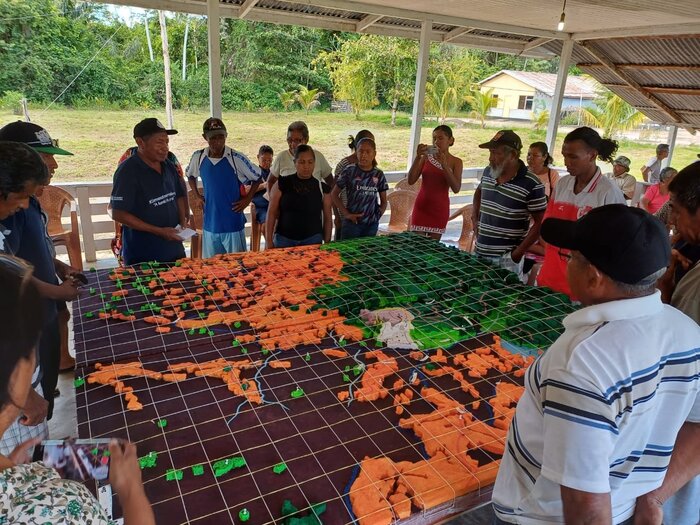
3D mapping process illustrates the value of nature and culture to sustainable livelihoods in Suriname
01 April 2024
Territorial GovernanceCulture and KnowledgeConservation and Human RightsForest VisionsCommunity GovernanceCulture and KnowledgeLands, Territories and ResourcesSelf Determination and FPICRights to Lands, Territories and ResourcesSelf-determinationEnglish


