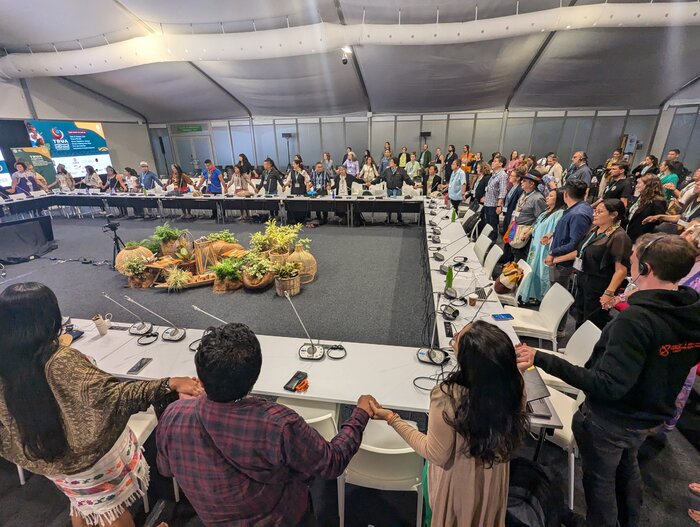

Self-determination
Forest Peoples Programme works to realise Indigenous Peoples and forest peoples right to self-determination, a fundamental right of all peoples affirmed in common Article 1 of the ICCPR and ICESCR. International treaty bodies and regional human rights courts have confirmed that self-determination applies to indigenous and tribal peoples living within nation states. The right to self-determination includes the right to determine political status and freely pursue economic, social, and cultural development. Article 1 also contains the collective right of peoples to freely dispose of their natural wealth and resources, and in no case be deprived of their own means of subsistence. The right to self-determination of Indigenous Peoples is reiterated in UNDRIP.
This means that under international law Indigenous Peoples and forest peoples have the right to determine their own futures; to meaningful participation in the development of policies, programmes, laws, or regulations impacting on their human rights; to freely enjoy and decide how to use their natural resources; and to continue their chosen ways of life and perpetuate their cultures, values, and belief systems. Our work to promote the realisation of the right of Indigenous Peoples and forest peoples to self-determination, is guided by self-identified needs and priorities of the peoples themselves.