
Biodiversity negotiations return to Nairobi: SBSTTA-28 and SBI-7 consider monitoring, implementation and finance
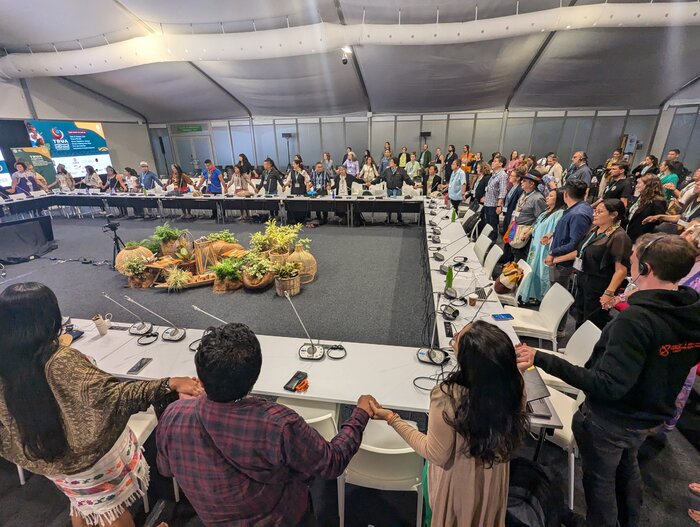
With only four years remaining to meet the 2030 targets of the global framework to halt and reverse biodiversity loss, upcoming negotiations in Kenya will be an important moment to take stock and strengthen global action. Read on to find out what will be on the table at the negotiations and which side events FPP and its partners will be participating in.
What will be negotiated in Nairobi?
The Kunming Montreal Global Biodiversity Framework (KMGBF), agreed in 2022, marked a step-change in the global ambition to protect, restore and make sustainable use of biodiversity. It recognises the rights, roles and contributions of Indigenous Peoples and local communities, and Parties agreed for a whole-of-society and whole-of-government approach where intergenerational justice, gender equity and the various values of nature are taken into account. However, at the KMGBF’s half-way point, progress is significantly behind schedule.1
The upcoming meetings of two of the CBD’s subsidiary bodies,2 SBSTTA (Subsidiary Body on Scientific, Technical and Technological Advice) and SBI (Subsidiary Body on Implementation), will review progress, examine technical implementation issues and prepare recommendations for COP17 in Yerevan, Armenia, later this year.
SBSTTA will focus on providing scientific and technical advice needed to implement the KMGBF, while SBI will consider the practical, institutional and financial conditions needed to accelerate implementation. Key issues to be negotiated include:
- Reviewing global progress towards the KMGBF’s goals and targets;
- Strengthening the Monitoring Framework used by Parties to track implementation and report on progress;
- Examining scientific advice related to protected areas, marine and coastal biodiversity, sustainable wildlife management and synthetic biology;
- Considering how scientific assessments, including ongoing IPBES assessments, can support Parties in accelerating action, and
- Mechanisms for mobilising resources for biodiversity action.
For Indigenous Peoples and local communities, these discussions are important because they will affect how progress is assessed, whose knowledge and data is valued and whether rights-based approaches are integrated into biodiversity planning, monitoring, finance and implementation. One important question is how Parties will put the CBD’s recognition of community-based monitoring and information systems and the traditional knowledge indicators into practice.
FPP works closely with the International Indigenous Forum on Biodiveristy (IIFB), the caucus of Indigenous Peoples and local communities in CBD processes. Find out more about its engagement at the meetings:
Side events
Alongside its work with the IIFB and others on the negotiations, FPP and its partners will participate in several side events.
Tuesday July 28th
18:15
This FPP co-hosted side event will present complementary analyses of collective progress towards the goals and targets of the KMGBF from various perspectives, including human rights, youth, gender, Indigenous Peoples and local communities, urban biodiversity and transformative change. Following short presentations, there will be a discussion on the steps needed before COP17 to secure a strong decision on the global review.
IPBES - Ongoing assessments and opportunities for engagement
18:15
FPP staff will present at this side event focusing on IPBES’ current work and assessments, including the monitoring assessment, the assessment on integrated biodiversity-inclusive spatial planning and ecological connectivity and the second global assessment of biodiversity and ecosystem services.
Wednesday July 29th
Monitoring Indigenous Peoples’ and Local Communities’ Land-Use Change and Land Tenure Rights in the Kunming-Montreal Global Biodiversity Framework: From Headline Indicator 22.1 Metadata to Country Reporting Practice
18:15
This FPP co-hosted side event will examine how Headline Indicator 22.1 (on land-use change and tenure in the traditional territories of Indigenous Peoples and local communities) can be monitored through stronger national data systems and inclusive reporting processes. Using Kenya as a case study, speakers will discuss the updated indicator methodology, lessons from Kenya’s seventh national report, and how official data can be linked with community-based monitoring to support rights-based implementation of the KMGBF.
Thursday July 30th
Monitoring and Reporting on Indigenous and Traditional Territories (ITTs) and ICCAs in the Context of Target 3 and Role of existing Platforms
13:15
This FPP co-hosted side event will examine how Indigenous and Traditional Territories and ICCAs can be recognised and reported under the KMGBF, particularly in relation to Target 3. Drawing on existing platforms such as the ICCA Registry, the Indigenous Navigator and LandMark, the discussion will focus on community-led reporting, FPIC, data sovereignty, governance and the safeguards needed to ensure that Indigenous Peoples and local communities retain control over how information about their territories is collected, validated and used.
A preview of Local Biodiversity Outlooks 3: The vital contributions of Indigenous Peoples and local communities as central to KMGBF implementation
18:15
LBO-3 will be published at COP17. This side event, co-organised by FPP and featuring presentations from FPP partners Phoebe Ndiema (Chepkitale Indigenous People Development Programme) and Ricardo Camilo Niño Izquierdo (Comisión Nacional de Territorios Indígenas), will preview key findings from the report through examples from Kenya, Benin, Colombia and Namibia. Speakers will show how Indigenous Peoples and local communities are using traditional knowledge, community-controlled data and monitoring tools to conserve biodiversity and govern their territories. They will also discuss what is needed for these approaches to be recognised in KMGBF planning, monitoring and implementation.
Friday July 31st
Grievance and redress mechanisms - Exploring considerations for KMGBF implementation
18:15
This FPP co-hosted side event will focus on the roles grievance and redress mechanisms in implementing the KMGBF. FPP partner Peter Kitelo (Chepkitale Indigenous People Development Programme) will share the Ogiek community’s experience of the Whakatane Mechanism.
Wednesday August 5th
Delivering the KMGBF Through Rights-Based Implementation: Territories, Partnerships and Finance
18:15
This FPP co-hosted side event will examine how private conservation organisations, funders and other non-State actors can put human rights into practice when implementing the KMGBF. Drawing on the Core Human Rights Principles for Private Conservation Organizations and Funders, the discussion will explore the discussion will explore how these actors can apply their human rights responsibilities in conservation planning, partnerships, finance and accountability.
Monday August 10th
Shaping responses to the Global Review: a multi-stakeholder dialogue
18:15
This FPP co-hosted event will build on the presentations and discussion held on Tuesday 28 July. It will bring Parties and other stakeholders together to consider how the findings of the Global Review and complementary analyses should shape decisions at COP17 and action beyond it. The interactive discussion will explore possible priorities, response options and forms of cooperation across governments, sectors and society.
Media enquiries
Contact Frances Jenner ([email protected])
1 See the CBD’s draft report on collective progress in the implementation of the KMGBF.
2 The twenty-eighth meeting of the Subsidiary Body on Scientific, Technical and Technological Advice (SBSTTA-28) will run from 27 July to 1 August, followed by the seventh meeting of the Subsidiary Body on Implementation (SBI-7) from 4 to 12 August.
Overview
- Resource Type:
- News
- Publication date:
- 24 Juli 2026
- Programmes:
- Culture and Knowledge
- Partners:
- Chepkitale Indigenous People Development Project (CIPDP) National Commission on Indigenous Territories (CNTI)
Related news