

Open Letter: The OECD should only accept Indonesia as a member if concrete measures are taken to respect Indigenous Peoples rights
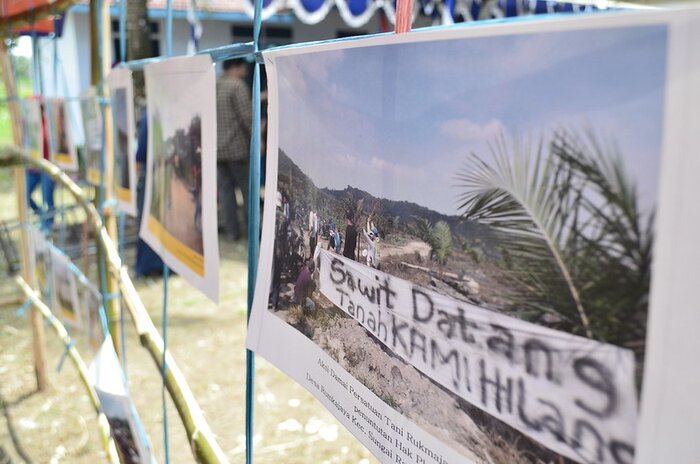
The Organisation for Economic Co-operation and Development (OECD) is currently evaluating how well Indonesia's policies align with OECD's corporate responsibility standards.
A coalition of 52 Indigenous Peoples’ organisations and civil society groups has submitted a joint submission to the OECD Working Party on Responsible Business Conduct, urging the OECD to address serious gaps in Indonesia’s protection of Indigenous Peoples’ rights before allowing the country to become a member.
Since Indonesia’s initial bid to join the OECD in 2024, the OECD has adopted a roadmap for Indonesia’s accession process. The OECD's Accession Roadmap includes OECD technical committees carrying out detailed reviews of the current reality of Indonesia's laws and policies. Among these is a technical review being carried out by the OECD Working Party on Responsible Business Conduct, which will assess, among other things, “Evidence of commitment and effective measures to promote Responsible Business Conduct in relation to…business respect for human rights, including those of Indigenous Peoples”.
The coalition argues that Indonesia’s current legal and regulatory framework is not aligned with either the OECD framework or international human rights law. In particular, they assert that it does not adequately protect nor adequately require businesses to respect Indigenous Peoples’ rights as set out in international law, including as set out in the UN Declaration on the Rights of Indigenous Peoples (UNDRIP).
It is critical that Indonesia improves its protections for Indigenous Peoples before it is formally invited to join the OECD. Despite over a decade of promises, a bill in Indonesian parliament regarding the rights of Indigenous Peoples remains unratified. In fact, Indonesia still has no single law in place to protect the rights of Indigenous Peoples, and regulations on Indigenous Peoples that do exist often contradict one another.
Intensive large-scale development projects in Indigenous territories, however, continue to move forward, raising questions about Indonesia’s commitment to the shared values, visions and priorities of the OECD.
"Indonesia’s engagement with the OECD presents a critical opportunity to advance accountability and uphold human rights. Yet accession cannot be credible while tens of millions of hectares of Indigenous customary lands remain unrecognised, and communities are displaced by commercial expansion without their free, prior, and informed consent."
- Angus MacInnes, Policy Officer, Forest Peoples Programme
To counteract this situation, the submission calls on the OECD Working Party to make a series of recommendations as part of its technical review of Indonesia before advancing Indonesia’s accession process, including that the Government of Indonesia:
- Establishes a clear timeline and participatory process for strengthening and adopting the Indigenous Peoples’ Rights Bill in line with international human rights standards;
- Accelerates the legal recognition of Indigenous Peoples and their customary territories;
- Ensures that development policies and investment frameworks fully respect Indigenous Peoples’ rights;
- Guarantees meaningful consultation with affected communities and civil society in the development of human rights due diligence laws and regulations; and
- Ends the deployment of military forces in support of development projects and strengthening protections for environmental and human rights defenders.
The coalition emphasises that meaningful recognition of Indigenous Peoples’ rights is essential to responsible business conduct, sustainable development, and legal certainty for investment. If these recommendations are not implemented, the consequences will be both humanitarian – as Indigenous Peoples continue to see their rights violated – and economic – as businesses may lose investor confidence by being forced to operate in a country without a robust legal framework.
The signatories highlight that Indonesia’s OECD accession process represents a critical opportunity for Indonesia to strengthen its protections for Indigenous Peoples’ rights. As countries come together next month to discuss multilateral corporate responsibility, signatories hope that the OECD will hold Indonesia to its own standards.
Overview
- Resource Type:
- News
- Publication date:
- 2 Juni 2026
- Region:
- Indonesia
- Programmes:
- Supply Chains and Trade Global Finance Access to Justice Law and Policy Reform
- Partners:
- Walhi Aliansi Masyarakat Adat Nusantara (AMAN): Indigenous Peoples Alliance of the Archipelago Bahtera Alam Green of Borneo HuMa (Association for Community and Ecology-Based Law Reform) JPIC Kalimantan International Work Group on Indigenous Affairs (IWGIA) LemBAH Perkumpulan Nurani Perempuan (PNP) Palangkaraya Ecological and Human Rights Studies (PROGRESS) Yayasan Masyarakat Kehutanan Lestari (YMKL)
