

“We are women fighting for our land, our community and our rivers”: The Shipibo Konibo Indigenous Guard holds its second women’s meeting in Peru
On 11 and 12 March, the second ORGI women’s meeting took place at the Bakish Mai Cultural and Education centre in Ucayali. This event, organised by the Regional Organisation of Indigenous Guard (ORGI)1 , provided a space to share knowledge on rights, territory and economic autonomy for women.
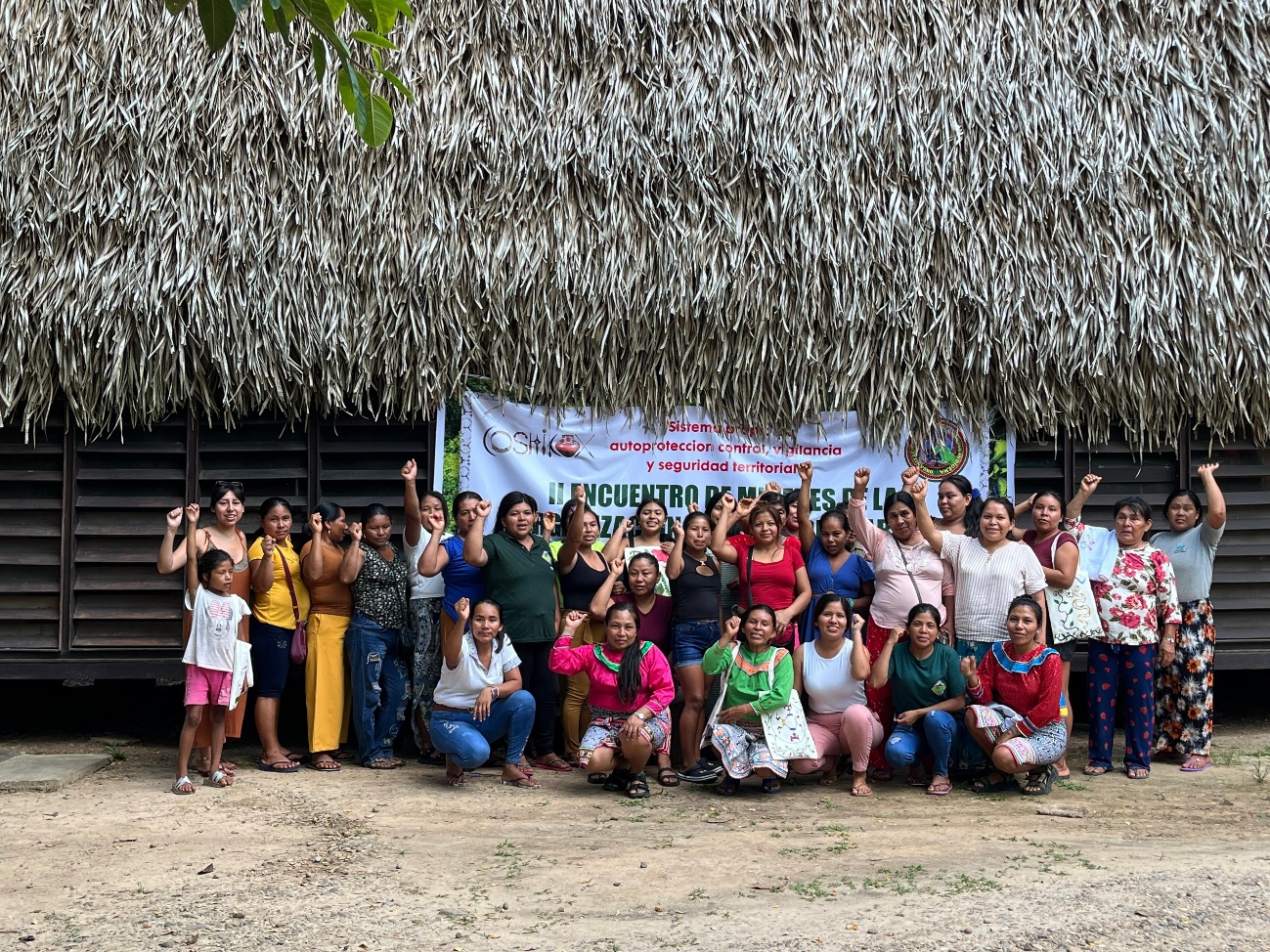
This event, led by the apus (leaders) Kelly Valera and Débora Bardales, welcomed women leaders from the Kakataibo, Quechua and Yanesha peoples, who are renowned for protecting their territory and implementing economic initiatives that safeguard biodiversity and boost the economy of Indigenous women.
Initially, the participants shared their concerns regarding their territorial rights. Currently, their communities face threats such as illegal fishing, illegal farming and monoculture plantations. Furthermore, they lack basic services such as water, sanitation and electricity, which highlights the Peruvian state’s debt to them and their communities.
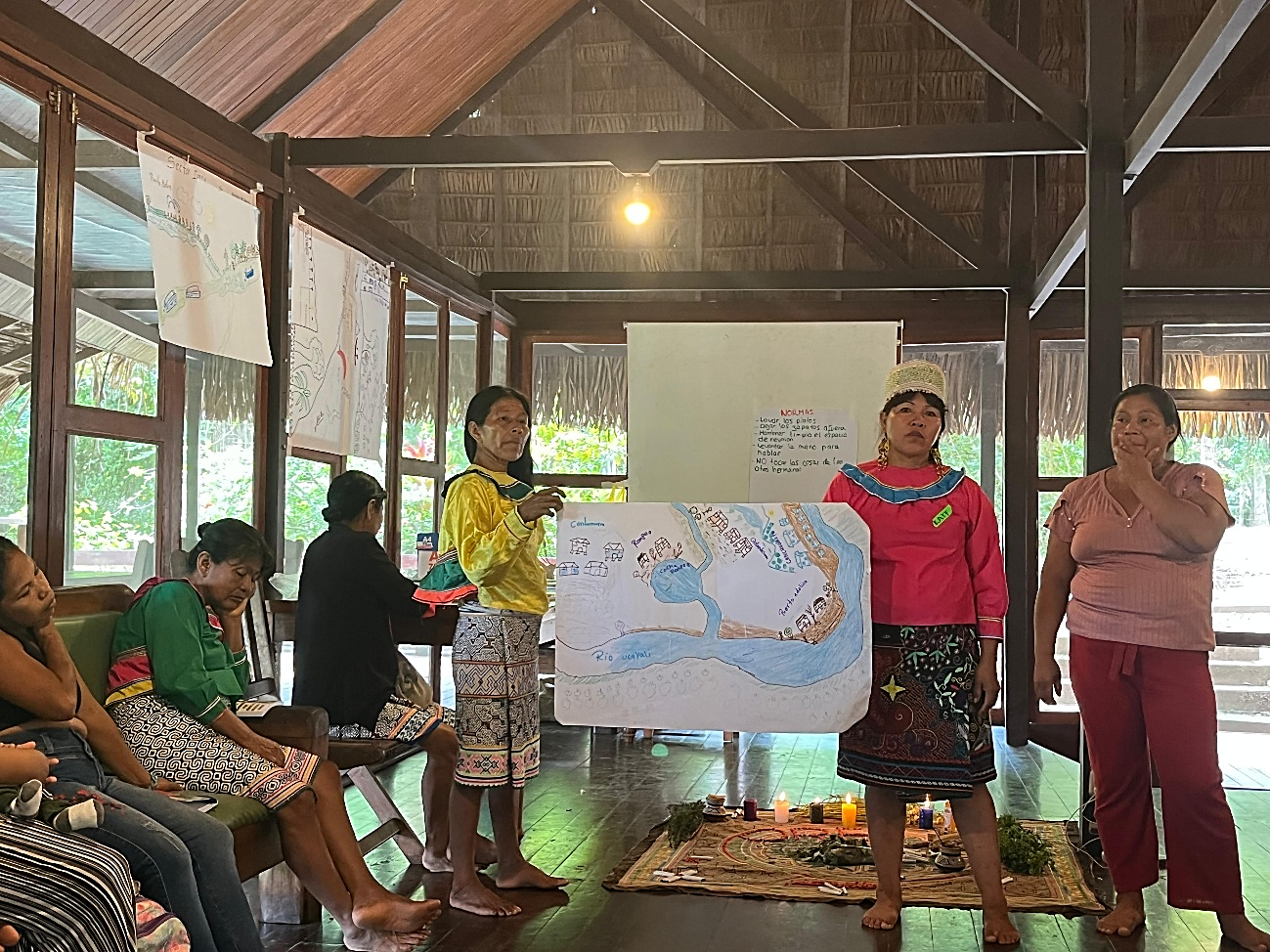
In response, ORGI highlighted their struggle to protect the territory and the importance of cooperation between different communities. They also explained how being part of the Indigenous Guard empowers them to participate in decision-making processes.
At the meeting, we see the reality: what our needs are, the situations we find ourselves in, and, as Shipibo people, we learn about the rights of Indigenous Peoples. So, if we find ourselves in a struggle tomorrow, we will know how to defend ourselves as an Indigenous people and share this knowledge with our sisters. We open our minds to how to work and rely on one another.” - Débora Bardales, ORGI.
Likewise, the members of the Indigenous Guard of the Kakataibo People of Peru (GIPKAP) highlight the strength they gain from being part of GIPKAP.
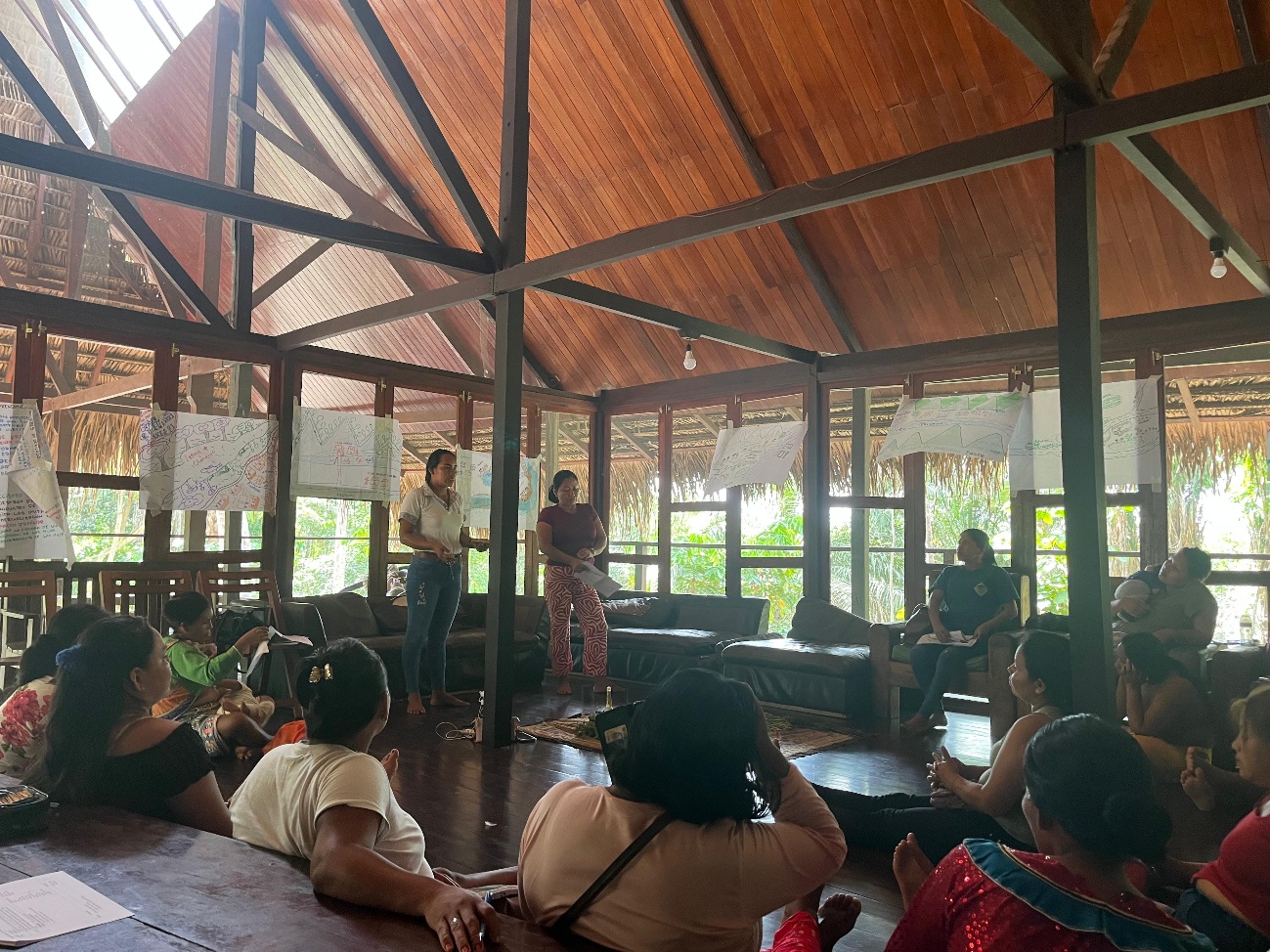
I feel as though I was born into GIPKAP. I used to be shy; I wanted to hide away, but then I said, ‘Me? I can’t spend my whole life like this!’ When I first joined GIPKAP, I was cooking [in decision-making spaces], but I also wanted to know what was going on, so I’d go and listen. And now I’m here, and I travel to different places. There are risks we take, but we carry on. We’re with the Indigenous Guard; we defend our territory. And although it’s not easy being a mum and a leader, I do it for my territory and for future generations.” - Olga Huayta, GIPKAP.
GIPKAP is my strength that I carry in my heart; even if I’m not there, the next generation will be. We are few communities, but we are brave. We are women of struggle. Ever since I was a little girl I have grown up defending territories, learning how to defend and how to speak out against the enemies who take our timber and meat. This isn’t easy; they even threaten us, but I won’t give up, because I’m not a woman who gives up easily. I am Indigenous, so I cannot give up easily.” - Karen Odicio, GIPKAP.
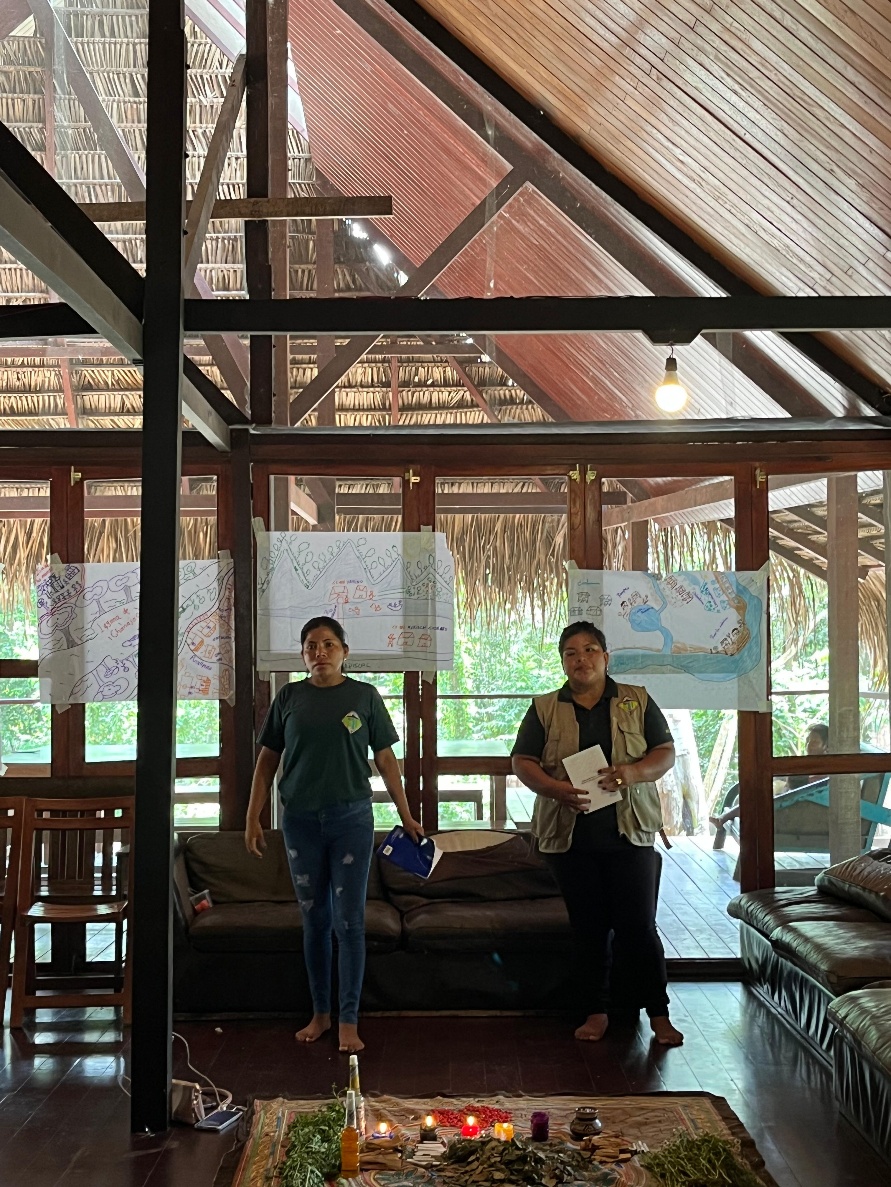
All of this demonstrates the strength of the Indigenous Guards and the importance of the work carried out by women. Subsequently, women leaders from the Yanesha and Quechua peoples shared their knowledge on women-led small businesses, promoted by the CHIRAPAQ, Centre for Indigenous Cultures of Peru.
Where we are, the price of maize never goes up, so it’s not worth it. That’s why we make maize products. We start by husking the maize, and then they support us with a machine to process it into flour. And that’s how the seven of us women have organised ourselves” – Lucía Chumbe, Quechua people.
Similarly, Yesenia Ramón from the Yanesha community outlined the workings of her association, explaining how they harvest cocoa and process it to make chocolate. Yesenia highlighted how the project began as a women’s initiative to strengthen and sustainably use the community’s most valuable resources. She also outlined the steps required for the creation and sale of their products. In this way, she explained, these initiatives of Indigenous economic autonomy led by women have a positive impact within families. They improve quality of life, promote children’s education, and foster women’s empowerment and leadership.
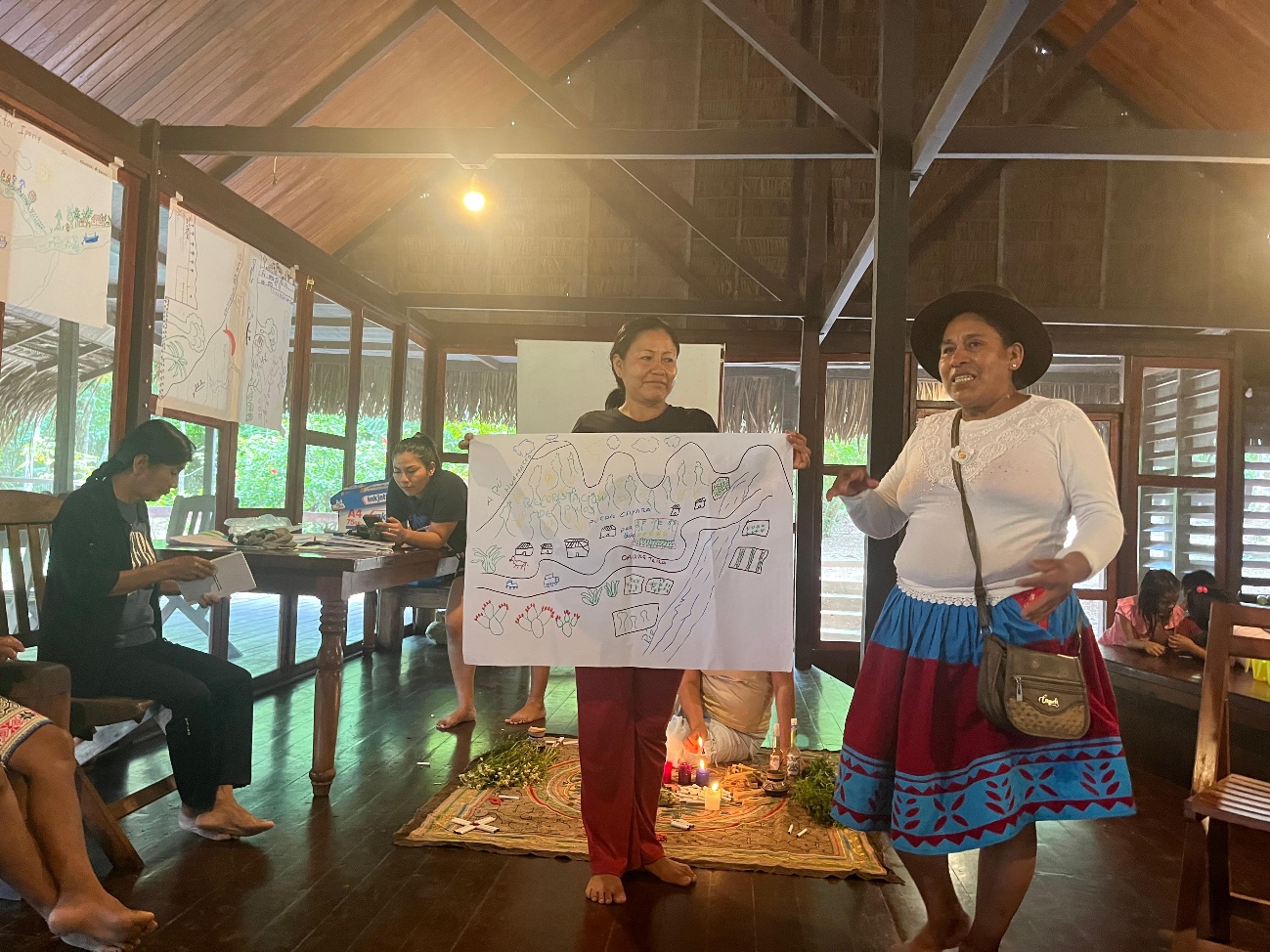
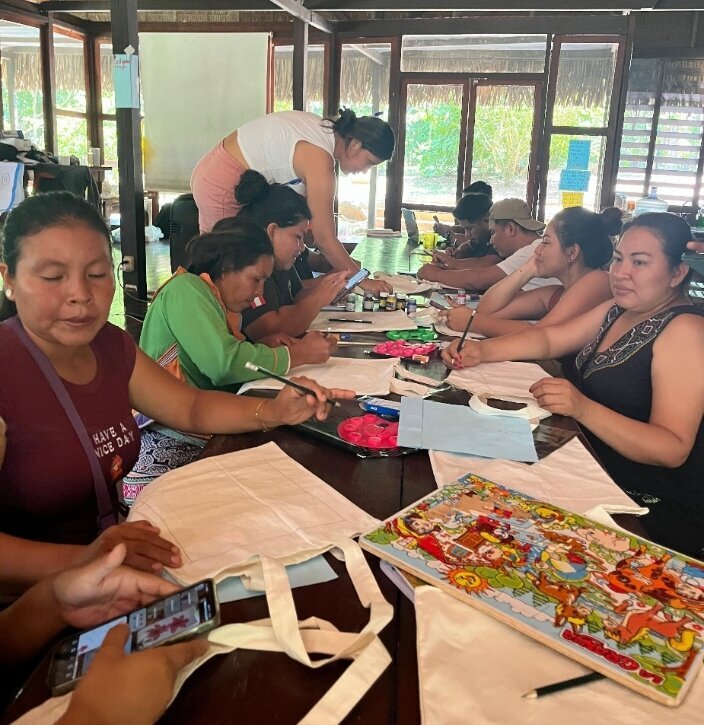
Finally, to celebrate the artistic heritage of the Shipibo people, mini-workshops were held on painting, jewellery-making, embroidery and other techniques. The gathering concluded with this opportunity to create and share artistic pieces, which form a fundamental part of Indigenous identity and provide many women with a livelihood and income for their families.
Apu Débora Bardales summed up the gathering as follows:
Over the last few days we have come together to strengthen women, to continue strengthening ourselves, so that they may be empowered and have the courage to continue defending our territory. This space is very important for ORGI.”
1 In partnership with the Shipibo Konibo Xetebo Council (COSHICOX), Multiversidad Bakish Mai, the Forest Peoples Programme (FPP), the Episcopal Commission for Social Action (CEAS) and the Institute for Legal Defence (IDL).
Overview
- Resource Type:
- News
- Publication date:
- 30 Maret 2026
- Region:
- Peru
- Programmes:
- Partner-led Actions
- Partners:
- Organización Regional Guardia Indígena (ORGI) Instituto de Defensa Legal (IDL) Consejo Étnico de los Pueblos Kichwa de la Amazonia (CEPKA)
