

Second-Class Citizens: Discrimination against Indigenous Peoples in the forests of Cameroon
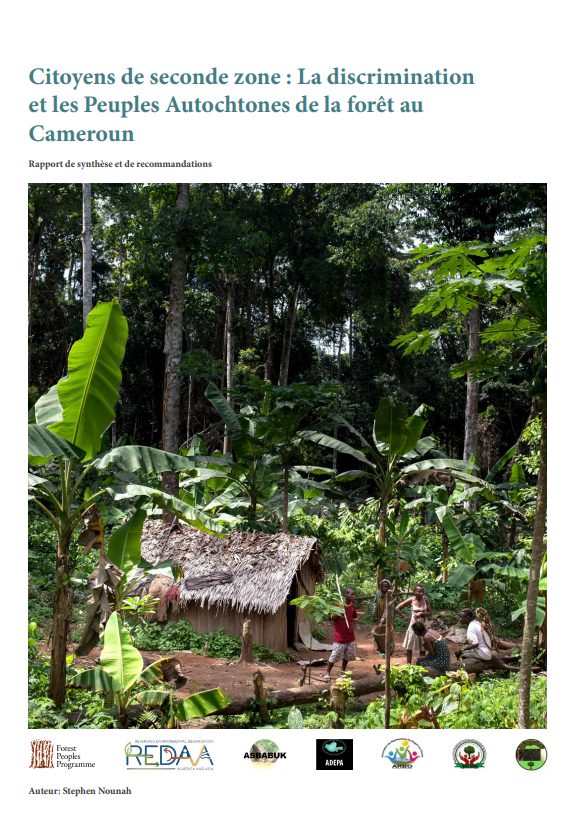
Note: This report is in French only
This report examines the issue of discrimination against forest-dwelling Indigenous Peoples in the light of international treaties and agreements ratified by Cameroon, as well as the general principles of international law and the early stages of Cameroonian legislation in the process of recognising them as a distinct group. A colonial perception of these groups has led other groups, and even certain public authorities, to view them as groups for whom specific measures aimed at assimilation are necessary.
“To combat discrimination, one must first understand what it is. This report aims to bring to light the discrimination faced by Indigenous Forest Peoples in Cameroon and to deepen understanding of it.”
The report focuses on the legal framework governing discrimination, particularly the enshrinement of non-discrimination as a fundamental principle of human rights in international law and within Cameroon’s constitutional and legal framework. The analysis reveals that although the principle of non-discrimination is enshrined in the preamble to the constitution and there are provisions addressing non-discrimination in certain scattered laws, the national legislature has not enacted legislation specifically addressing the protection of Indigenous Forest Peoples, let alone special measures aimed at remedying the inequalities they face.
Finally, this report elaborates on the experiences that the authors have observed and documented in general, as well as specific cases of discrimination against Indigenous Peoples. These experiences and cases, whilst not exhaustive, concern lands, territories and resources, natural resources, the specific issue of community forests and community hunting grounds, the annual forestry levy, protected areas, free, prior and informed consent (FPIC), reparations and just and equitable compensation, representation at community, municipal and national levels, culture, the sale of their services and unequal pay, forced labour, access to healthcare, access to education, the specific case of discrimination against Indigenous women, and access to justice.
Información General
- Tipo de recurso:
- Reports
- Fecha de publicación:
- 23 abril 2026
- Región:
- Camerún
- Programas:
- Avance de las protecciones jurídicas
- Socios:
- Bagyeli’s Cultural and Development Association (BACUDA) Association Sanguia Baka Buma’a Kpode (ASBABUK)
