
“It is the way we live that conserves”: Legal models for rights-based conservation
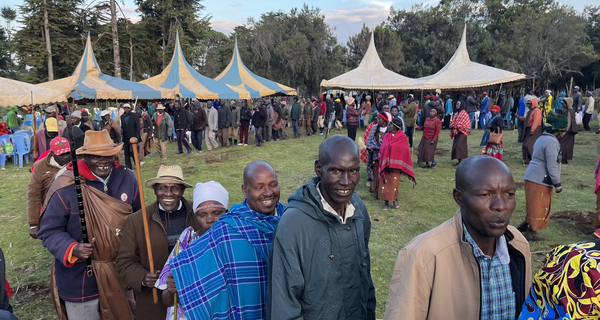
In this paper, we briefly review legal models for rights-based conservation from Australia, Tanzania, Kenya, Guyana, Brazil and Canada. We then outline some lessons learned and outline some general points of good practice for successful rights-based conservation.
A fundamental prerequisite for rights-based conservation is recognition of the customary land rights of indigenous peoples and other highly land-connected peoples and their communities. Once this condition is met, two broad approaches for implementation of rights-based conservation are (i) co-management, and (ii) community management that is regulated through national and customary law.
Key points:
- Two broad approaches to rights-based conservation, once land and resource rights are recognised, are (i) co-management and (ii) regulated community management.
- In both approaches, rules and regulations need to be self-determined and implemented based on the principle of free, prior and informed consent.
- Management rules or regulations should be the least restrictive necessary to ensure that management meets its agreed objectives.
- In co-management approaches, special attention needs to be paid to addressing power imbalances, including by ensuring communities have independent funding to resource their own participation and contract their own technical support etc.
- Legal frameworks should be pluralistic, accommodating customary laws. There should be maximum scope for communities to set their own rules and procedures.
- Management rules should also address issues of individual discrimination where that arises, such as discrimination against women.
This paper is number 10 of the briefing series Transforming Conservation: from conflict to justice.
Overview
- Resource Type:
- Briefing Papers
- Publication date:
- 17 November 2025
- Programmes:
- Territorial Governance Conservation and Human Rights Access to Justice