

Kenya Forest Service (KFS) guards are burning down hundreds of homes and evicting Indigenous Sengwer Communities in Embobut Forest

On 14th May, 2024, the Sengwer Council of Elders released a press statement calling on the Kenyan government and foreign donor agencies to halt the violent evictions of the Sengwer indigenous community by government-funded forest guards (KFS).
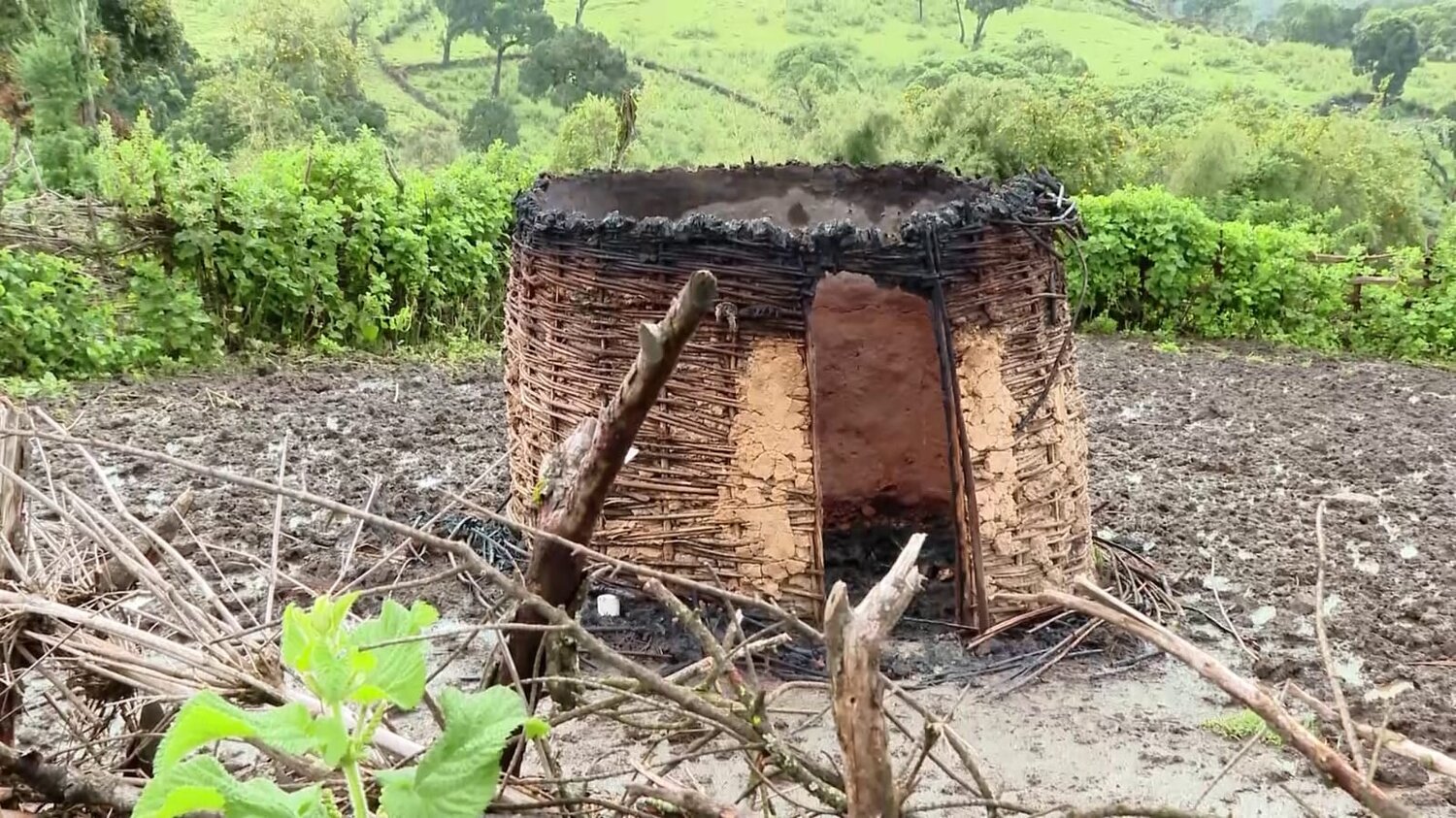
The ongoing forceful evictions - which have escalated this month with the burning of at least 600 houses in Embobut forest in the Cherangany hills - violate multiple national and international laws. Communities who have lived on their ancestral lands for centuries have had their homes destroyed, leaving them without shelter in the rainy season.
“Our forefathers lived here and so we found ourselves living here in the forest,” says Benjamin Chelimo, resident of Kipsitona village in Kapkok glade, Embobut Forest. “We have nowhere to go - the government should intervene. Even if they repeatedly burn down our houses, they'll still find me here.”
Hundreds of members of the indigenous Sengwer community who live in Kapkok, Koropkwen and Kaptirbai glades in Embobut forest have already been evicted from their ancestral lands in what is expected to be a one-month long operation by the KFS under the name ‘Imarisha Msitu’ ('Strengthen the Forest') and under the pretext of protecting the Cherangany Hills Water Tower from degradation.
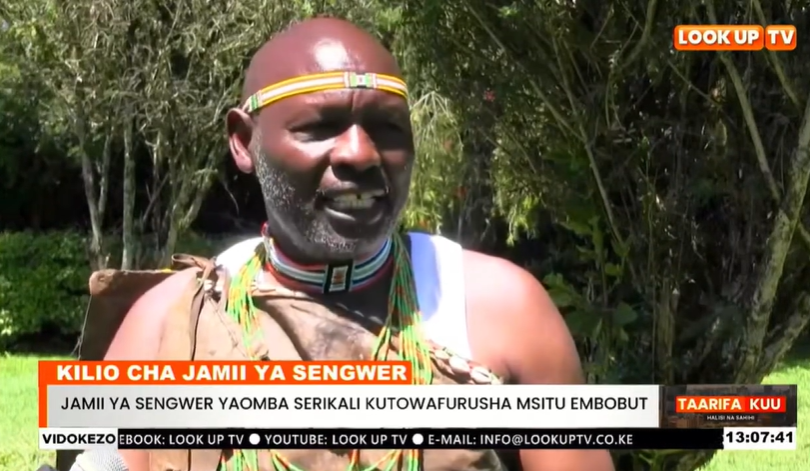
"It is not right to burn houses and claim this as conservation" says Elias Kimaiyo, a Sengwer indigenous community leader from Embobut forest who has worked tirelessly to try to persuade Kenya Forest Service (KFS) to work in partnership with the community to conserve their ancestral forest lands.
These evictions are being carried out despite a Court order, which the Sengwer secured to ensure that the forest is not destroyed and that they are not evicted from their ancestral lands. The order states that:
“...the status quo in Embobut forest as of today do remain in force, which means those who are in occupation of forest land as of today should not be evicted, but no new persons should be allowed to occupy forest land.
Court of Appeal, Kisumu, March 2021
The evictions began in spite of numerous previous attempts by the Sengwer Indigenous Peoples to collaborate with KFS and the Kenyan Ministry of Environment, Climate Change and Forestry. The Sengwer proposed to work together with the authorities to restore, conserve and protect Embobut forest from degradation and illegal activities, while ensuring that they are not evicted from their land.
For decades,the Sengwer have suffered evictions from their ancestral lands. This is a result of the Kenyan government’s outdated colonial approach to forest conservation, which relies on removing people from the land. In theory, this is in order to better protect the land. In reality, evicting communities whose way of life depends on the well being of their forests leaves their lands open to exploitation by outsiders, including by those in government agencies who are supposed to be protecting such lands. Such agencies are supported - and funded - by European and International donors, despite the fact that when land traditionally occupied by the Sengwer is under their control, it is better conserved and more biodiverse than other areas.
In a press statement from 13th May 2024, representatives of the Sengwer Council of Elders called upon the Kenyan Ministry of Environment, Climate Change and Forestry
“To review (with full and active participation of traditional forest indigenous peoples the hunter-gatherers) the Forest Conservation and Management Act 2016 to recognize the rights of traditional forest indigenous peoples to live in, manage, control and own their ancestral lands in protected areas on conservation conditions”
The press statement also calls upon donor agencies that support conservation projects in the Cherangany Hills (EU, World Bank, African Development Bank, UNDP, IUCN, IFAD, GEF, The Nature Conservancy, NETFUND, etc.) to “not subject indigenous peoples to continued human rights violations and land injustices” and respect the rights of the Sengwer as indigenous peoples, including their right to free, prior and informed consent.
Future efforts to restore, conserve and protect Embobut forest must involve collaboration between Kenyan authorities and the Sengwer Indigenous peoples. By incorporating a human rights based approach, halting illegal evictions and working together to ensure the effective management of the Sengwer’s ancestral land, the Kenyan government can achieve their conservation aims without violating Indigenous peoples’ rights.
Indigenous forest peoples in Kenya should be supported to conserve their lands by having their collective land rights recognised - as outlined in the 2016 Community Land Act - rather than being violently evicted and having their lands continuously degraded.
More information
English Transcript of Look Up TV interview video
Headline reads: CRIES OF SENGWER COMMUNITY
ANCHOR: The Sengwer community pleads with the government to have mercy and stop evicting them from Embobut forest, Elgeyo Marakwet County. The attempt to evict them by the Kenya Forest Service (KFS) is happening despite a court order allowing them to reside in Embobut forest.
COMMUNITY MEMBERS SPEAKING
They came and burnt houses, children's clothes got burnt, everything got burnt, like literally everything is over. Even today there´s nothing there. So I´m just asking - are we Kenyans or Ugandans? If we are Ugandans then take us to Uganda.
Our forefathers have lived here since time immemorial. It was after the years of the 80s that we started experiencing the burning of our houses. When the burning of houses happened, people went into the forest and later came to construct other houses. So it has been a circle of events, where the houses are burnt, after a while we construct again. And during such a time a lot of degradation on our lands was happening.
As the Sengwer community, we have our governing structures and community bylaws that guide us on how to conserve the environment. It´s very clear in our bylaws that our people should live in glades. Even in our many letters to the government, we´ve always urged the government to join us by working together to ensure that everyone living in the forest as Sengwer is moved to a glade. And that has been our stance as a community. But the Government is the problem now because it burns people in the glades forcing them to look for places to hide in the forest. We are really urging the Government to please have some talks with us. Let us all ask our people who are hiding in the forest to please come and live in glades.
K24 TV interview with English subtitles
Overview
- Resource Type:
- News
- Publication date:
- 15 May 2024
- Region:
- Kenya
- Programmes:
- Conservation and Human Rights Territorial Governance Culture and Knowledge