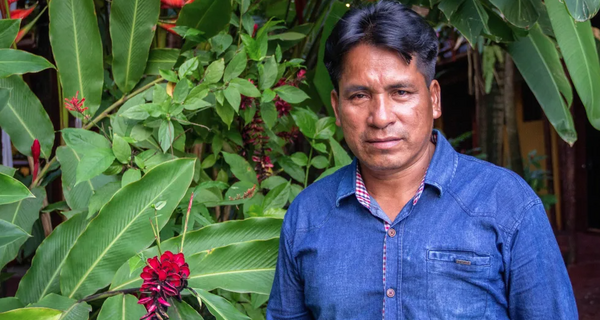

Quinto Inuma case: National Criminal Court hears witnesses over three days in Tarapoto, Peru

During three days of in-person hearings in Tarapoto, the Third National Criminal Court heard testimonies from family members, witnesses and a survivor of the attack that took the life of Indigenous leader Apu Quinto Inuma. The statements reconstruct the crime, highlight the threats Quinto Inuma faced for defending his community's territory, and reiterate his family and his community’s demand for justice.
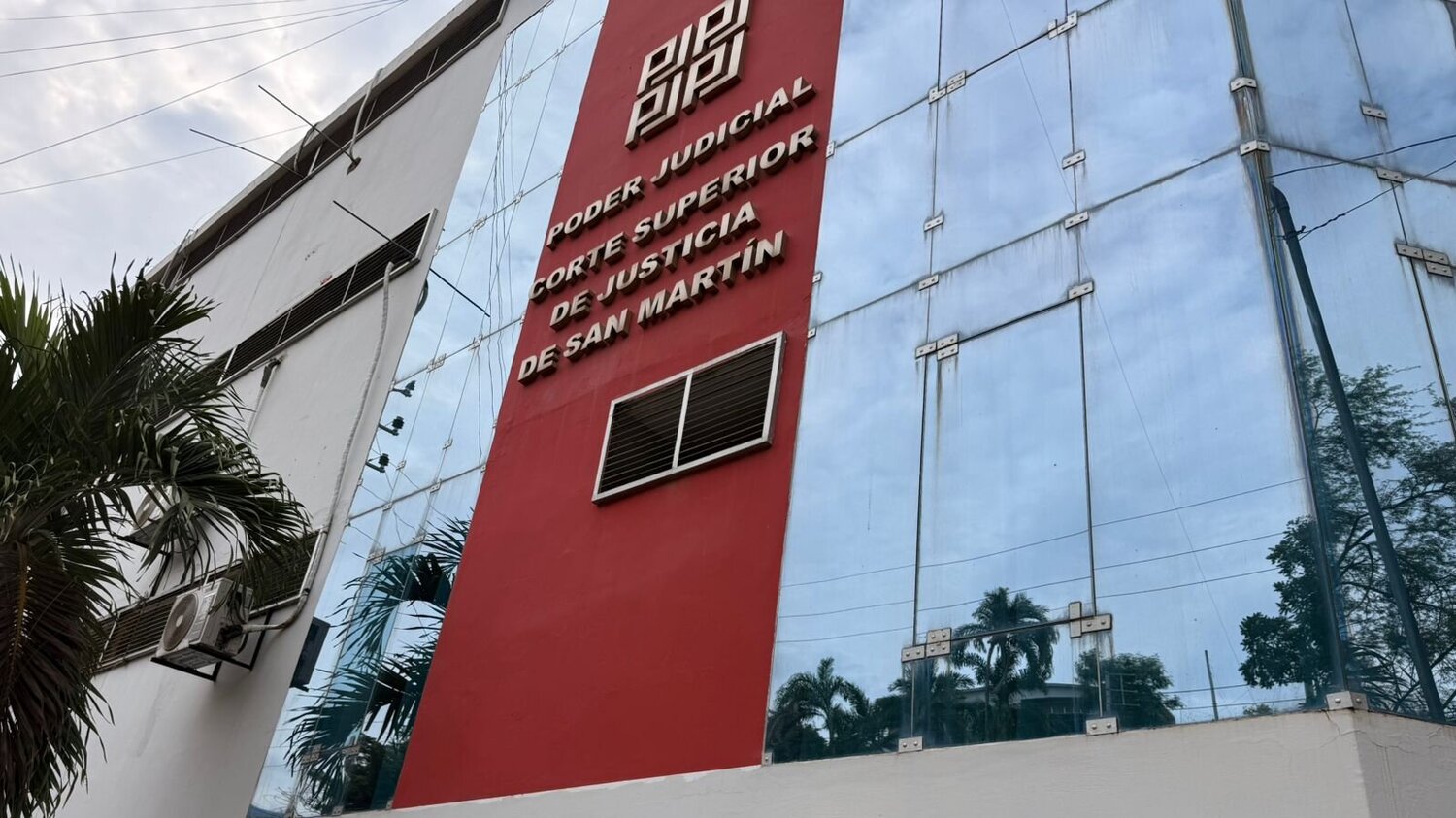
The oral trial for the case of the murder of Indigenous leader Quinto Inuma Alvarado, who was murdered in November 2023, took place between 10 and 12 March 2026 at Superior Court of San Martín, Tarapoto, in the northern Peruvian Amazon.
The Third National Criminal Court (of the National Superior Court of Specialised Criminal Justice) had travelled from Lima to Tarapoto to allow Apu Quinto Inuma’s family and other witnesses to attend in person. It was composed of judges Nayko Coronado Salazar, María Julia Benites Goicochea and Wilmer Roy Quispe Umasi, who held three in-person sessions of witness testimony.
Also present, on behalf of the Third Specialised Prosecutor’s Office against Organised Crime (FECOR) of the Public Prosecutor’s Office, were prosecutors Juan Alberto Orihuela Legonia, Paloma María Andaluz Queirolo and Gabriela Roxana Peña Calderón, together with the lawyers representing the civil parties and the defence of the accused.
On the first day, 10 March, the court heard from immediate family members of Apu Quinto Inuma, including his widow Betty Mandruma, his son Geanpierre Inuma and his nephew Meister Inuma. They recounted the events: they described how they were travelling by boat from Tarapoto to their community of Santa Rosillo de Yanayacu until they found the path blocked by a fallen tree whilst crossing the Yanayacu ravine, just before the attack on Apu Quinto. They then described how the crime took place.
The family also described the security measures that Quinto Inuma had requested from the State to safeguard his life, which ultimately failed to protect him. They also described the severe impact on the family caused by Quinto’s absence and the relocation they had to undertake to rebuild their lives in a city, far from their community, where they had to take refuge for security reasons.
In their statements to the court, Meister Inuma and Edgar Inuma (Quinto’s son) also described how, following the attack, they had encountered the defendant Limber Ríos, noting his suspicious and defiant behaviour.
On the second day, 11 March, Manuel Inuma, Quinto’s brother and current apu (leader) of the Santa Rosillo de Yanayacu community, gave evidence. Manuel highlighted Quinto’s work as a defender of the communal territory and its forests. He stated that Quinto had received serious death threats from the defendants in the trial as a result of his work to ensure his community had control over their own territory.
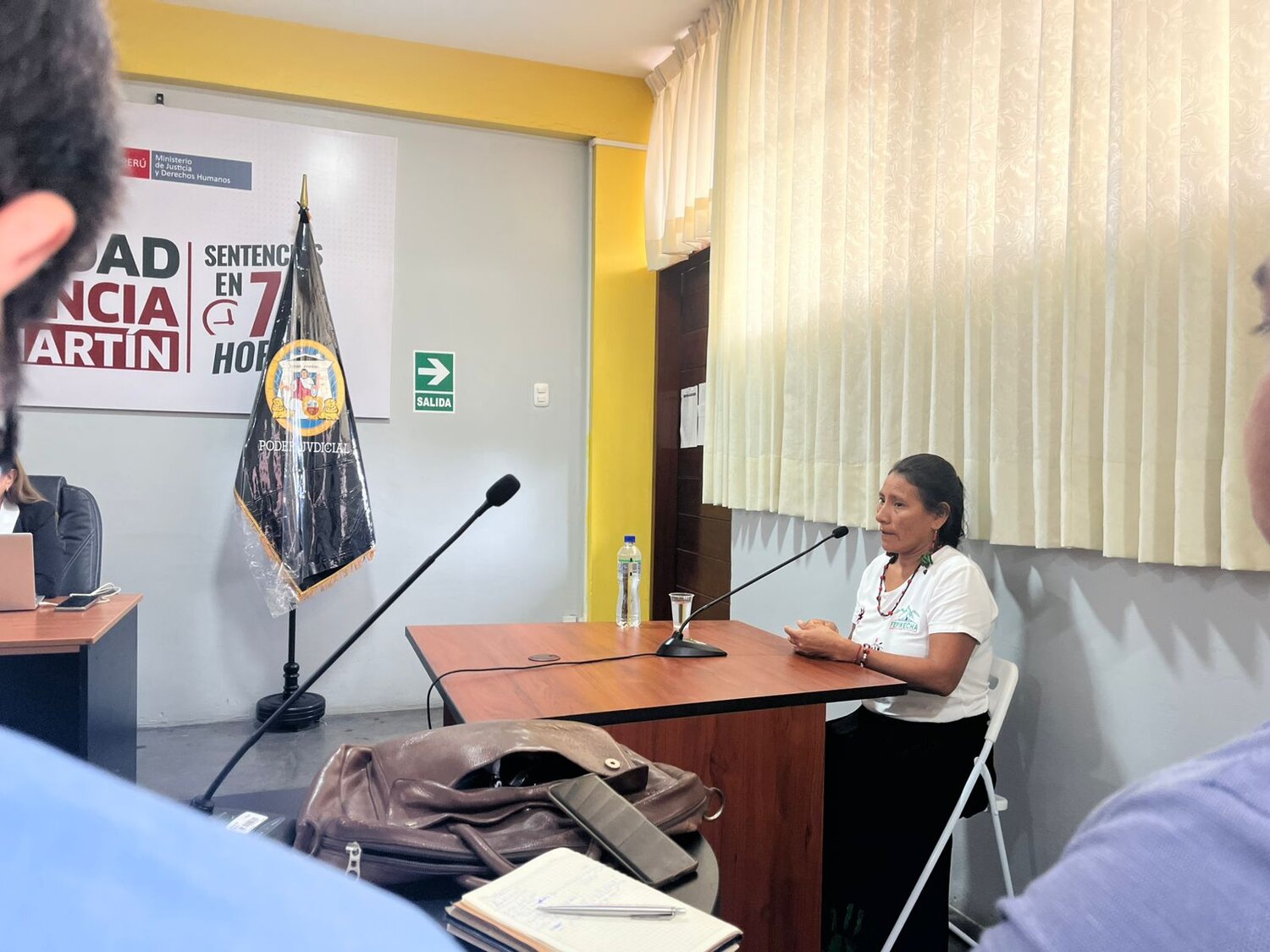
On the third day, 12 March, Axeldina Barbarán, a survivor of the attack on the boat that killed Apu Quinto Inuma, testified. Axeldina recounted how she managed to escape from the area and how she still has shotgun pellets lodged in her body.
She also described how, from the date of the crime to the present day, she has been unable to carry out her work growing peanuts and maize, and the severe psychological impact this episode has had on her.
Witnesses for the defendant Limber Ríos also gave evidence; their accounts contradicted one another and corroborated the statements made by the prosecution’s witnesses, such as the details regarding Mr Limber Ríos’s clothing and belongings on the day of the murder. Finally, the witness for the defendant Segundo Villalobos testified, also contradicting himself in his statement.
At the end of the sessions, relatives of Apu Quinto Inuma expressed their hope for justice.
We are very happy as a family. Everything that needed to be said has been said truthfully. And I believe that the truth is clearer than ever. As a family, we hope for justice and that the trial will soon be over. We would be relieved if [the defendants] were sentenced, although we will never have the peace of mind of seeing my father again. Still, at least we will have the hope that justice will be carried out," said Kevin Inuma, son of Quinto Inuma and member of the board of directors of the Federation of Indigenous Peoples of Kechwa Chazuta Amazonía (FEPIKECHA).
I hope for justice and civil reparation. That is why I hope the case will move forward as soon as possible, so that I can feel at peace, so that I can stop worrying and feeling hopeless about when this will happen. We want the guilty parties to be sentenced,” said Axeldina Barbarán, Quinto Inuma’s niece and a member of the FEPIKECHA board of directors.
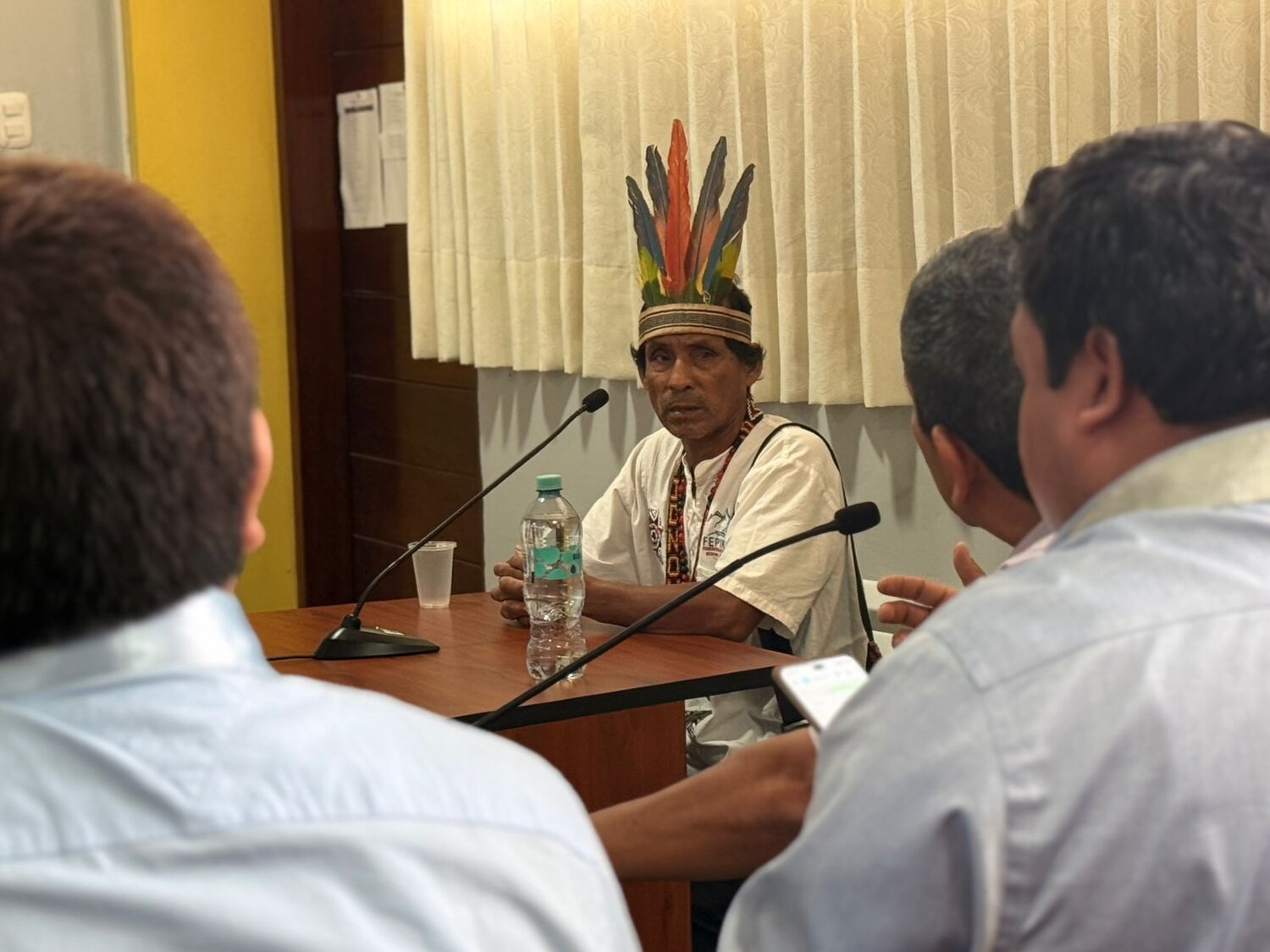
We are very grateful to the judges and prosecutors and we ask them in a very special way that justice be done. I, as the apu of the Santa Rosillo community, ask that this crime does not go unpunished. We have spent three days giving evidence and we ask the authorities to ensure that those who committed the crime against my brother are brought to justice. We will continue Quinto Inuma's legacy, the strength he left behind," said Manuel Inuma.
As the case returns to the virtual hearing phase with other witnesses, the Inuma family, the Santa Rosillo community of Yanayacu, and the national and international communities remain attentive to the outcome of the trial for the murder of apu Quinto Inuma.
This is an emblematic case for Peru, and the sentencing will have repercussions on how similar cases are dealt with in the future. This is the first time that judges have travelled from Lima to Tarapoto for a trial linked to the murder of an Indigenous defender, and it sets a historic precedent for cases involving Indigenous defenders across the country.
FPP expects the court to deliver a sentence commensurate with the gravity of the crime and reparations for the family.
Overview
- Resource Type:
- News
- Publication date:
- 13 March 2026
- Region:
- Peru
- Programmes:
- Access to Justice
- Partners:
- Instituto de Defensa Legal (IDL) Federación de Pueblos Indígenas Kechwa Chazuta Amazonía (FEPIKECHA)