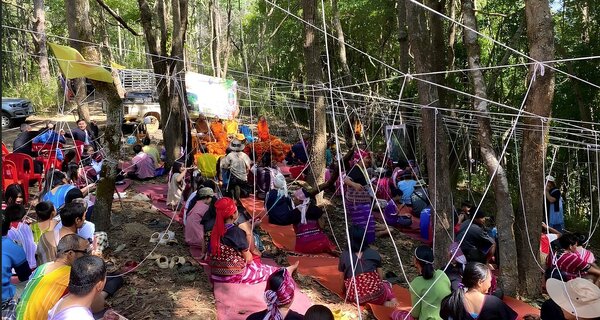

Revitalising Indigenous food systems: a story from the Cordillera region of the Philippines
Florence Mayocyoc-Daguitan is a Kankanaey Igorot from the Cordillera Philippines. She has been working in sustainable agriculture in the Philippines for many decades, and now works with Partners for Indigenous Knowledge Philippines (PIKP) as Focal Person of the Food Stream of the Transformative Pathways project.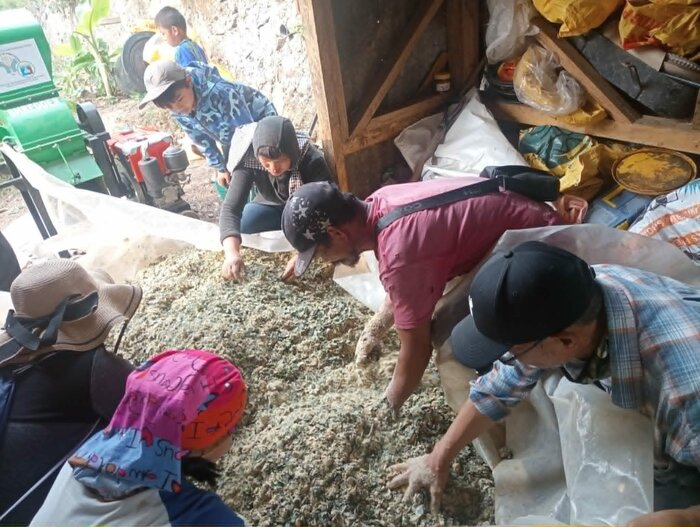
PIKP’s work on food systems started during COVID times. At the time, the chair of PIKP – an Ibaloy elder, and resident in Loakan, Baguio City – the most populous city in the Cordillera region of Luzon Island in the Philippines – saw children roaming around, playing, and thought of the idea of using this time to mentor children to have home gardens.
The children willingly cooperated and collectively learned and set up their home gardens. It was also during this COVID time that the home gardeners’ network in Baguio City organised themselves as a loose network, to advocate for urban gardening. With the travel restrictions, home gardens were very relevant, because it meant having fresh vegetables in your own garden, so you didn’t have to go to the market. Some members of the network were supported by PIKP.
And so when we at PIKP conceptualised the Transformative Pathways project, a partnership with FPP and Indigenous organisations across five countries, food systems were very much on our mind and became a central part of our work within that project.
The reality is that since colonial times, there has been a lot of interference with our food systems in the Philippines. In spite of this, Indigenous Peoples in particular persevered with Indigenous food systems – although these were also slowly weakened. Our work seeks to support communities to strengthen them.
My role is more of a facilitator of participatory action research. I facilitate a process that allows a community or group to look at what’s happening in their food system. From there, they define what pathways to take.
For example, in Besao, Mountain Province, we work mainly with the Payew Indigenous community within their ancestral domain. When we started research there, the community told us that as late as the 1980s they had been food sovereign and food sufficient.
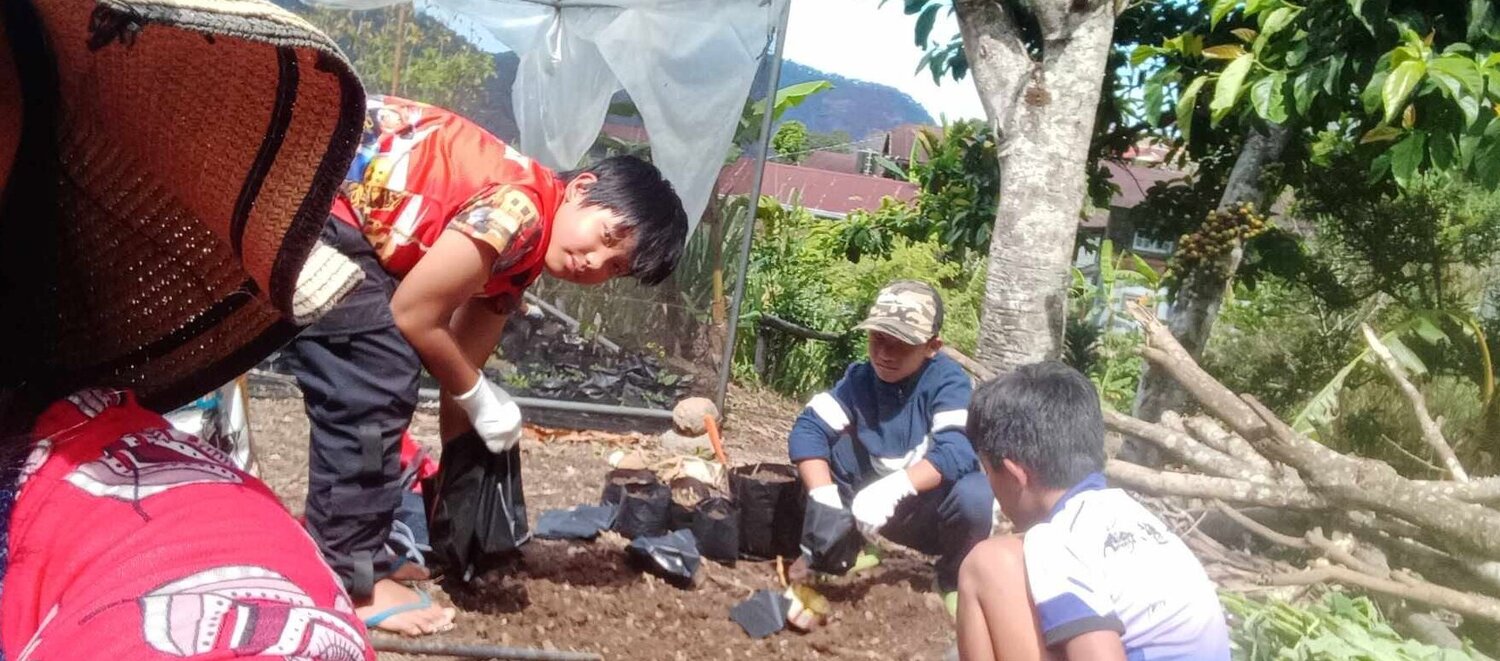
Credit: Payew Indigenous Farmers’ Organisation (PIFO)
Whereas now in the 21st century there is the import of food, canned goods, frozen foods, agro-chemicals, animals feeds, even fresh vegetables, fruits, rice. They now depend on the stores and market for food they had been able to supply for themselves in the past.
During the 1970s, things started to change as able-bodied (male) members of families were recruited for paid work in the mines, leaving behind women and children to take care of the farms and household work.
The community in Besao still had food security – because they had the purchasing capacity, because of the income from the mines. But people continue to leave the community to search for cash-based occupations, and few people are left to manage all the farmlands.
Faced with this situation, for convenience, farmers in the community embraced the use of synthetic fertilisers, although fortunately they didn’t also adopt monoculture planting. Then later, in the 21st century, people also started using more chemicals – pesticides and herbicides.
When the community reflected on the status and trends in their food systems, they realised – yes, we have plenty of choices nowadays, but can we say it has increased our wellbeing? While there was no explicit answer, they all agreed that illnesses have multiplied – high blood pressure, cancer, kidney trouble; that the change in diets had negative impacts on health.
The community feels that solidarity is weakening, the values associated with food systems are weakening. They felt that the changes were not all progress – some are bad.
So, after reflecting on this, the Payew community resolved to revive their Indigenous food system. What they did immediately was to revive soil fertility, using green manure. The elders wanted to just go back to what they had been doing – green manuring and incorporating compost from plants and animal manure. The younger farmers want to innovate as things have changed – there are far fewer people, the traditional agro-calendar has changed and so some innovations are needed.
When people moved to natural farming after the soil has been degraded, it didn’t work well straight away. For some who experimented on biofertilisers, it took three croppings for them to see their crops being vibrant and happy. Some people in the community were discouraged. But others persevered and were able to show that farming systems rooted in Indigenous wisdom of making use of resources within the community – for example using animal manure as fertilisers and using diverse plants as animal feeds – can be competitive with farms based on commercial farm inputs. Now more people are becoming interested.
In PIKP we believe with conviction that that Indigenous knowledge can be part of solving the multiple crises of this globalised world. We also recognise the need for partnership with others. The work we do, in partnership with FPP, allows us to provide spaces for discussion and reflection with communities, enable farmers to learn from one another, link with other groups, support their advocacy work. These are the kinds of work that the government usually does not support. We also provide groups with seed capital to revive, innovate and develop Indigenous food systems. But sharing knowledge, building networks, and providing communities with space for reflection is a key element in enabling them to exercise their autonomy.
Overview
- Resource Type:
- News
- Publication date:
- 14 July 2026
- Region:
- Philippines
- Programmes:
- Culture and Knowledge Conservation and Human Rights
- Partners:
- Partners for Indigenous Knowledge Philippines (PIKP)
Related news