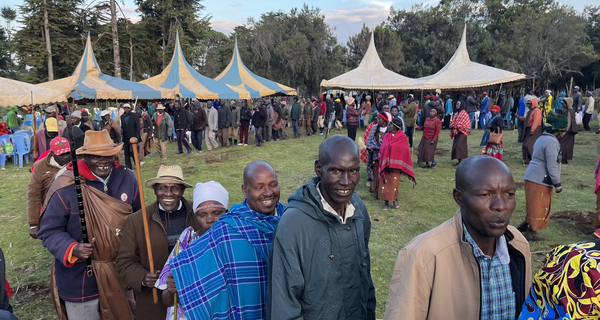

From dispossession to territorial self-demarcation: the case of the Kichwa people and protected areas in the San Martin region of the Peruvian Amazon

In the territories of the Kichwa people of the San Martin region, the Peruvian State created two protected areas without their prior, free, and informed consent, before the government had properly recognised most of the Indigenous communities and collectively titled their lands. Despite their ancestral occupation, which means that, under national and international law, they are recognised as the owners of these territories, the Kichwa communities were rendered invisible by the Cordillera Azul National Park (PNCAZ), established in 2001, and the Cordillera Escalera Regional Conservation Area (ACR-CE), established in 2005. At the time of their creation, the technical documents for both protected areas only considered the presence of communities that had already been formally recognised and titled, ignoring other Kichwa settlements that had not gone through these processes. The imposition of these protected areas on their territories would become the main obstacle to their self-determination and land titling processes in the decades to come.
This report summarises the resistance and proposals of the Kichwa people of San Martin, Peru, to the dispossession of their territories by the PNCAZ and the ACR-CE. It also details legal, political and technical advocacy with the Peruvian state and other traditional conservation actors, and the strategy of territorial self-demarcation which the Kichwa communities and their representative organisations have undertaken in their struggle to demand restitution, reparations and benefits, and defend their rights in the context of conservation while exercising their autonomy and self-determination.
Key points
- The situation of the Kichwa people of San Martin exemplifies how state-run protected areas can affect Indigenous Peoples’ use of and access to land, as well as their cultural practices. The Kichwa have been severely impacted by the creation of the PNCAZ and ACR-CE on their traditional territories.
- However, the Kichwa communities and their representative organisations have created agreements and proposals that promote rights-based conservation in Peru, transforming the traditional exclusionary model into a more intercultural and just one.
- Faced with the Peruvian state’s failure to comply with indigenous rights and the lack of a willingness to engage in dialogue, the Kichwa people have chosen to strengthen their governance and control of their territories through autonomy and self-determination, including the self-demarcation of their ancestral territories within the protected areas.
- Thus, the Kichwa struggle aims to transcend outdated paradigms of exclusionary conservation. Instead, their approach values the opportunities that conservation with a true rights-based approach will offer in the face of the state’s climate and biodiversity commitments.
- In the face of the rollback of indigenous rights in Peru, international organisations and donors must strengthen their due diligence so as not to facilitate the violation of the human rights of the Kichwa and other Indigenous Peoples affected by the imposition of protected areas. It is therefore urgent to revolutionise the Peruvian protected areas authority’s concept of co-management towards one of restitution and respect for rights.
This paper is number 9 of the briefing series Transforming Conservation: from conflict to justice.
Información General
- Tipo de recurso:
- Briefing Papers
- Fecha de publicación:
- 9 octubre 2025
- Región:
- Perú
- Programas:
- Gobernanza territorial Cultura y conocimientos Conservación y derechos humanos
- Socios:
- Federación de Pueblos Indígenas Kechwa Chazuta Amazonía (FEPIKECHA) Instituto de Defensa Legal (IDL) Federación de Pueblos Indígenas Kechwas del Bajo Huallaga San Martín (FEPIKBHSAM) Consejo Étnico de los Pueblos Kichwa de la Amazonia (CEPKA)