
Walking Together: What does good allyship with Indigenous Peoples look like?
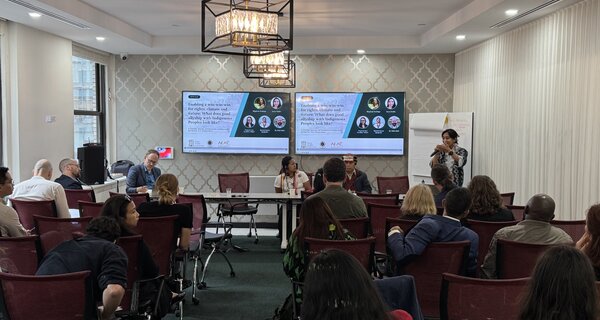
On June 17, 2026, FPP hosted a webinar to further discuss what ‘good allyship’ involves, building on the launch of the Valuing Allyship report and discussions held at New York Climate Week in October 2025.
Joyce Godio, an independent consultant-researcher from the Cordillera, Philippines, and the moderator of the webinar, explained that the Allyship publication started as an internal review of FPP’s flexible community support models. FPP also tried to reflect on its own position within the funding ecosystem and particularly the growing conversation about channelling funds or direct funding to Indigenous Peoples and grassroots organizations.
The review highlighted that for recipient Indigenous Peoples’ organizations and local organizations, it is not only how much funding is allocated but also how it is delivered.
The stories primarily showed that flexible and trust-based support is not only feasible but it is also essential to achieve enduring change at the grassroots level”
Joyce Godio.
The stories in the report, based on Joyce’s interviews with FPP country partners, revealed four main insights:
- Trust is built over years, and this trust sustains transformation in land rights and community situations.
- Flexibility in funding fuels responsiveness. It is key that partners can act when something unexpected happens, something that could not have been foreseen while writing a proposal.
- Funding should follow community priorities and not donor templates.
Sustainability is reframed through shared accountability - not only financial continuity but also building resilient community institutions and nurturing leadership. Shared accountability also means sharing not only in the successes but also the mistakes and the challenges.
Joyce also reflected on the term itself:
Ally as a term hopes to capture the relationship that is built on trust and less of the transactional relations that are often associated with an intermediary as an actor within the context of funding. Ally reaches for something different. It points to a relationship that is built on trust, shared purpose and mutual accountability rather than just a position or rather than just an actor within a funding chain”.
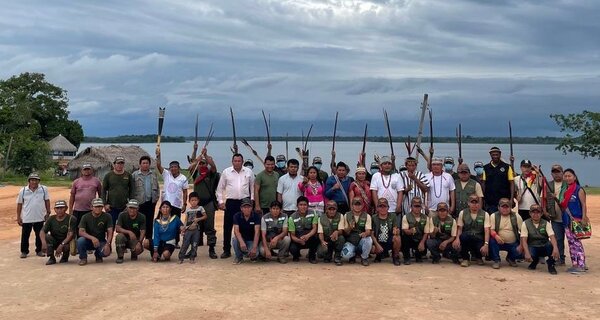
Cristina del Rocío Gavancho León (IDL, Peru) spoke about allyship and support around the case of Quinto Inuma Alvarado. Quinto was an Indigenous leader of Santa Rosillo de Yanayacu community, in the San Martin region of the northern Peruvian Amazon who was murdered on 29 November 2023. He had long been under threat because of his resistance to illegal economies in his territory. In conversation with Joyce, Cristina spoke honestly about risks that support organizations can create:
“There were organizations, before the assassination, who were present to make the case visible and this generated a difficult context of exposure for the Indigenous Peoples. There have been civil society and donors who gave the case a lot of visibility, putting indigenous peoples at risk. […] And they didn’t respond when there were consequences. So, following the assassination, these groups were largely absent, now that we are looking for justice and healing.”
Emil Ola Kleden of Yayasan Masyarakat Kehutanan Lestari (YMKL, Indonesia) reflected on the challenges for support organisations when applying the concept of self-determination and promoting free, prior and informed consent:
“It means that we do not interfere with what option they will take, the community that we work with has the right to make a choice and sometimes this is not what we expect to happen. So that's really challenging in our work. Communities we work with in Sumatra, Kalimantan, North Molucas and in Papua have made choices to work on agroecology for example or choose agrarian reform for their land. They may choose individual title or village forest that is under state control. We respect their rights to make decisions on their own”.
Emil also raised the question:
Do we still have responsibility to the community we work with after the project ends? We helped them to get donor support, but the project runs for 3 years. The community expects that we can stand with them beyond the three-year project period. Allyship for me is a process that has a time consequence and is a process of building trust.”
Finally, Teresa Chemosop (coordinator of the East Africa Indigenous Women-Led Assemblies (EAIWA), Kenya) talked about the power of truly community-led processes, and how allies must learn to follow rather than lead. Allies are still supporting, but they are not taking up the space. In the case of the East Africa assemblies, the agendas are not fixed and the discussions are very flexible, allowing them to evolve according to emerging topics. They were lucky to have donors who were supportive and comfortable following instead of leading.
In the chat and Q&A sections, the session drew many affirmative comments and positive feedback. Some participants raised concerns about ‘financial capture’ (NGOs who present themselves as allies but capture funds intended to go to the grassroots level) and NGOs occupying policy spaces where Indigenous and forest people's organizations should be speaking.
The discussion concluded that allyship is more than a concept - it is a set of conditions: trust built over years, funding that follows community priorities, long-term relationships, and shared ownership of successes, risks and mistakes.
Información General
- Tipo de recurso:
- News
- Fecha de publicación:
- 21 julio 2026
- Región:
- Indonesia Kenia Perú
- Socios:
- Yayasan Masyarakat Kehutanan Lestari (YMKL) Instituto de Defensa Legal (IDL)
Noticias relacionadas