

Indigenous Peoples of the Amazon call on the Peruvian state to recognise their autonomous self-protection mechanisms
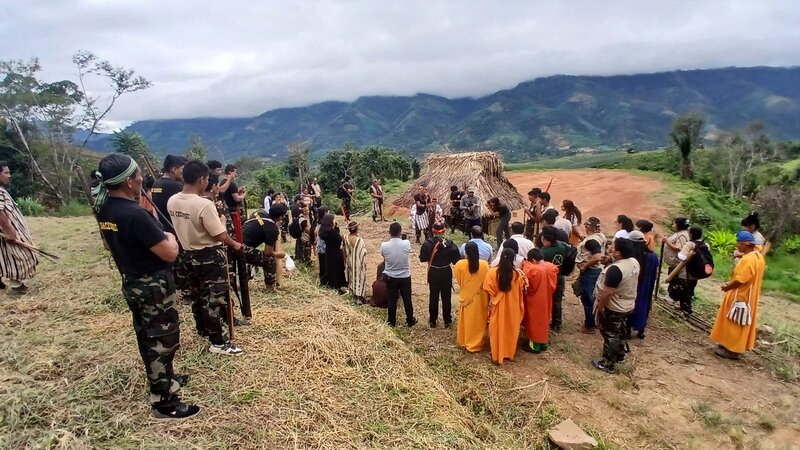
On May 22-23, representatives from ten organisations representing four Peruvian Indigenous Peoples came together to discuss Indigenous Amazonian Security (SIA) in the Indigenous Asháninka community of Santa Barbara, Satipo. The “Meeting on Amazonian Indigenous Security (SIA - Obayerite Asháninka) for the strengthening of indigenous justice administration and communal governance in the Central Jungle” was a space to reflect on and share experiences of their existing territorial self-protection mechanisms, and how they could grow stronger together through solidarity.
The meeting concluded with the signing of the Santa Bárbara declaration, which sets out recommendations to the state to protect these self-defence mechanisms, as well as calling for the urgent approval of Bill 2062-2011, which recognises Indigenous Peoples’ right to autonomous organisation for Indigenous amazonian security.
The Asháninka, Shipibo-Konibo, Kakataibo and Kichwa Indigenous Peoples, from Junín, Ucayali, Huánuco and San Martín regions hope the Bill will provide a regulatory framework to safeguard their own self-protection mechanisms in a context where illegal activities, threats and murders plague Indigenous territories, with the state repeatedly demonstrating its inability to provide the protection needed.
The meeting was organised by the Central Jungle Indigenous Communities’ Confederation (CECONSEC) and the SIA CECONCEC, with the support of the Amazonian Centre for Anthropology and Practical Application (CAAAP). Participating organisations included the Regional Organisation of Amazonian Nationalities of the Central Jungle (ORNASEC), the Indigenous Guard of the Kakataibo People of Peru (GIPKA), the Regional Indigenous Guard Organisation (ORGI) of the Shipibo Konibo nation, the Asháninka Confederation of the Tambo River (CART), the Federation of Campa Ashaninka Native Communities (FECONACA), the Organisation of Asháninka Communities of the Río Negro (OCARN), the Federation of Kechwa Chazuta Indigenous Peoples of the Amazon (FEPIKECHA) and the Ethnic Council of the Kichwa Peoples of the Amazon (CEPKA). Similarly, delegates from the Institute for Legal Defence (IDL) and the Forest Peoples Programme (FPP) participated as technical advisers.
Key topics addressed at the meeting
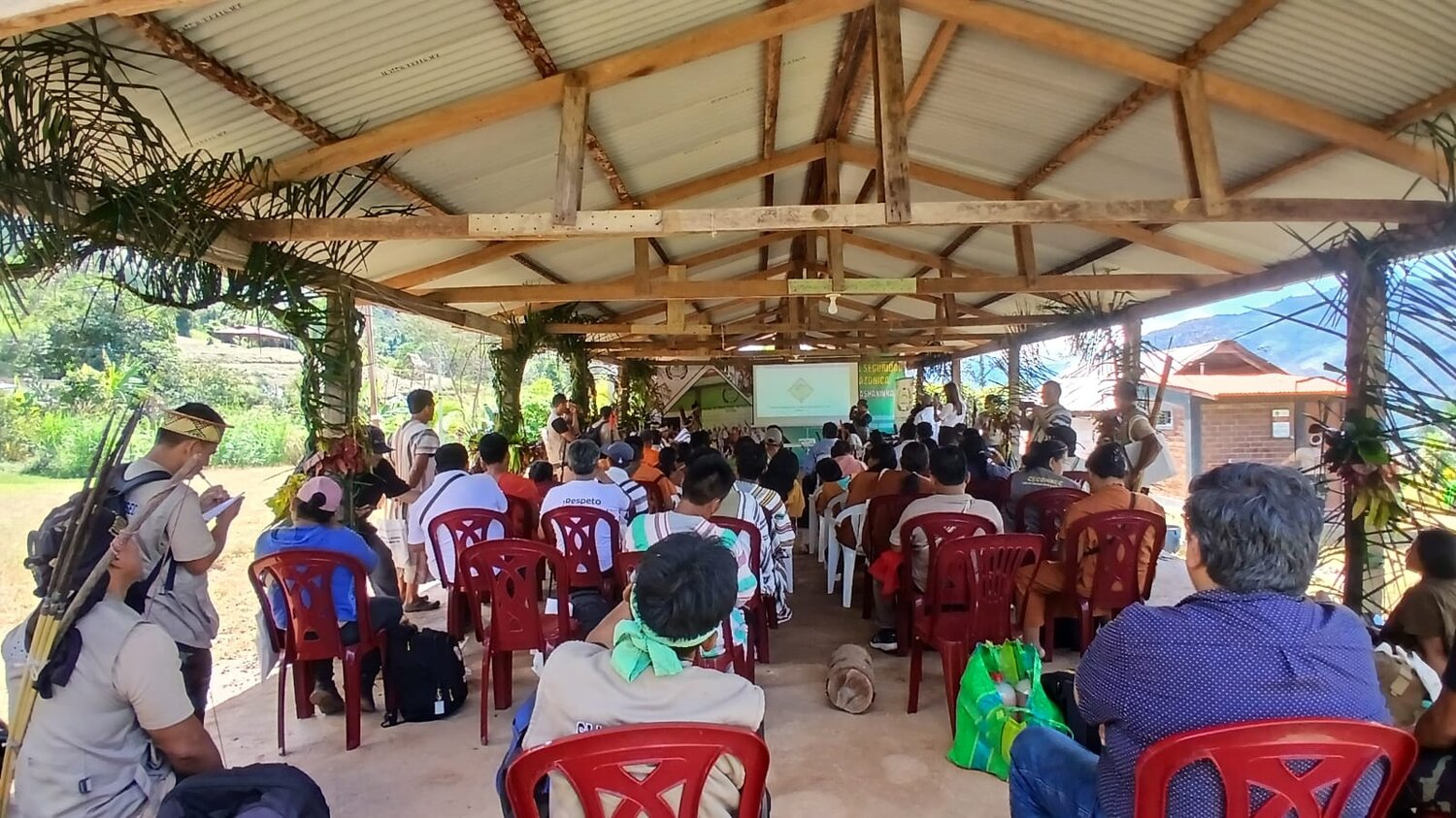
The meeting addressed the creation and organisation of the various initiatives on Indigenous security in the Amazon, including Indigenous guard groups and other self-protection mechanisms, against the backdrop of the historical threats they have faced in their territories and their most recent political demands.
Lessons learnt and recommendations were also shared amongst the peoples, emphasising respect for their own autonomy; the need for ongoing training of leaders through Itinerant Schools; the application of Indigenous justice without external interference or the risk of criminalisation; the defence of territory through concrete actions against illegal logging, fishing and mining, land trafficking and other such activities; the strengthening of the SIA; and solidarity and coordinated work between peoples where threats affect the Amazon as a whole.
The delegations also discussed the varied backgrounds of members of the various self-protection mechanisms, the scope of communal justice and ordinary justice, the need to gradually amend communal statutes, the use of communal records for interventions, and the logistical shortcomings they face, such as a lack of equipment, instruments and technological tools for forest monitoring and other purposes.
A central focus of the meeting was a review of the process and current status of Bill 2062-2021-CR, “Law on the Recognition of the Autonomous Organisation for Indigenous Amazonian Security”, presented by the current Member of Parliament and Senator-elect, Silvana Robles Araujo, approved by the Commission on Andean, Amazonian and Afro-Peruvian Peoples and Ecology, and which has had a substitute text since 2025. It is currently awaiting scheduling for debate in the Plenary Session of the Congress of the Republic as soon as possible.
“As Indigenous Peoples, we are telling the State to recognise our own security system. We are not asking for permission, but rather saying ‘recognise us within the framework of our autonomy’”. Teddy Sinacay, president of CECONSEC.
The meeting was also attended by representatives of the State, including from the justice system, who reported on the role and actions they are undertaking in support of Indigenous Peoples, human rights defenders and community surveillance systems in the Amazon.
Participants included the Decentralised Directorate of Culture (DDC) of Junín from the Ministry of Culture, the coordination of the Junín Regional Committee of the Inter-sectoral Mechanism for the Protection of Human Rights Defenders from the Ministry of Justice (MINJUSDH), the Provincial Sub-Prefecture of Satipo, the District Sub-Prefecture of Satipo, the Presidency of the Board of Senior Prosecutors of the Central Jungle Prosecutorial District, the National Office for Justice of the Peace and Indigenous Justice (ONAJUP), the Headquarters of the Chanchamayo Police Division, and the Sub-Directorate for Indigenous Peoples of the Regional Government of Junín.
The Santa Barbara Declaration
Finally, the Meeting concluded with the signing of the Santa Barbara Declaration. The full declaration can be found here in Spanish, and the main points are summarised below:
The SIA’s commitment to the comprehensive defence of territories, forests, rivers, streams, livelihoods and sacred spaces is reaffirmed, whilst respecting the organisational structure of the Indigenous movement.
It demands recognition of the SIA as an autonomous organisation of Indigenous Peoples and calls for its approval under “Draft Law No. 2062/2021-CR on the recognition of the autonomous security organisation of Indigenous or native peoples located in the Peruvian Amazon”.
It rejects any act of criminalisation and persecution of Amazonian Indigenous Peoples.
We demand the implementation of specialised protection mechanisms for Indigenous defenders, with an intercultural, territorial and gender-based approach, particularly in contexts of high conflict linked to illegal economies, extractive activities and others.
We call upon the State and cooperative partners to provide logistical support for the SIA and other Indigenous self-protection mechanisms, such as clothing, camping equipment, technological equipment and others.
We call on all branches of the Peruvian State to strengthen intercultural coordination and collaboration between Indigenous justice and the ordinary justice system.
We reaffirm our commitment to building unity among Amazonian Indigenous Peoples to collectively defend our rights, territories and ways of life in the face of the threats affecting the Amazon.
Overview
- Resource Type:
- News
- Publication date:
- 29 May 2026
- Region:
- Peru
- Programmes:
- Territorial Governance Access to Justice
- Partners:
- Consejo Étnico de los Pueblos Kichwa de la Amazonia (CEPKA) Organización Regional Guardia Indígena (ORGI) Federación de Pueblos Indígenas Kechwa Chazuta Amazonía (FEPIKECHA) Instituto de Defensa Legal (IDL)