
Let communities lead: Indigenous voices on resilience, sustainability and allyship
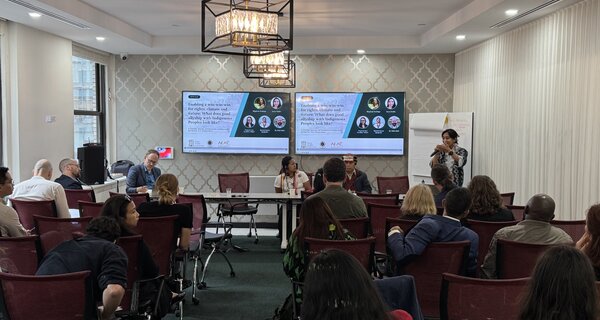
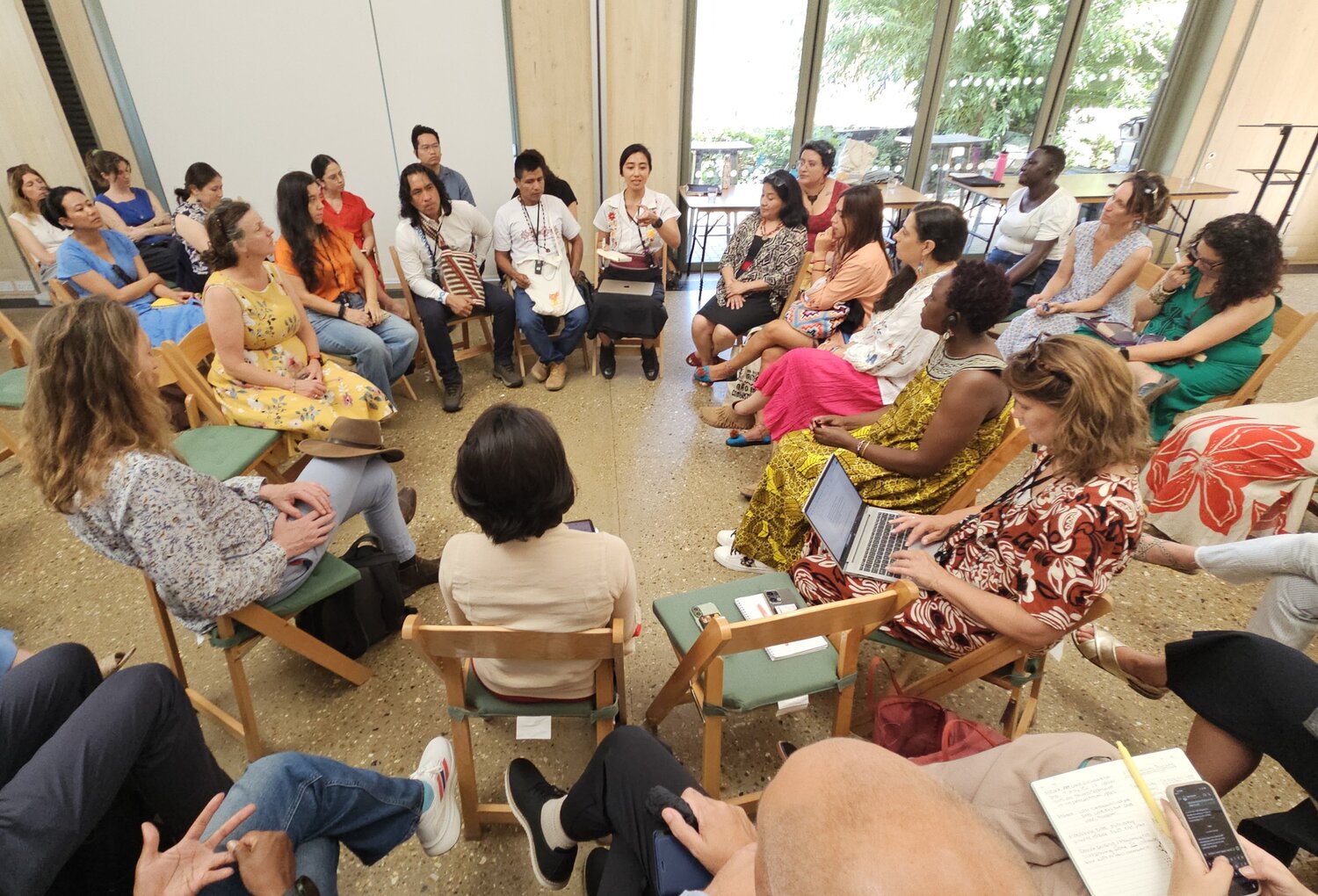
Forest Peoples Programme (FPP) and Indigenous Peoples’ representatives from different countries co-organised a roundtable event at Camley Street Natural Park, as part of London Climate Action Week (20-28 June) entitled Enabling resilience: A roundtable discussion on building sustainable Indigenous Peoples’ institutions.
Bringing together Indigenous speakers from Indonesia, Kenya, Colombia and Peru, alongside donors, allies1 and representatives from Indigenous and civil society organisation and networks, the roundtable offered space for an honest conversation that explored how ‘capacity building’, ‘accountability’ and ‘institutional development’ are usually defined and by whom. The current global political situation and funding landscape were an important backdrop for this open dialogue.
Whether from the donor perspective or grassroots leaders, who have been recipients of support, participants reflected on a central learning question: what kind of support from allies and donors genuinely strengthens Indigenous movements, both now and for generations to come? This question aimed to explore what organisational resilience, capacity-building and sustainability really mean for Indigenous Peoples, and as one donor participant questioned, is it actually the donors who need capacity building?
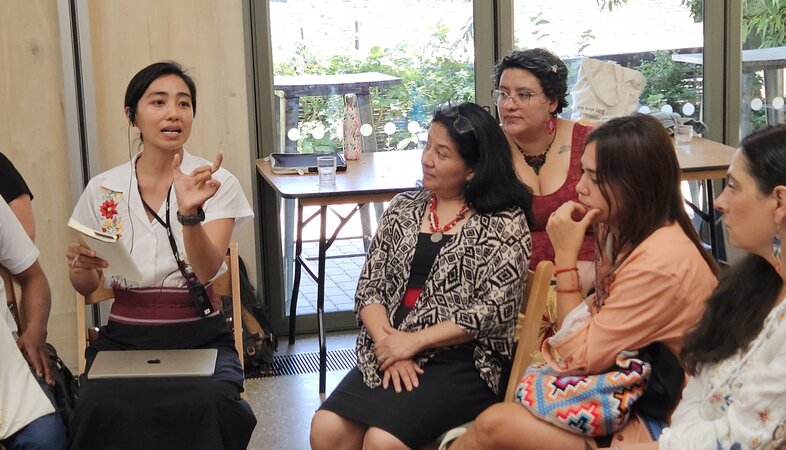
The session was facilitated by Joyce Godio, an Indigenous Filipina advocate for social justice and the writer of a forthcoming FPP briefing on the topic. Throughout the discussion, the Indigenous leaders consistently expressed the importance of building long-term relationships, built on trust, flexibility and the freedom for Indigenous Peoples to decide and lead their own priorities.
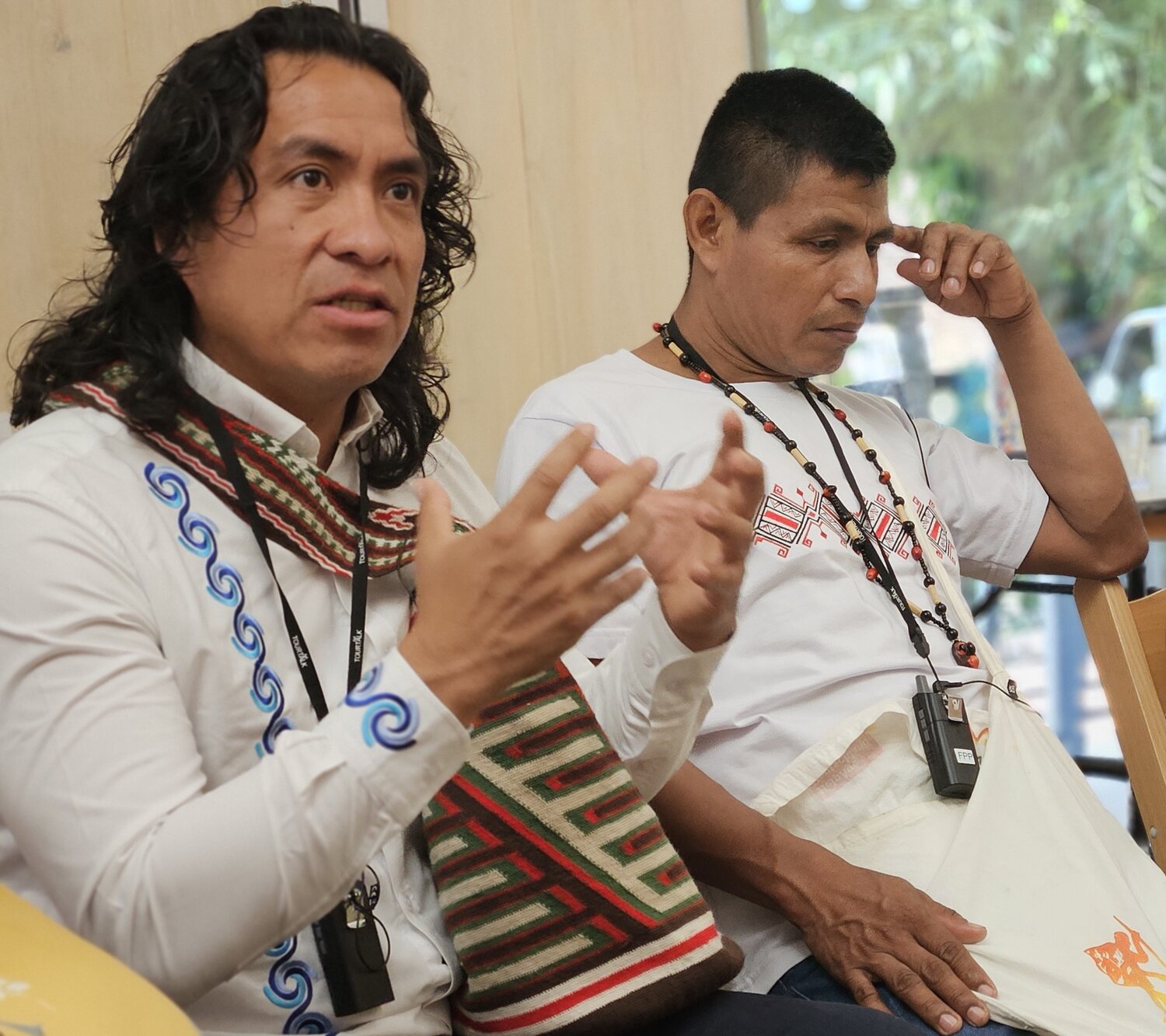
For Apu Quimiston Apagueño Ojanama, representing the Kichwa people in Peru, meaningful solidarity responds to priorities identified by communities themselves. Since 2001, his federation has worked to secure legal recognition of Indigenous lands, with support from allies including FPP, helping around 80% of communities obtain land titles. Apu Quimiston said,
Our territories are our source of life; without access to them our rights continue to be violated.”
Apu Quimiston felt that accompaniment for Indigenous entrepreneurship and inclusion initiatives for children has also helped to strengthen resilience. Further support for knowledge sharing workshops for children and youth would enable Kichwa peoples to maintain and value ancestral customs and traditions so that their culture is not lost.
Camilo Niño Izquierdo, an Arhuaco leader from the Sierra Nevada de Santa Marta in Colombia and representative of the National Commission of Indigenous Territories (CNTI), described the importance of meaningful allyship, through accompanying long-term processes, built on trust and mutual respect.
Colombia’s peace agreement brought hope, but more than 10 million Colombian hectares are still not legally recognised as Indigenous territories. “I can be Indigenous here, I can be Arhuaco here, but without territory, which is the foundation of the community, we have nothing,” he said.
Indigenous leaders in Colombia continue to face physical violence and attacks on their customs, knowledge systems and ways of thinking. To address these systemic challenges, Camilo argues that donors and allies must act in solidarity with long-term initiatives. “When the [short-term] initiative is over, the impact is also over. Long term processes are necessary to benefit the community,” he explained.
He describes resilience as “remaining as peoples”, which requires sustained accompaniment from allies that enables communities to strengthen their livelihoods, independence and governance. Camilo stated, "we are not disappearing as Indigenous Peoples, we will continue to fight – we can help to mitigate climate and restore nature, we can give a lot to humanity. But those contributions are often rendered invisible."
Camilo explained "Indigenous peoples today are not the same as they were 500 years ago. How can we design better interventions within Indigenous territories?" He believes the answer lies in Indigenous leaders taking the lead from the beginning and determining the direction of progress. He concluded that:
Allyship is working together – everyone has something to offer and bring…by working together we can amplify impact.”
Teresa Chemosop, Coordinator of the East Africa Indigenous Women Led Assemblies, from the Ogiek of Mount Elgon in Kenya, believes that meaningful allyship begins by recognising that Indigenous communities already have the knowledge and capacity to lead. She said:
Communities are told they lack the capacity to manage projects before being given the opportunity to demonstrate their leadership.”
Through women's assemblies, Indigenous women have created spaces to organise, build solidarity and strengthen leadership on their own terms. In contexts where women cannot speak openly in front of men, these assemblies enable them to share experiences, identify priorities and exercise collective leadership. For Teresa, the most valuable allies accompany these processes without directing them.
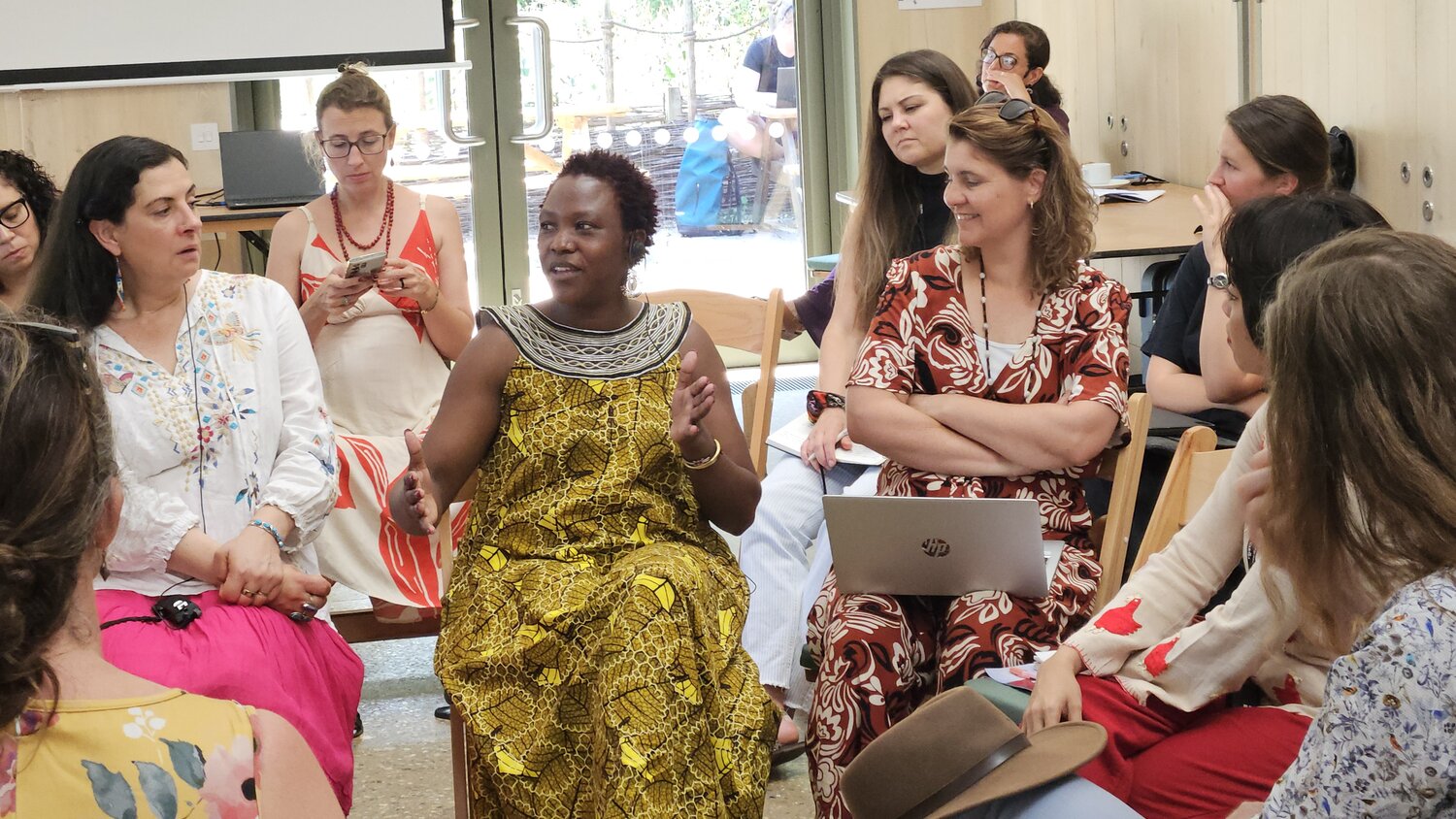
She explained that allies often arrive with their own objectives, leaving Indigenous women's leadership insufficiently recognised and appreciates support from allies, such as FPP, who stand in solidarity rather than imposing their own agendas.
An Indigenous audience participant agreed and warned that organisations often occupy spaces that should belong to Indigenous Peoples, reinforcing non-Indigenous technocracies while excluding Indigenous leaders from decisions affecting their communities.
She also criticised donors who prioritise technical reporting and indicators over investing in existing Indigenous leadership. Describing this as a ‘non-Indigenous rescuer’ approach, she argued that meaningful allyship is not about speaking on behalf of Indigenous Peoples, but ensuring they have the resources, opportunities and recognition to lead.
An Indigenous trustee from a donor organisation echoed these sentiments, suggesting that when we talk about solidarity, an ally should not come with their own agenda. She asked "how can solidarity be built collectively, not in a fragmented way?"
Another participant from a donor organisation, offered a slightly different perspective. Whilst acknowledging that Indigenous priorities should come first, he said that some donor organisations have very particular aims and so it's important to find the 'sweet spot' where common objectives can be found.
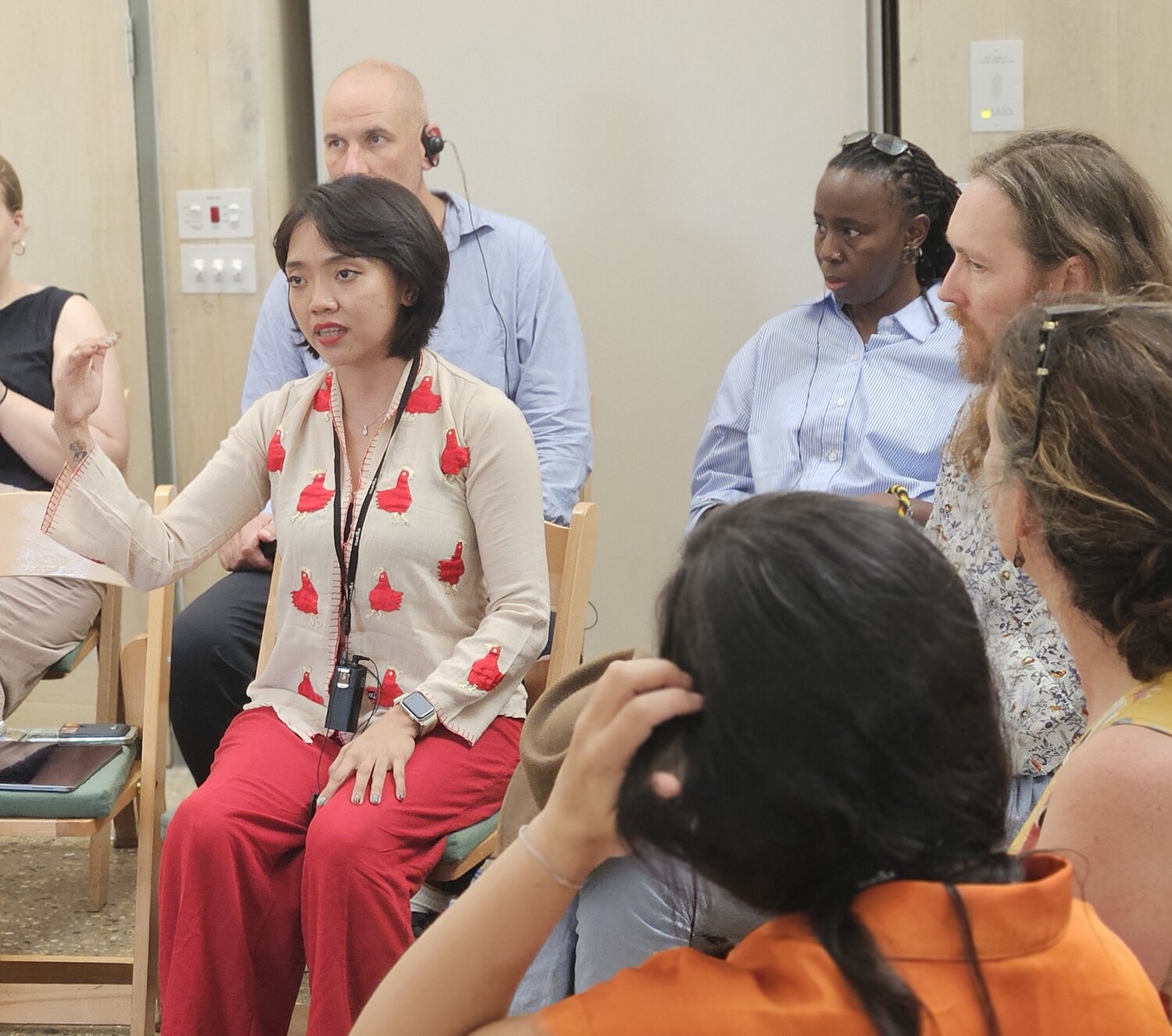
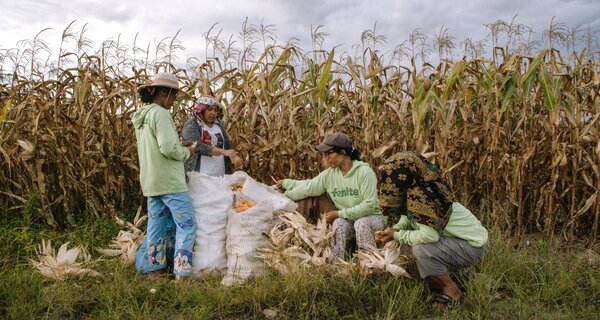
Pramasty ayu Koesdinar (Dinar) from Bengkulu, Sumatra, in Indonesia, representing AKAR Global Initiative, posed the question, “what alternative paths exist to escape the weaponisation of food and the pressures of capitalism?” She explained that capitalism leaves women with little time to rest, recover or build resilience, and that financial independence is essential to develop the capacity to respond to crises.
The starting point to achieve this, she said, is “supporting communities to recognise and understand the challenges they face, giving them space and confidence to talk about their fears for the future, and then asking them what they need to face these crises," whether leadership training or other forms of accompaniment.
Dinar felt that strengthening resilience is also about ‘rebuilding the commons’: rebuilding care and relationships amongst community members, preserving communal ownership and collective assets, maintaining cultural practices and fostering solidarity.
Another audience participant, agreed with the idea of providing broader community solidarity and felt that some allies offer help that is too individualistic, for example supporting only individual human rights defenders.
Across all contributions, participants agreed that the global political and economic landscape has shifted, with a heightened resistance to rights-based approaches, which needs to be countered by global solidarity where everyone has a role to play. Dinar summed this up:
The world is in crisis – let’s make this ecosystem help us to meet our sisters and brothers and build a bridge against the same enemies.”
The strongest partnerships are those that create space for Indigenous leadership to flourish. Resilience cannot be separated from territory, freedom and self-determination. It grows from the communities themselves and is strengthened through accompaniment and allyship built on trust, respect and solidarity.
1 ‘Allies’ is the term used by FPP to refer to organisations such as FPP that act as a bridge between donors and Indigenous Peoples, which are more commonly referred to in the NGO sector as ‘intermediaries’. The nature of this relationship is one of the issues that this event aimed to explore and has been discussed in FPP's Valuing Allyship report, with a second report in development.
Overview
- Resource Type:
- News
- Publication date:
- 30 July 2026
- Partners:
- National Commission on Indigenous Territories (CNTI) Akar Global Inisiatif
Related news