

Press Release: Landmark judgement in Uganda highlights conservation's difficult history
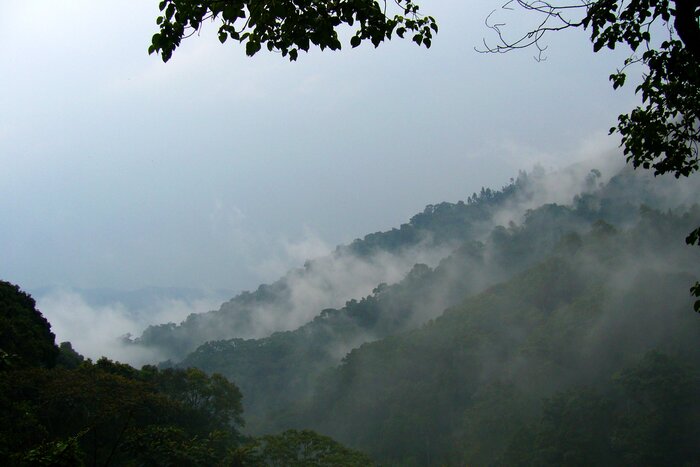
As the world grapples with conservation’s difficult history, a landmark judgment in favour of the Batwa by Uganda’s Constitutional Court shows African Courts are prepared to lead the way
During the IUCN World Conservation Congress in France last week, the Union called on all its members to recognise ‘the on-going legacy of dispossession of Indigenous Peoples and local communities’ associated with the imposition of some protected areas. In Uganda, the Constitutional Court is taking steps to address this legacy at a national level, against opposition from the Government.
Kampala, Uganda (13th September 2021) – Handed down by the Constitutional Court on the 19th August 2021, a landmark judgment ordering the Government of Uganda to take responsibility for its illegal evictions of the Batwa was celebrated by the indigenous forest people as the most important stage yet in their long struggle for recognition of their constitutional rights. This is believed to be the first time Uganda's Courts have recognised 'the on-going legacy of dispossession’ associated with some conservation activities and should resonate strongly across Uganda where local communities are at the forefront of both the impacts of conservation and the increasing effects of climate change. Most importantly, it could be the beginning of the end to their community’s immense suffering and loss that has threatened the very survival of their culture.
The Batwa’s continuing exclusion from what Justice Elizabeth Musoke recognised as “their” ancestral land is the result of the Government’s “illegal eviction” of the Batwa as recently as the mid-1990s. Touted as a solution to ensure conservation of the forest and local populations of Mountain Gorillas, decades of Government conservation policy sought to exclude all human habitation of the Bwindi, Mgahinga and Echuya forests. This approach was pursued by the Government despite the fact that the original inhabitants and custodians of these forests – the Batwa – were not a threat to the forest, the Gorillas and other endangered wildlife.
“We can live in harmony with the forest, as our fathers, grandfathers and ancestors used to,” said Jovanis Nyiragasigwa, a Batwa elder and one of the petitioners in the case. “We would share [the forest] with the animals as our parents did,” she said.
Dr. Helga Rainer, an expert on environmental conservation and policy with a focus on great ape conservation, gave expert testimony in the case.
“The Batwa are a small community and the socio-economic and cultural costs of displacing them cannot be justified because they were not the threat to the forest in the first place,” said Dr. Rainer. "In fact, it was their forest home that was getting smaller and smaller, as a result of encroachment by other communities seeking land for farming,” she said.
The Batwa number only few thousand individuals living mostly in the Kanungu, Kisoro and Kabale districts of south-eastern Uganda, as close as possible to their ancestral forests. Evictions and continued attempts to exclude the Batwa principally by officers of the Uganda Wildlife Authority (UWA) and the National Forestry Authority (NFA) – both Respondents in this case – and have caused landlessness, destitution, bonded labour conditions, and heightened the risks of sexual violence for Mutwa women and girls.
Sometimes the consequences have been fatal, as they were for one Mutwa elder, Ruzabarande Mateke, who according to a witness in the case and as reported in national media, died from injuries sustained when beaten unconscious by NFA officers in Echuya Forest Reserve.
Finding unanimously in favour of the Batwa and ordering the Government to pay the Petitioners’ legal costs, the five-judge bench of the Constitutional Court tasked the High Court with determining the “measures needed to be taken in favour of the Batwa people to ameliorate the appalling situation in which they find themselves” on the basis that:
“No adequate compensation was paid to the Batwa people by the Government for loss of their land, which left the Batwa unable to acquire alternative land for settlement, and has rendered them landless, destitute people living as squatters on land adjoining the relevant protected areas. This has not only affected the Batwa’s livelihoods but has also destroyed their self-esteem, and their identity as a people.”
The judgement comes as the global community too is grappling with the historic legacies of national parks and other protected areas wrongly imposed on communities and peoples. In the ongoing negotiations between world leaders on how to stem the loss of biodiversity facing the world, one proposal gaining steam is to expand protected and conserved areas up to 30% of the globe. For this to happen in a just and equitable way, Governments and national courts have a vital role to play in restoring and supporting communities’ rights to manage and conserve their territories in order to arrest the negative impacts and injustices of past protected area policies.
“Modern conservation practice has acknowledged that indigenous people often manage nature in ways that robustly support its protection. This was recently reinforced by the Intergovernmental Platform on Biodiversity and Ecosystem Services’ 2019 global assessment report on biodiversity and ecosystem services. Indigenous people, such as the Batwa in this case, should therefore no longer by excluded from their ancestral lands.” stated Dr Rainer.
As Dusabe Yeremiah, the chairperson of the Batwa’s own organisation UOBDU, speaking from Kisoro, noted:
“I dearly hope this case serves as a wake-up call for the Government of Uganda to finally recognise that the Batwa are their best friends and allies in the continued conservation of Bwindi, Mgahinga and Echuya forests,” he said.
“The time has come for the Government to enter into partnership with the Batwa, to uphold the court’s judgement, and allow the Batwa home to their ancestral forests, and see that there is a win-win to be found that can protect those forest ecosystems and ensure the survival of the Batwa as a people and a culture, before it is too late,” said Dusabe.
Two of the three Respondents to the Batwa’s court petition – the Attorney General and the UWA – have in the last week appealed the judgement. The Batwa’s hopes for justice now lie with the Supreme Court.
# # #
For more information and interview requests, please contact:
United Organisation for Batwa Development in Uganda at [email protected] or (+256) 772 660 810
Onyango & Company at [email protected] or (+256) 414 666 242 / 392 003 495 / 701 666 244
Background information:
On the court case and the situation of the Batwa and other indigenous people in Uganda
- United Organisation for Batwa Development in Uganda (UOBDU) and 11 Others v Attorney General and 2 Others (Constitutional Petition 3 of 2011) [2021] UGCC 22
- The indigenous Batwa people and protected areas in southwest Uganda (FPP, UOBDU and CARE International: 2008)
- Kisoro Memorandum: Joint statement by Indigenous Peoples of Uganda on the need for full recognition of our rights (2018)
- The Batwa Pygmies of the Great Lakes Region, by Jerome Lewis (MRG: 2000), including chapter: Forest conservation and the Batwa: The Ugandan case, at page 19
- The COVID-19 pandemic sees hunger and poverty on the rise among the dispossessed Batwa: Uganda case study, by Marie Joyce Godio through the help of Penninah Zaninkah and Aisha Nyiransenga (2020)
On conservation and Indigenous Peoples
- Motion 129 on Avoiding the point of no return in the Amazon protecting 80% by 2025, passed by the IUCN World Parks Congress, 9th September 2021
- World Conservation Congress, Marseille 2021
- The role of Indigenous Peoples and local communities in effective and equitable conservation. Ecology and Society 26(3):19. Dawson, N. M., B. Coolsaet, E. J. Sterling, R. Loveridge, N. D. Gross-Camp, S. Wongbusarakum, K. K. Sangha, L. M. Scherl, H. Phuong Phan, N. Zafra-Calvo, W. G. Lavey, P. Byakagaba, C. J. Idrobo, A. Chenet, N. J. Bennett, S. Mansourian, and F. J. Rosado-May. 2021
- Transforming Conservation, Forest Peoples Programme, March 2019
- Brittain, S., Tugendhat, H., Newing, H., & Milner-Gulland, E. (2021). Conservation and the rights of Indigenous Peoples and local communities: looking forwards. Oryx, 55(5), 641-642.
Overview
- Resource Type:
- Press Releases
- Publication date:
- 17 September 2021
- Region:
- Uganda
- Programmes:
- Conservation and Human Rights
- Partners:
- United Organisation for Batwa Development in Uganda (UOBDU)