
Valuing sustainable customary systems for use and management of natural resources of Indigenous Peoples and local communities in Tshopo Province, Democratic Republic of Congo
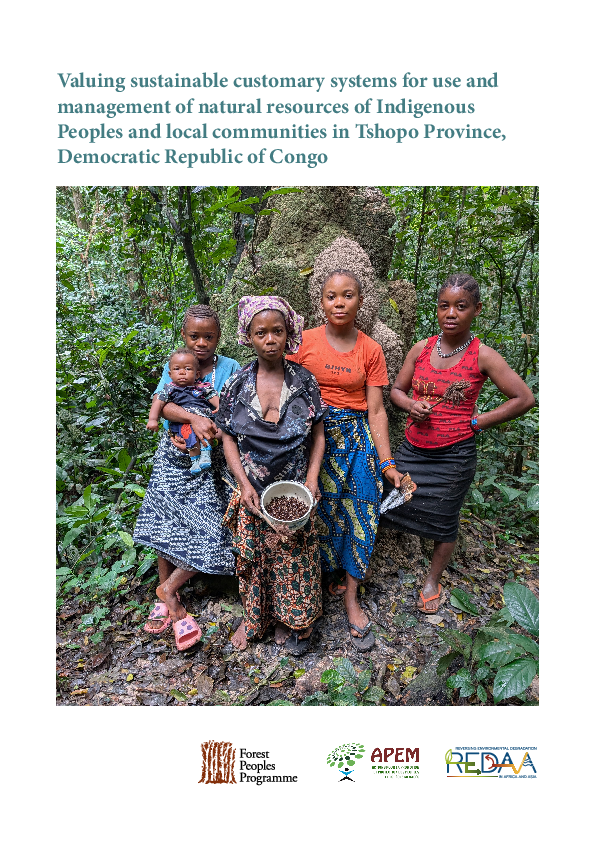
Indigenous Peoples and local communities of the equatorial forests of the Democratic Republic of the Congo have played a key role in maintaining biodiversity by sustainably managing their customary lands and natural resources.
However, despite growing recognition of their contribution to biodiversity conservation, their customary resource use systems continue to be overlooked in policy and practice.
Based on participatory research with Indigenous Peoples and local communities in Tshopo Province, this report argues for the need to valorise their customary resource use systems and create the enabling conditions in legal frameworks to allow them to more effectively contribute to and lead their own biodiversity conservation.
The report demonstrates how the customary systems of local Babali communities and indigenous Bakango (Bambuté) people follow various principles for ensuring the sustainability of natural resource use on their lands.
Taking the case of Tshopo Province, which in recent years has seen the largest area of primary forest loss among provinces in the DRC, it outlines the challenges communities face to uphold their customary resource use systems in the face of various pressures. A rights-based approach centring indigenous and local communities’ sustainable resource use systems can create the necessary conditions to more effectively address the drivers of deforestation in the DRC’s equatorial forests.
Overview
- Resource Type:
- Reports
- Publication date:
- 21 July 2026
- Region:
- Democratic Republic of Congo (DRC)
- Programmes:
- Territorial Governance Culture and Knowledge
- Partners:
- Actions for the Promotion and Protection of Threatened Peoples and Species (APEM)