
Dr. César Bazán Seminario Talk: Defending Indigenous Peoples’ Human Rights and Territories in Peru
A live event and collaboration between Forest Peoples Programme (FPP) and the Institute of Legal Defence (IDL), that was co-hosted along with the School of Oriental Studies (SOAS) in London, UK, CAFOD and the Peru Support Group.
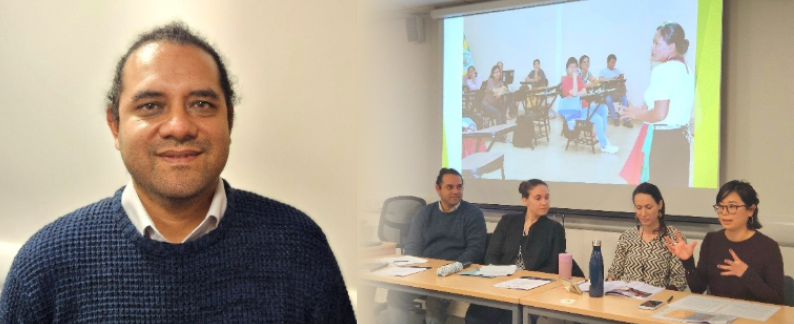
On 16 March 2026, Dr. César Bazán Seminario, a prominent lawyer and human rights activist in Peru, delivered a powerful and thought-provoking talk exploring how Indigenous Peoples are using the law to defend their rights, protect their territories, and build new generations of legal advocates.
The event entitled ‘Defending Indigenous Peoples’ human rights and territories in Peru’ was hosted by the School of Oriental and African Studies (SOAS), University of London, and supported by Forest Peoples Programme, CAFOD and the Peru Support Group. At the heart of the discussion was a striking contradiction: while law has historically been a tool of colonial power in Peru, it can also be repurposed by Indigenous Peoples as an instrument for justice.
Indigenous Peoples in Peru
Dr. Bazán Seminario, who is a lawyer at the Instituto de Defensa Legal (IDL) in Peru and a Law Professor at the Faculty of Law, Pontificia Universidad Católica del Perú, described how Peru is home to 55 Indigenous Peoples across the Andes and the Amazon. Although only 26% of the population identifies as Indigenous, the real figure is likely to be much higher due to the enduring stigma associated with Indigenous identity.
He explained that racism remains deeply embedded in Peruvian society. Terms historically used to describe Indigenous and mixed-heritage people have often functioned as racial slurs, reflecting a long legacy of exclusion and discrimination. Indigenous perspectives and voices have been largely excluded from the design of the Peruvian state. Legal and political systems have traditionally followed models from the Global North, without meaningfully incorporating Indigenous perspectives.
Political instability and rising authoritarianism continue to shape the national context. With frequent changes in leadership and a national general election taking place in April there is limited attention to Indigenous issues in political agendas and the outlook remains challenging.
Drawing from his recently published book, ‘Where the Constitution Meets the Heart’ (Constitución/Corazón in Spanish), Dr. Bazán Seminario offered two proven strategies to successfully strengthen Indigenous Peoples’ rights in Peru; strategic litigation by Indigenous Peoples, with legal advice from the Peruvian NGO Legal Defence Institute (Instituto de Defensa Legal), and training Indigenous Peoples on their rights through establishing the Peoples Legal School.
Strategic Litigation: Using the Law to Defend Rights
Over a 12-year period, Indigenous communities in Peru, supported by IDL, have pursued dozens of cases of strategic constitutional litigation, legal action designed not only to win cases, but to drive broader social change. Some of the key successes are outlined below.
Protecting the Marañón River and Securing Water Sources
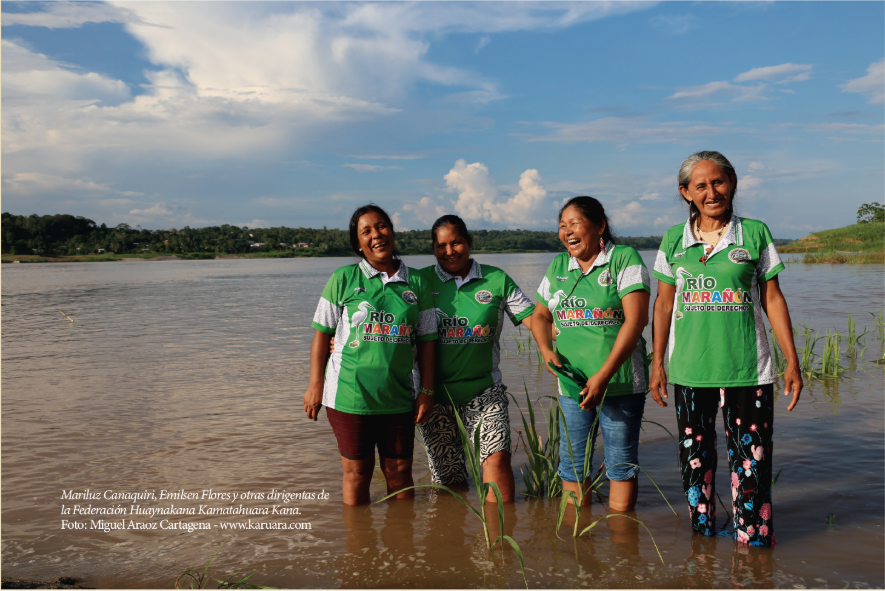
Mariluz Canaquiri, Emilsen Flores and other women leaders from the Huaynakana Kamatahuara Kana Federation who defended the Marañón River
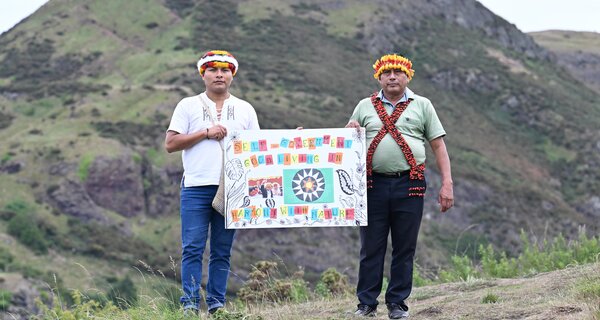
The Kukama Kukamiria people, who live along the Marañón River, one of the major tributaries of the Amazon which begins in the Andes, led a groundbreaking legal and social movement to protect the river and the territories it crosses. For the Indigenous communities who live along the river’s banks, it is not just a resource; it is central to their culture, spirituality, and identity.
Faced with oil pollution and large-scale infrastructure threats, the Huaynakana Kamatahuara Kana Federation, mainly composed of Kukama Kukamiria women leaders, created a national and international movement, bringing in support from NGOs and civil society in the Global North and South. In 2021, they filed a constitutional protection lawsuit to defend the river and organised a high-impact campaign under the slogan “The Marañón River Is a Living Being.” Their action led to a historic ruling in 2024, whereby the river itself was recognised as a subject of rights, challenging human-centred approaches and recognising the river's right to be protected and restored.
Challenging Racism in Media
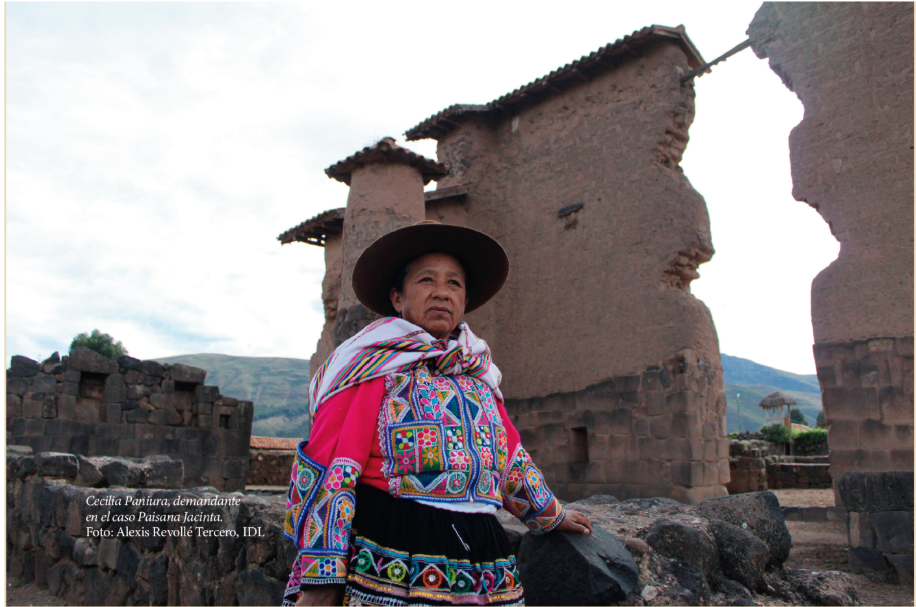
In another landmark case, four Quechua women took legal action against a popular television comedy show ‘La Paisana Jacinta’ that portrayed a fictional Indigenous woman, named Jacinta, using degrading and stereotypical imagery. The character reinforced harmful narratives—depicting Indigenous women as unintelligent, violent, dirty, and less than human.
The case sparked a nationwide debate about racism in entertainment. Ultimately, the courts ruled in favour of the claimants, ordering the show to be taken off air and prohibiting the continued use of the character. This marked a significant step in addressing structural racism in public discourse.
The Right to Speak One’s Own Language in Legal Proceedings
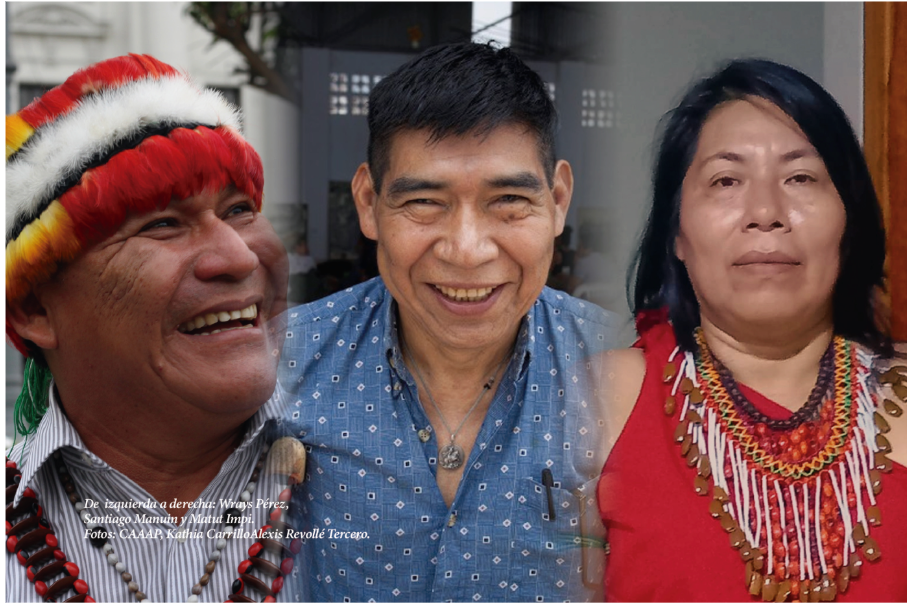
In Peru, legal proceedings are typically conducted in Spanish. For Indigenous Peoples whose first language is not Spanish, but rather their indigenous language, this creates profound inequality. Indigenous women facing gender-based violence often struggle to access justice due to linguistic barriers, further compounding discrimination.
Challenging these barriers, Matut Impi, Vice President of the Awajún Autonomous Territorial Government and two other Indigenous women, filed a constitutional compliance lawsuit to compel the Women’s Emergency Centre of Condorcanqui in Santa María de Nieva, the prosecutor’s office, and the police to provide interpreters. Building on an earlier successful lawsuit, in a case where interpreters had not been provided, in 2023 the Civil Chamber of the Amazonas Court ordered the Women’s Emergency Centre to provide interpreters for translation from Awajún and Wampis to Spanish, and vice versa.
The Right to Education
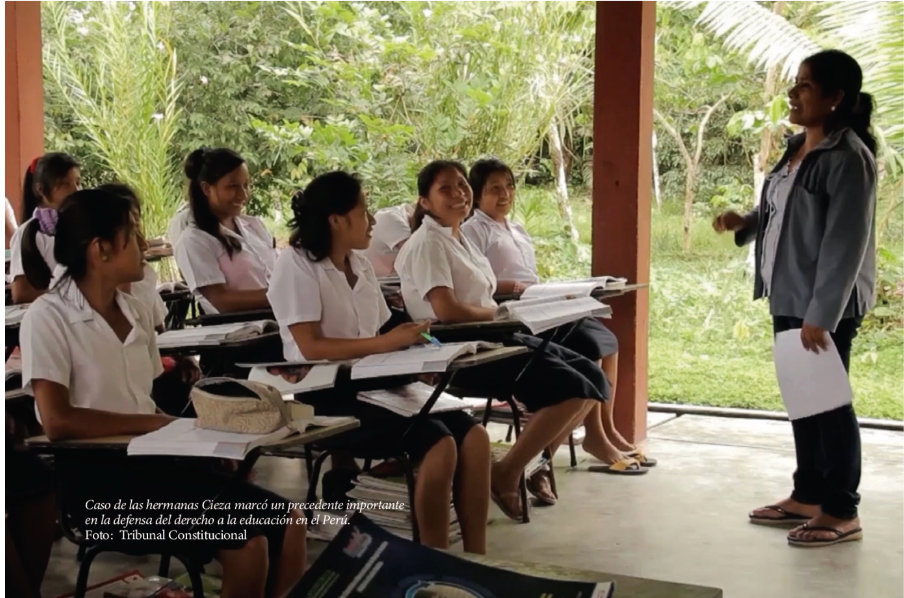
Legal action has also helped expand access to education, a human right. In one case, two sisters Marleni and Elita Cieza Fernández were denied entry to secondary school because they were considered “too old.” The only alternative offered was an adult education centre located four hours away. After a lengthy legal process, the Constitutional Court ruled in their favour, recognising a violation of their fundamental rights—including the right to education and personal development. The broader social impact has been tangible: rural women's illiteracy rates have declined significantly over the past decade.
The People’s Legal School
Dr. Bazán Seminario’s talk also explored a second key strategy: transforming how law is taught. A pioneering training programme has been developed, with support from IDL and FPP, to support young lawyers and Indigenous leaders. Rooted in the Latin American decolonial concept of sentipensar—which combines thinking and feeling1—this approach challenges the idea that law is neutral. Instead, it recognises law as a space shaped by power, culture, and competing worldviews.
Key features of the programme include:
Centring students as active participants in learning
Valuing Indigenous knowledge systems alongside academic theory
Bringing together diverse voices, including Indigenous leaders, activists, and academics
Combining theory with practice, through placements in organisations defending Indigenous rights
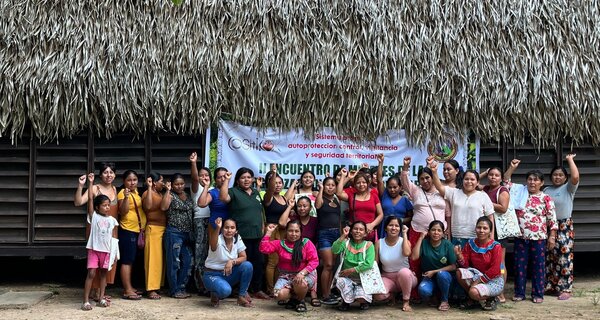
Over the past five years, the School has trained over 250 lawyers/law students and Indigenous leaders, including dedicated cohorts for Indigenous lawyers. It has also expanded to include training for Indigenous women on responding to gender-based violence, leadership programmes for young Indigenous people and a growing alumni network engaged in legal advocacy and social justice work.
Despite these achievements, significant challenges remain. Legal processes are often slow and frustrating, some initiatives face political and bureaucratic resistance, the People's Legal School has faced an unfounded criminal investigation and media harassment, and efforts to decolonise legal education remain largely outside mainstream universities.
Looking Ahead: Resistance and Hope
Dr. Bazán Seminario concluded his talk by looking to the future, explaining that even in a context of political uncertainty and rising authoritarianism, he still has strong reasons for hope. Legal victories, grassroots mobilisation, and the emergence of a new generation of Indigenous and allied legal advocates are helping to reshape the landscape. By combining strategic litigation with transformative education, these efforts are building a powerful movement—one that reclaims the law as a tool for justice, dignity, and self-determination.
Following César’s talk, a panel of human rights experts with experience in the Peruvian context reflected on how the cases presented by César resonate with broader global struggles for democracy and human rights.
Sayuri Andrade, Coordinator of the Peru Support Group, explained that the work of IDL and others has enabled the law, which was historically a tool of the colonial powers, to be used to create space and power for people who have been struggling for centuries. It has allowed Indigenous People to question their understanding of the political and what it means to be a citizen. She believes that international organisations, who want to walk side-by-side with their Indigenous partners, should continue to open up space and provide resources which enable Indigenous Peoples to acknowledge and recognise their own power and give them time to think and strategize politically.
Lara Domínguez Lawyer, Forest Peoples Programme, (speaking from her own perspective), highlighted the parallels between the struggles in Peru and the erosion of international rules-based order, a sustained incremental process that has taken place over decades, to our collective detriment. This has included creating legal architecture to systematically narrow the scope or dismantle protections whilst appearing to still comply with international laws, as well as corporate capture of Government institutions. She emphasised that whilst the current political climate is creating challenges for international solidarity movements, international human rights law matters, because it provides people with a language to articulate their demands and collectively fight back against systemic injustices. The UN Declaration on the Rights of Indigenous Peoples (UNDRIP) is a key example of this.
Emily Mulville, CAFOD Andes Country Representative, believes that human rights laws and policy change starts with the communities themselves, their collective struggles and their resilience. Popular education, such as the People’s Legal Schools, is critical, as well as supporting Indigenous defenders, lawyers, women and young people. She explained that defending human rights is becoming more dangerous in Peru, emphasising the importance of alliances and coalitions. With the global rise in authoritarianism, international solidarity is also crucial for protection and visibility. Global, political and economic systems are perpetrating human rights and environmental abuses, but she emphasised that we have agency to change this. Recognising that we are all interconnected, amplifying campaigns, and addressing the root causes of the issues we see are important steps.
Aperçu
- Type de ressource:
- News
- Date de publication:
- 28 avril 2026
- Région:
- Pérou United Kingdom
- Programmes:
- Gouvernance territoriale Autonomisation juridique Accès à la justice Réformes juridiques et politiques
- Partenaires:
- Instituto de Defensa Legal (IDL)
Actualités connexes