

Indigenous Guard of the Shipibo people exercises its autonomy by expelling illegal fishers from Lake Yacumama in Ucayali
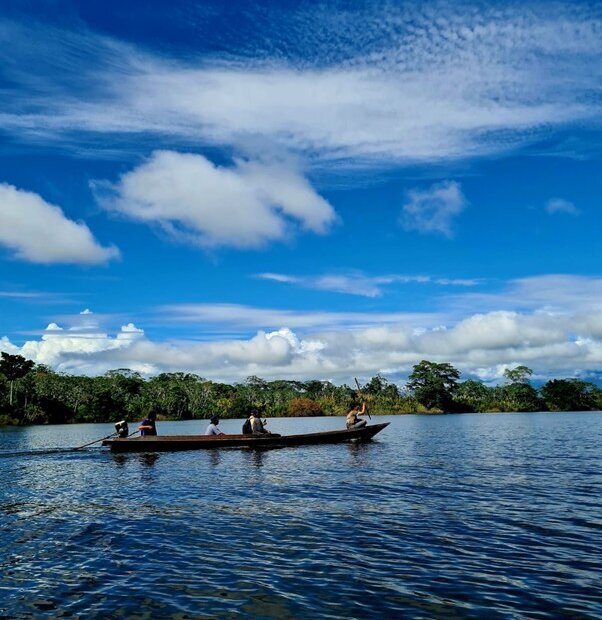
Indigenous guards from four Shipibo communities living on Lake Yacumama, in the province of Coronel Portillo, Ucayali region, located in the Peruvian Amazon, accompanied by the Regional Organisation of Indigenous Guards (ORGI), successfully carried out a series of interventions against fishers operating without authorisation on this historic lake belonging to the Shipibo people.
Between 18 – 22 February 2026, leaders and members of the technical-legal team of the Shipibo Konibo Xetebo Council (COSHIKOX) and ORGI travelled to the communities of Utucuro and Roya, located on the shores of Lake Yacumama, where they were joined by community members from the neighbouring communities of Puerto Belén and Nueva Villasol. There, they held a series of meetings, training sessions and direct interventions against illegal fishers, consolidating the presence of the Indigenous Guard in the area, with the aim of strengthening the exercise of their autonomy and self-government as a people.
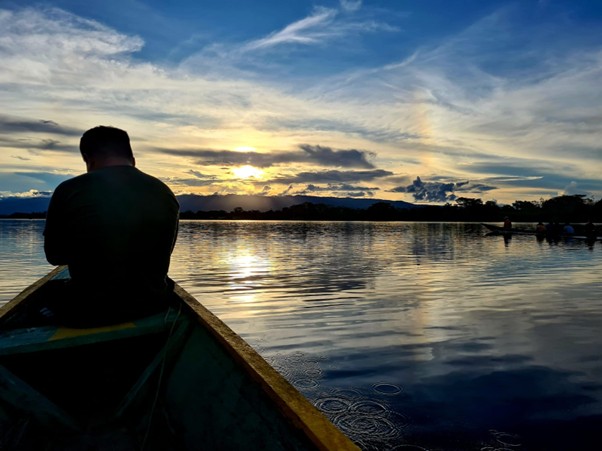
In recent years, the aforementioned communities have been facing incursions by medium and large fishing vessels operating in Yacumama without respecting the ancestral territory and collective rights of the communities. They use drag nets and predatory techniques, such as trawling or poisoning the water, to extract large quantities of fish that they then sell in Pucallpa, directly and negatively affecting the food supply of the Yacumama communities. Faced with this situation, since 2025, the communities have begun to organise themselves as Indigenous guards and protect their territory themselves. To strengthen these efforts, they requested the presence and advice of more experienced guards.
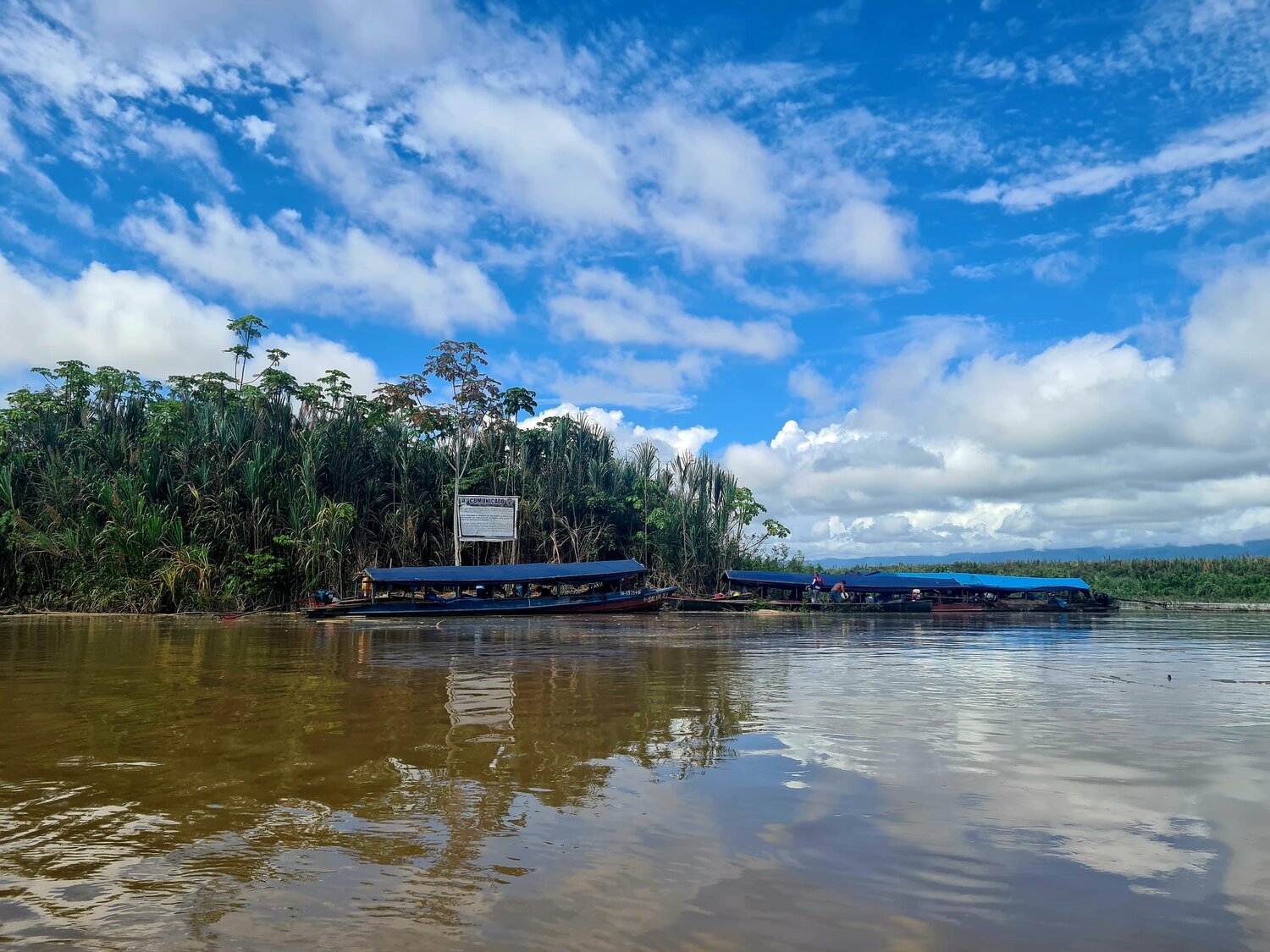
Building Shipibo autonomy: "Non bi ate jaweki" ("What we do ourselves")
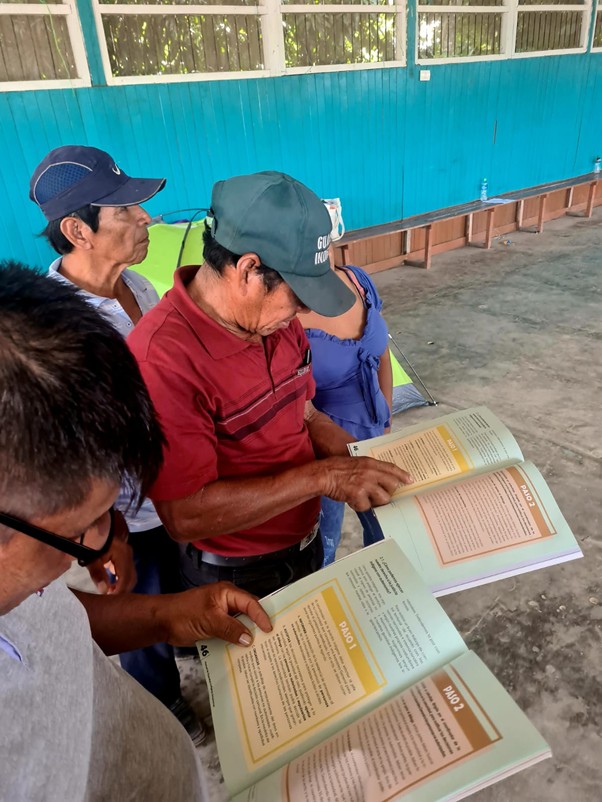
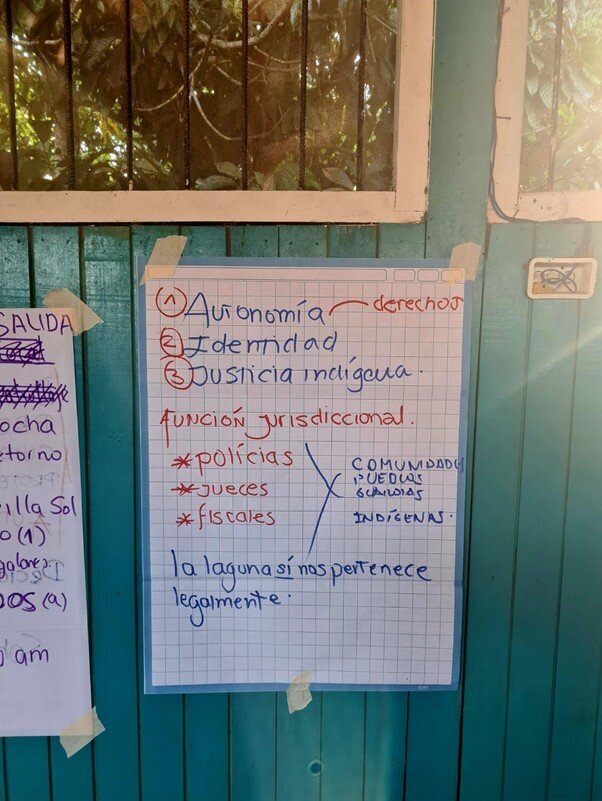
First, there was a preparatory day, which addressed practical and legal aspects of the interventions, including a conversation about the collective Indigenous rights that have underpinned the work of the Indigenous Guard since its founding in 2021: autonomy, self-determination and self-government; Indigenous ownership of ancestral territory; and Indigenous justice. It should be noted that in 2025, Nueva Villasol obtained communal title to its ancestral territory, finalising the titling of the area surrounding Lake Yacumama as Indigenous property. The day concluded with the swearing-in of the new members of the Utucuro Indigenous Guard.
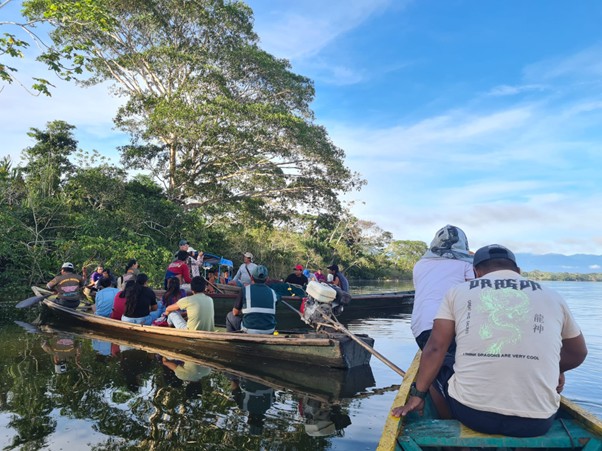
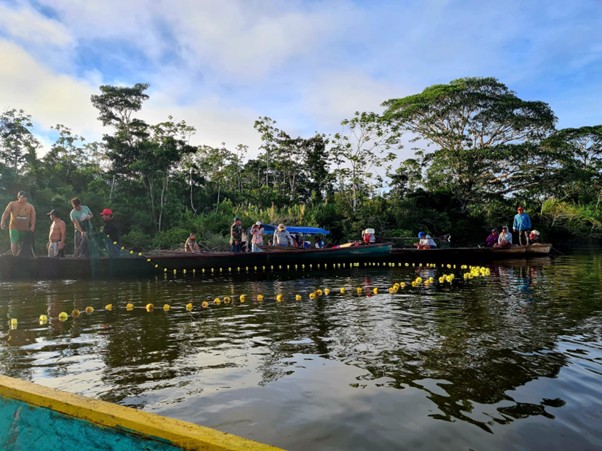
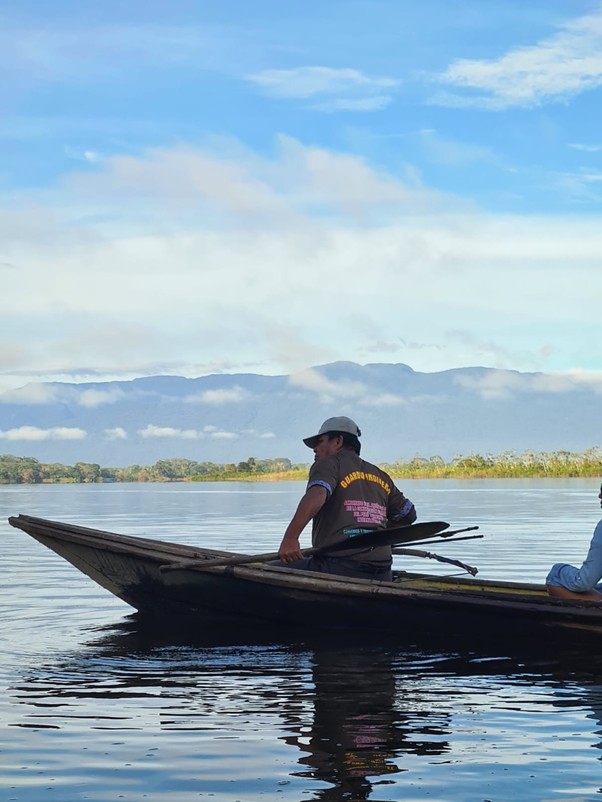
On Friday, 20 February, a fleet of the Indigenous Guard, consisting of five boats with people from the four Indigenous communities, left Utucuro at around 6:30 a.m. Over the next few hours, they intercepted a group of medium-sized fishing boats (whose occupants refused to identify themselves) and, through dialogue, demanded their withdrawal. They verified that the fishermen had left the lake before continuing their patrol, circling the entire Lake Yacumama and returning to Utucuro around 11:00 a.m.
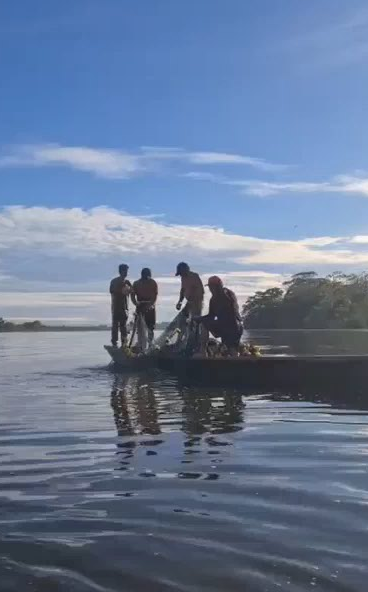
The following day, Saturday 21 February, the Guard carried out another intervention, this time in the Anaconda Lake, located near Yacumama, where they intervened with an even larger fishing group than the previous day. Despite heavy rain, the Indigenous guards remained well organised and managed to sign a memorandum of understanding in which the fishermen involved agreed not to return to the Shipibo lake.
The coordinator of the Utucuro Indigenous Guard, Miguel Silvano, said:
We have intervened with the fishers in order to keep that area within the territory of the four communities. The fishers have not rebelled, they have come to an understanding. Thanks to the President [of the Guard], Kelly, they have understood: they have agreed to leave and in the end they did."
Silvano also highlighted the importance of having strong and solid legal backing, based on community agreements set out in official documents. This is based on his more than 28 years of experience as a justice of the peace in his community, although he now considers the Indigenous guard to be the most effective way to achieve territorial security.
We are affected by the fishers. They kill and poison fish. The waters are polluted. It is a very sensitive issue; I have witnessed a lot of fish being killed. It is a crime, but the fishers still do it. That is why I am glad about this intervention.”
Miguel Silvano, Coordinator of the Utucuro Indigenous Guard.
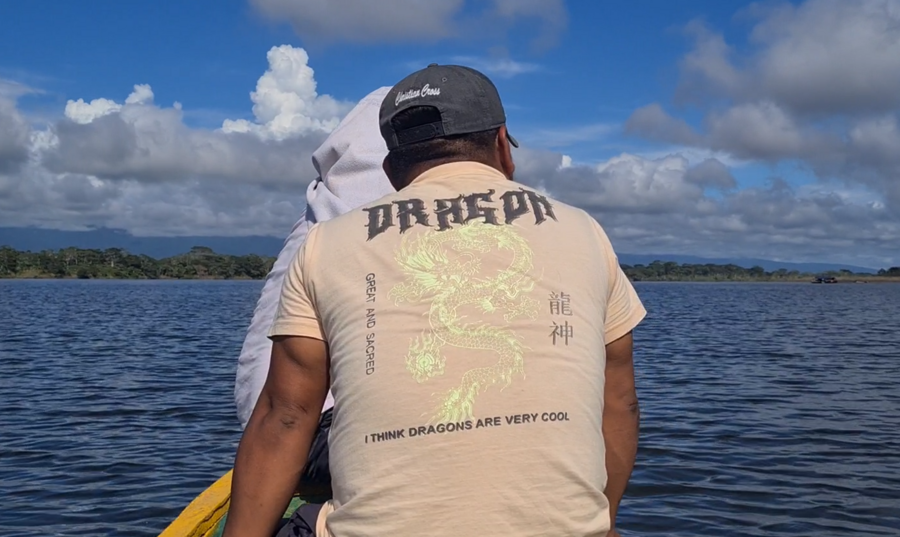
We came to Utucuro because they needed the support of the elite group of the Indigenous Guard. This meeting was very important. Apart from the intervention, we had to swear in the guard, so yesterday we swore them in and now they feel more integrated into the Guard.”
Kelly Valera, President of the Indigenous Guard of the Shipibo people
Regarding the logic behind the intervention in Yacumama, President Kelly pointed out:
We are here because the only way for us to organise ourselves is through the union of the peoples and community members, organised in this way. Why? To defend everything that belongs to our territory and lake. Because if we don't organise ourselves in this way, if only one community is fighting, then the illegal fishers will not respect us. The strategy is to bring together the bases of the guards very close by, to unite as one to carry out the intervention. Then we enforce our right, that we deserve not to be trampled on by the state. So this intervention here on Lake Yacumama was very important. And as a result, the Utucuro guard has committed to working in a more organised way with the nearby guards.”
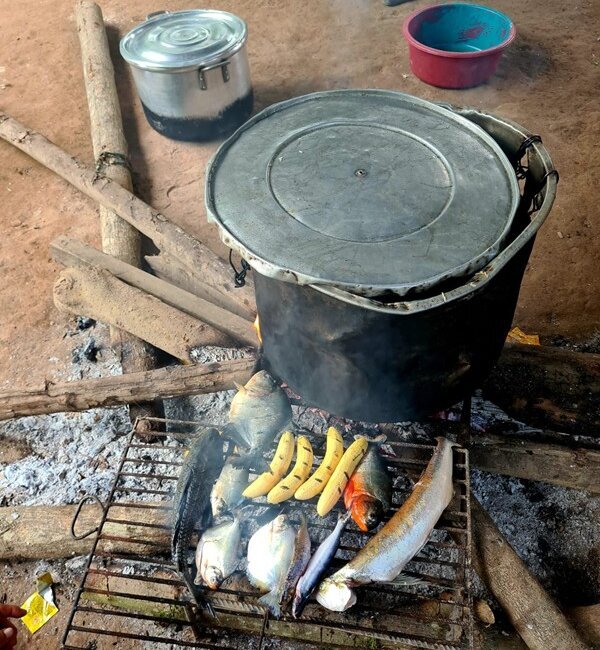
ORGI has identified lakes as a strategic space for its interventions and for consolidating its project of autonomy. Community-led interventions of this kind require only a modest investment, mainly to purchase fuel and organise community meals (olla común, or common pots). However, despite being an area where there is a carbon project with an international investor, community members report that the community does not receive any benefits and therefore does not have the necessary resources to carry out these interventions on a regular basis. In fact, they still lack uniforms and field equipment, their own boat, and equipment such as mobile phones to enable them to monitor more systematically a territory under threat from multiple pressures.
In this regard, President Kelly commented:
As for the fishers, we see that the lake is very large, so they are going to need fuel. From the Guard, we are seeking support so that the four communities that are organising themselves here between peoples can go out to patrol once or twice a week. The intervention is very strong. The fishers do not operate alone; there are usually several groups. So we need unity, and that is what we are going to do – unity is very important.”
