

Weaving solidarity between the Amazon and the UK: The Wampis Nation's Call to Protect Territories of Life
In June 2025, representatives of the Wampís Nation travelled from the Amazon rainforest to the UK to share their experiences of Indigenous autonomy, self-governance and environmental defence, as well as to urge the UK government to take action in support of their human rights and the environment.
During their trip, Pamuk (elected president) Teófilo Kukush Pati, and the Director of Justice, Tsanim Evaristo Wajai Asamat, spoke at events in London, Edinburgh, St Andrews, the Isle of Eigg, and Aberdeen. They met with community organisers, academics, politicians, school children, and activists, building new alliances and strengthening solidarity.
Their message was clear: Indigenous Peoples are on the frontlines of multiple crises, and real solutions must start by recognising their rights and supporting their autonomy. They also called on the UK government to introduce a corporate accountability law and ensure climate funding reaches them directly. This blog documents their journey, the conversations they sparked, and the solidarity they inspired.
London Climate Action Week
Just Alternatives for Climate Finance
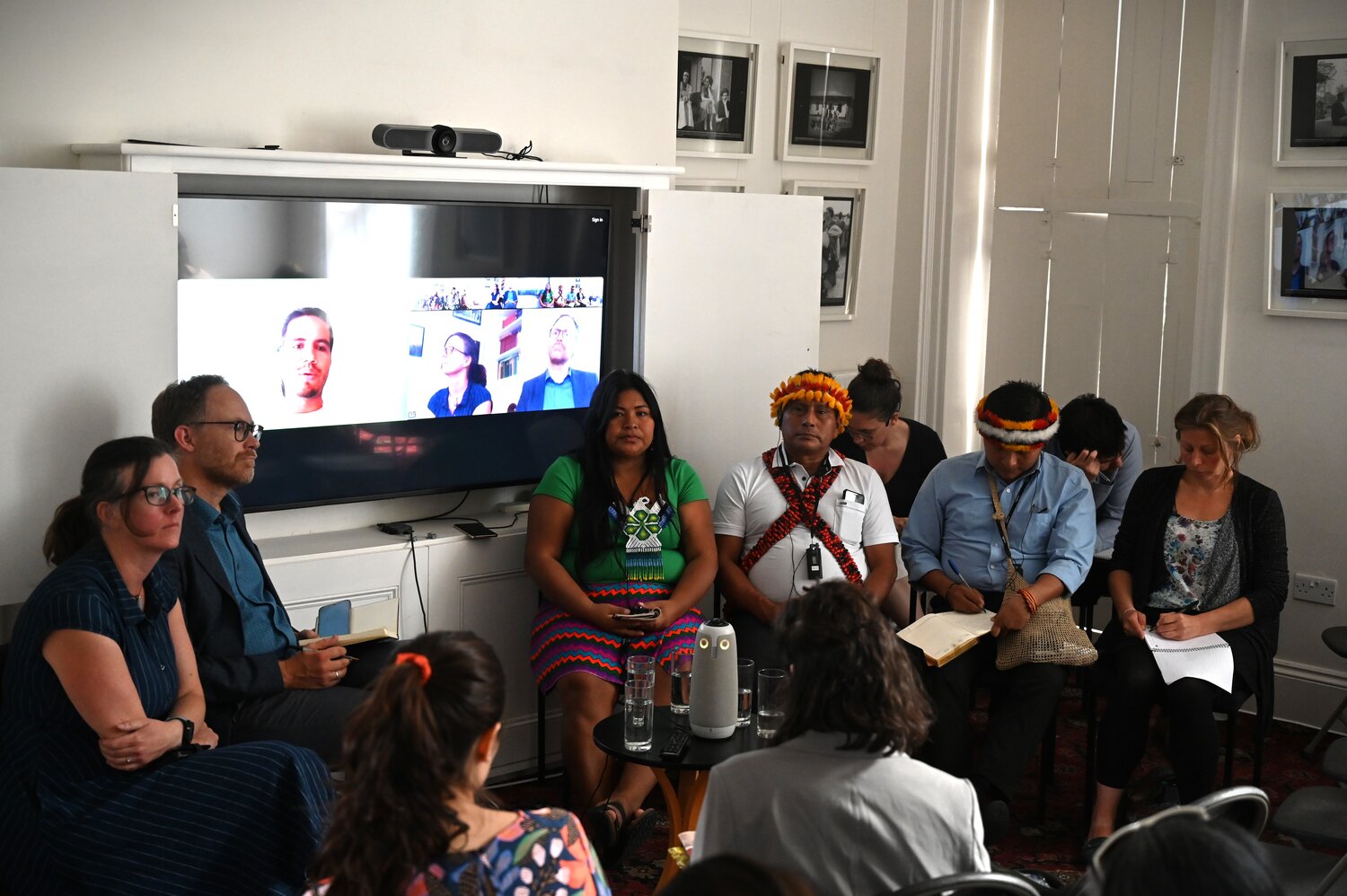
On June 23rd, Forest Peoples Programme (FPP), together with the Royal Anthropological Institute and the Autonomous Territorial Government of the Wampis Nation (GTANW), hosted an event titled Just Alternatives for Climate Finance as part of London Climate Action Week. The event spotlighted the critical issue of direct financing to Indigenous Peoples and forest peoples.
Pamuk Teófilo Kukush Pati and Tsanim Evaristo Wajai Asamat were joined on the panel by other speakers including Sara Omi, an Indigenous activist and member of Women in Global South Alliance for Tenure and Climate and Emil Sirén Gualinga, of the Kichwa people of Sarayaku, Ecuador, and climate finance advisor. The event was moderated by Tom Lomax, Director of FPP.
The event explored alternative sources of climate and nature finance, such as taxes on polluting companies and ending subsidies to oil and gas. The most effective channels to enable climate and nature finance to reach the ground were also discussed.
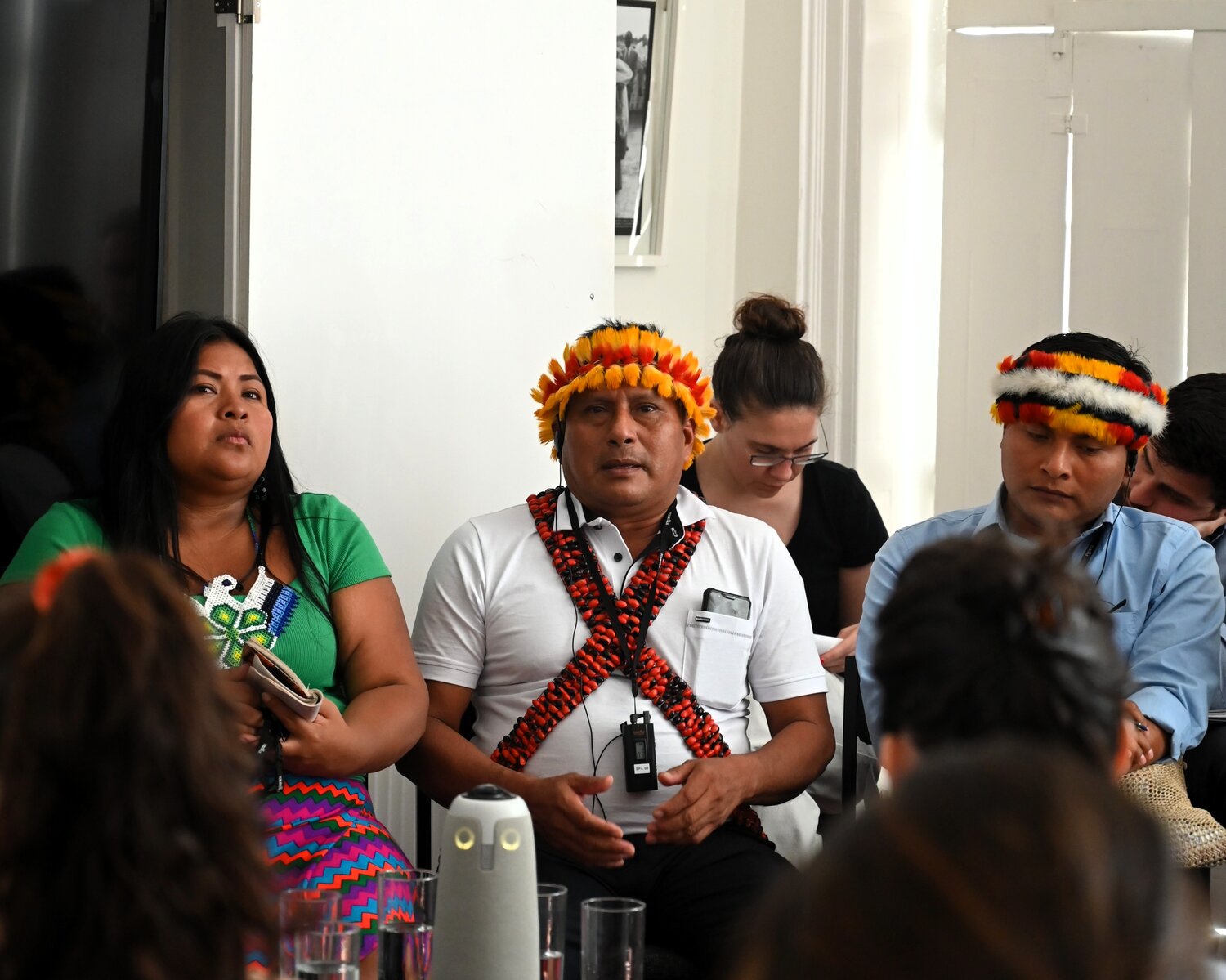
Pamuk Teófilo Kukush Pati emphasised that the climate finance Peru receives isn’t reaching Indigenous territories. He argued that a better approach would be for funding to go directly to Indigenous Peoples and local communities, who are on the frontlines of forest and biodiversity protection. He shared real-world examples of how the Wampís Nation actively supports climate and nature outcomes, including regenerating turtle populations, aquaculture and reforestation efforts.
Tsanim Evaristo Wajai Asamat underscored that international governments and philanthropic organisations must take into account the wider political landscape when deciding to channel climate funding to states, pointing to Peru’s recent amendment to an international cooperation law (the APCI law), which threatens civic spacee described the creation of Charip - which means “strike like lightning” - the GTANW’s territorial defence group formed in response to state inaction on illegal mining. He emphasised that directly funding Charip, not the state, would result in real action on the ground to halt destructive extraction.
Direct Dialogue with the UK Government
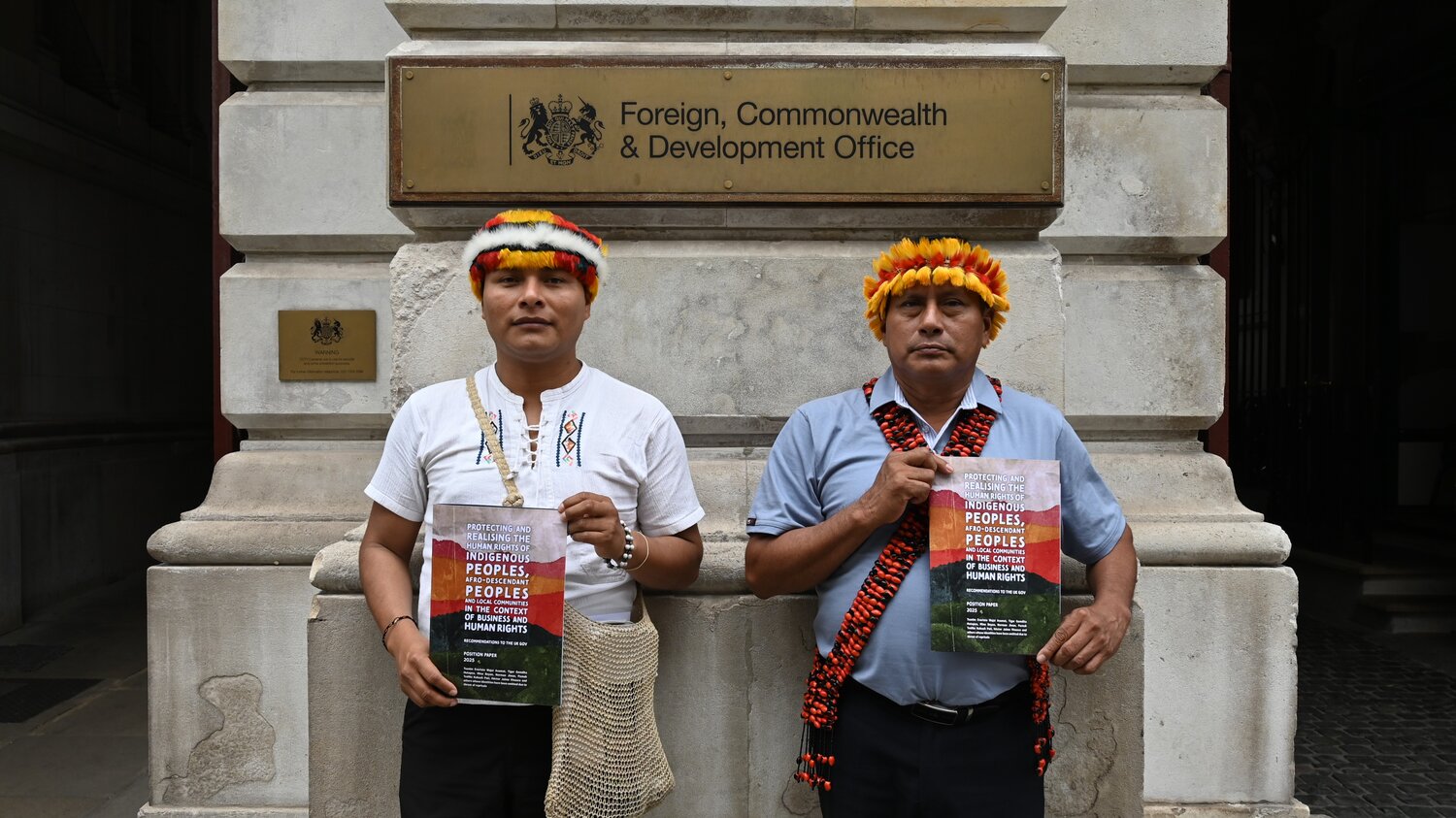
The following day, June 24th, representatives of the Wampís Nation met with UK government officials including the Foreign, Commonwealth & Development Office (FCDO) and the Department for Business and Trade. Here, alongside some of their co-authors including Norman Jiwan, they presented an exclusive preview copy of a position paper developed by Indigenous Peoples, Afro-descendent peoples, and local community and civil society leaders: Protecting and Realising the Human Rights of Indigenous Peoples, Afro-descendant Peoples and Local Communities in the Context of Business and Human Rights. The meeting was held under Chatham House rules.
Sharing Stories of Autonomy
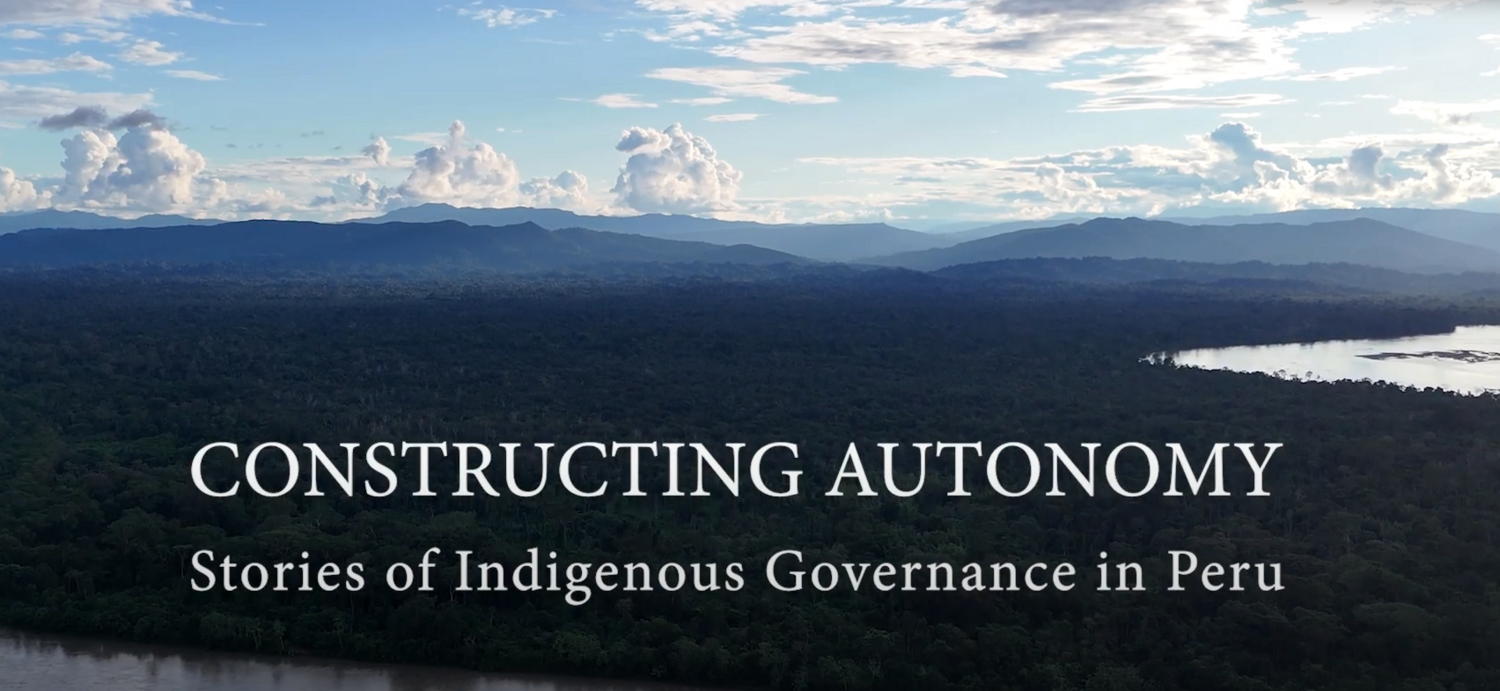
To wrap up the London activities, GTANW, LifeMosaic, The Royal Anthropological Institute, Cine Brazil, The Corporate Justice Coalition, Peace Brigades International UK, The Cinema Museum and FPP hosted a screening of LifeMosaic’s Constructing Autonomy: Stories of Indigenous Governance in Peru.
The film profiles the Wampís and Awajun; two amongst at least a dozen autonomous Indigenous governments which have been forming across the Peruvian Amazon over the past decade. It asks key questions: what do these forms of governance look like, why were they formed, what challenges do they face, and what futures do they envision? It also highlights how, through their autonomous government, the Wampís are confronting threats such as by mining, the oil industry, illegal logging, and the effects of climate change.
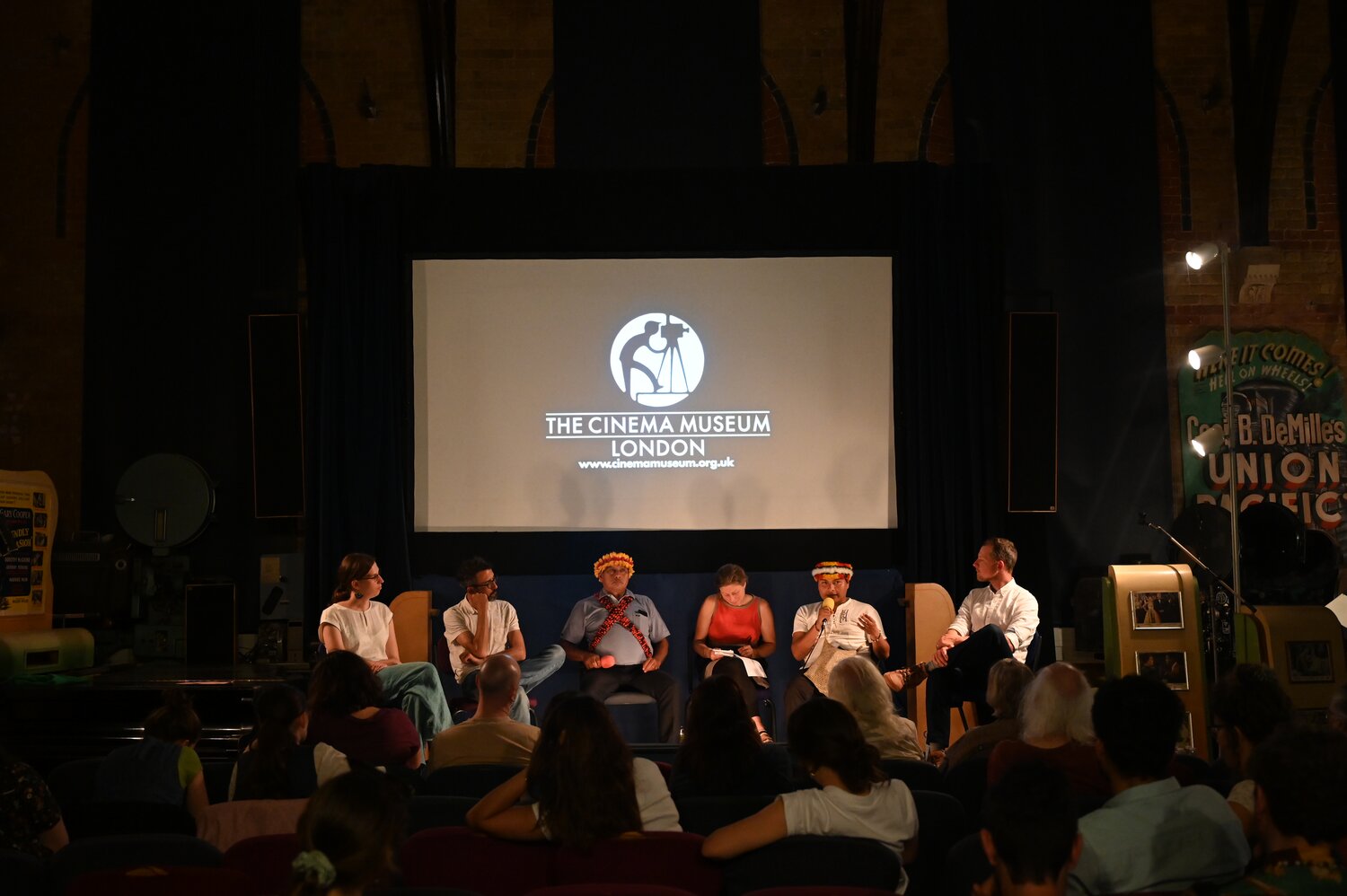
After the screening, Pamuk Teófilo and Tsanim shared their strategies, whilst Luise Schroter, Senior Policy and Campaigns Officer at the Corporate Justice Coalition, shared what the UK government should be doing to ensure the accountability of business and finance, including by introducing a corporate accountability law, known as the "Business, Human Rights and Environment Act".
Mikey Watts, filmmaker and Latin America coordinator for the NGO LifeMosaic discussed the making of the film and LifeMosaic’s unique approach to film making with Indigenous Peoples. The event sparked lively discussion around Indigenous governance, solidarity, and how those in the UK can support the Wampís.
Scotland
Calling for Ethical Supply Chains in Scotland
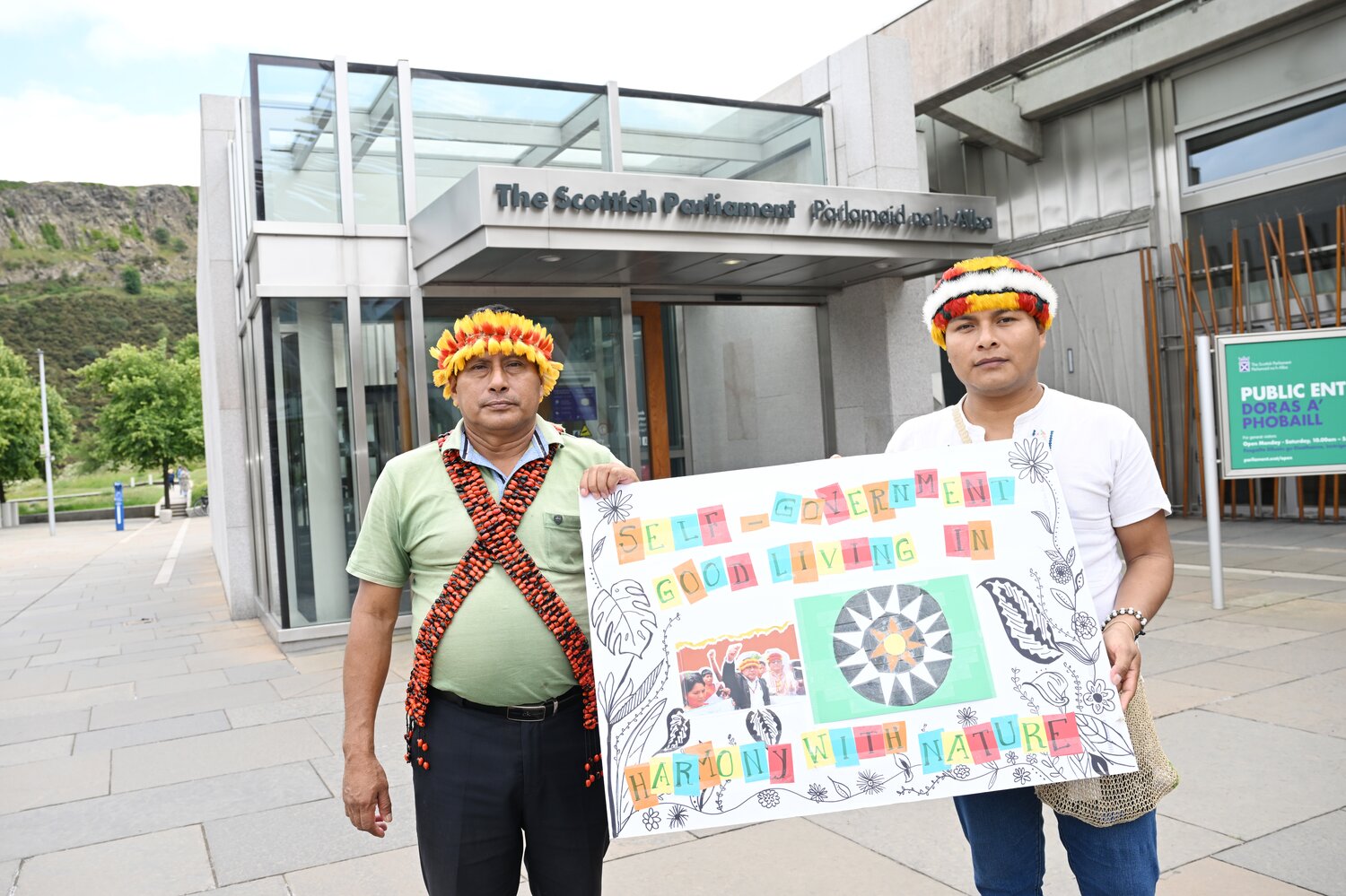
In Edinburgh, Wampís representatives scaled Salisbury Crags with a welcome party, then visited Holyrood, the Scottish Parliament, accompanied by Friends of the Earth Scotland and FPP. There, they raised urgent concerns about Scotland’s renewable energy supply chains, particularly the alleged use of illegally sourced balsa wood from the Amazon.
Balsa wood, essential for wind turbine blades, is increasingly logged in the Amazon Rainforest and the Wampís territory. A 2024 investigation revealed that Mingyang, a Chinese supplier to the Green Volt wind project (recently approved in Scotland), is linked to supply chains implicated in deforestation and Indigenous rights violations.
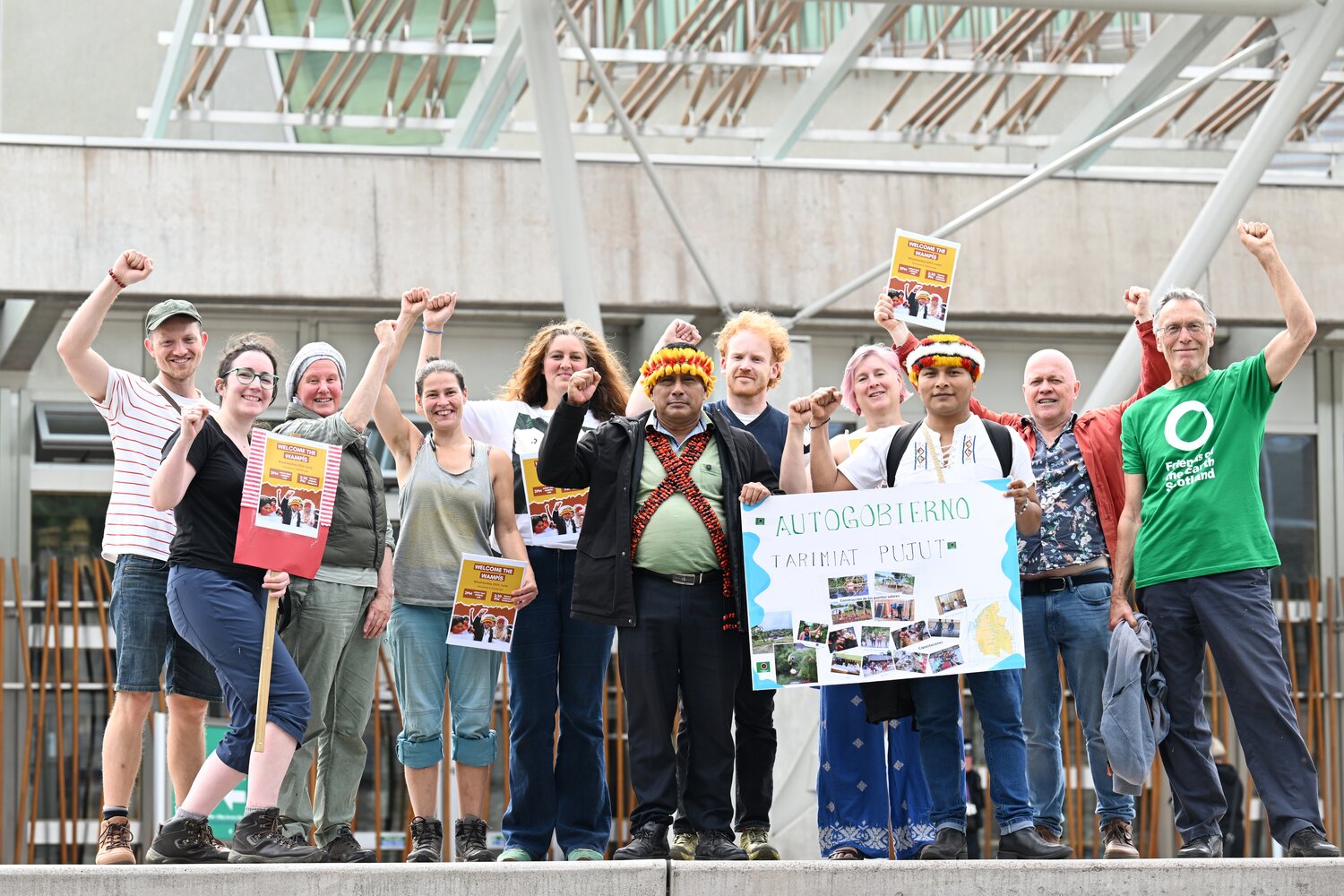
We call on the Scottish Government not to invest in the big wind energy companies that are cutting down Wampís territory… Instead, they should invest in our own productive projects that help feed our people and protect our forests.”
Pamuk Teófilo Kukush Pati
Discussing Resource Justice with Friends of the Earth
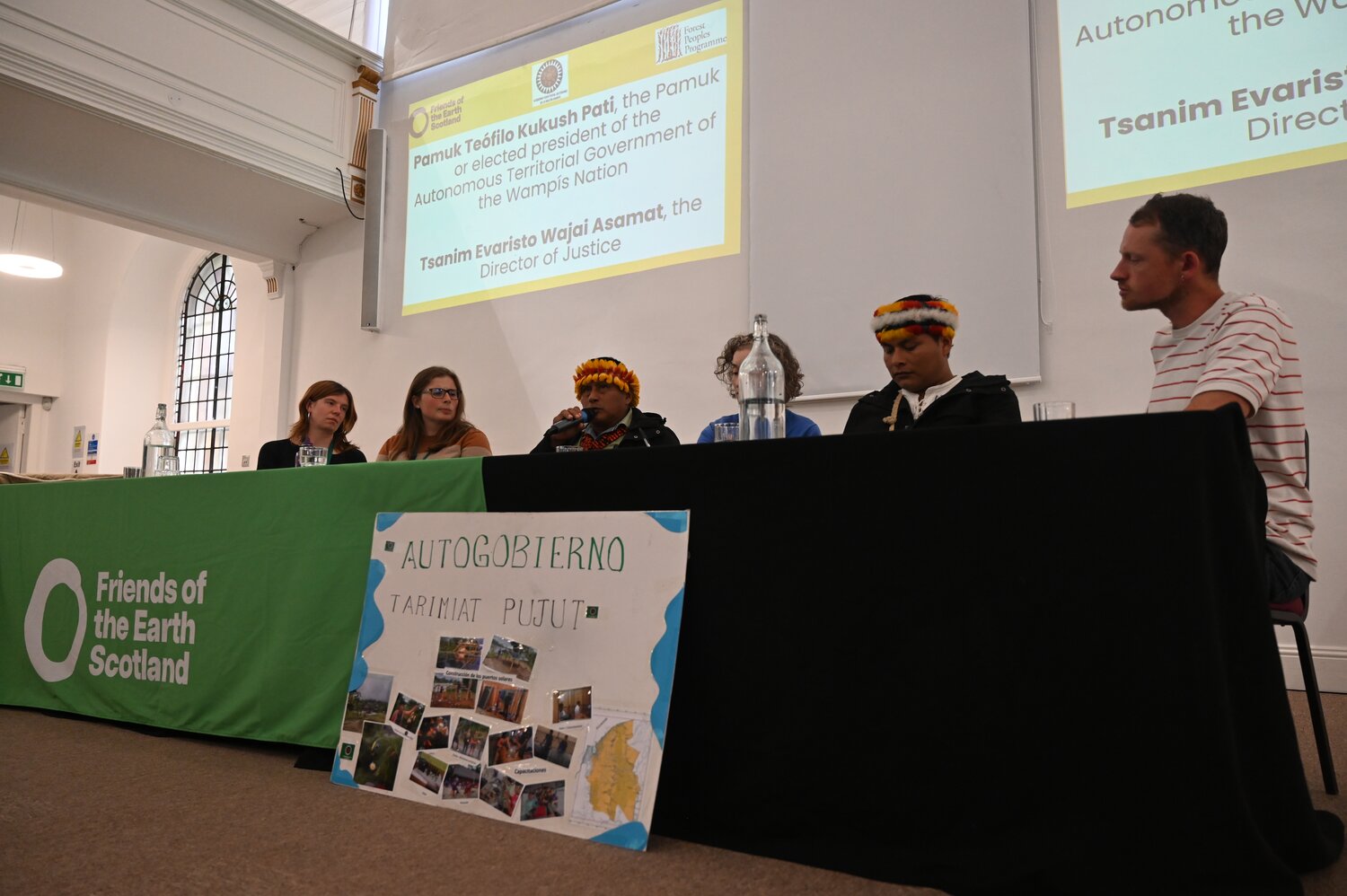
Later that evening, Friends of the Earth Scotland hosted an event with its members to welcome the Indigenous leaders to Edinburgh. The event explored the connections between resource justice in Scotland and international struggles for justice. It highlighted how people around the world are affected by different parts of the same system, connecting through global supply chains.
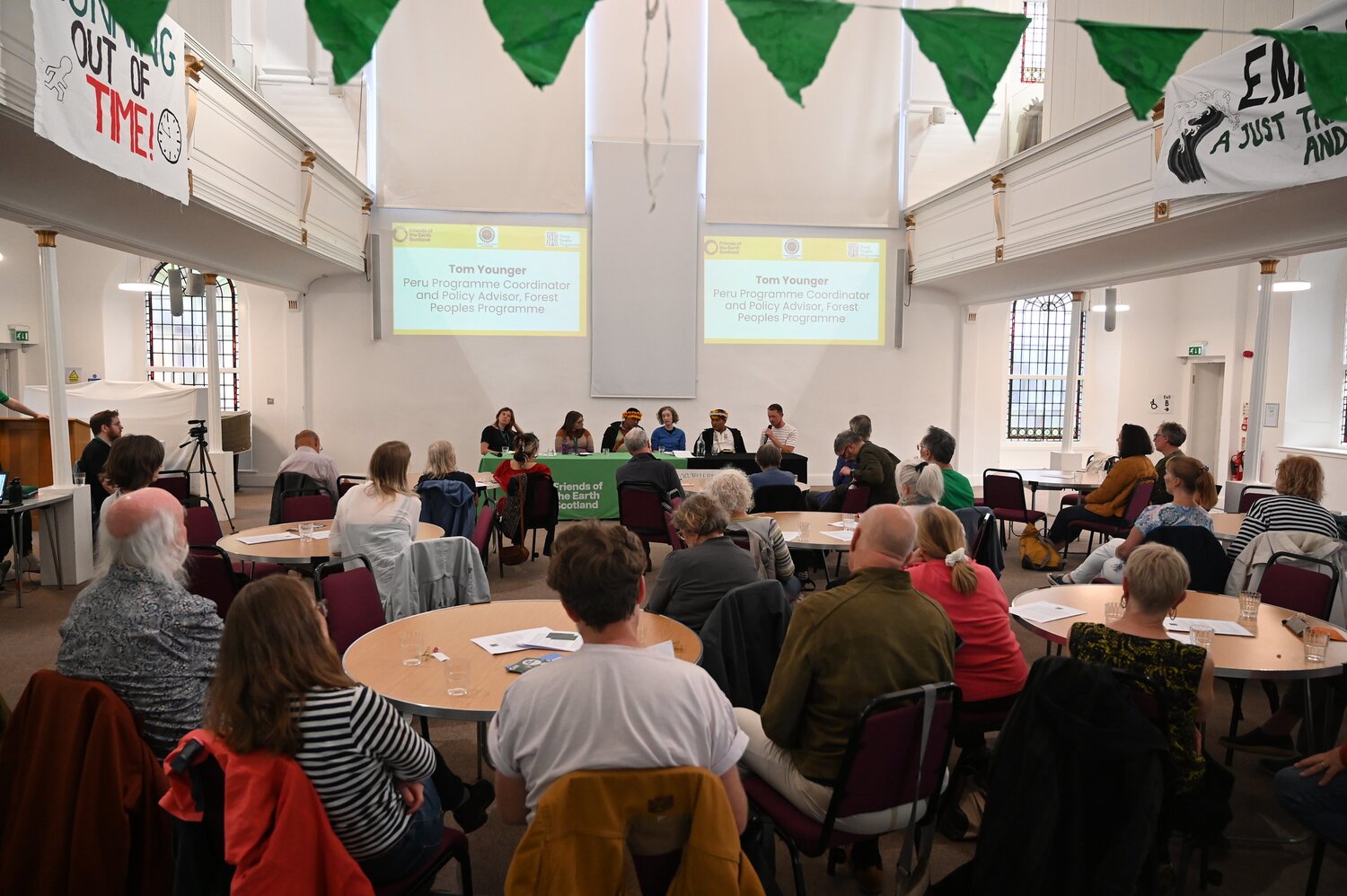
Our work in Scotland is part of the same fundamental struggle against a system that puts profit before people and nature. By recognizing the connections between our efforts here and international fights for justice, we can strengthen our shared hope for a better future. Your fight to protect your home is not so different from our work here in Scotland, we are both fighting for a world free from corporate greed and a future where ecosystems can flourish."
Kim Pratt, Senior Campaigner for the Circular Economy at Friends of the Earth Scotland
Discussing Autonomy at the University of St Andrews
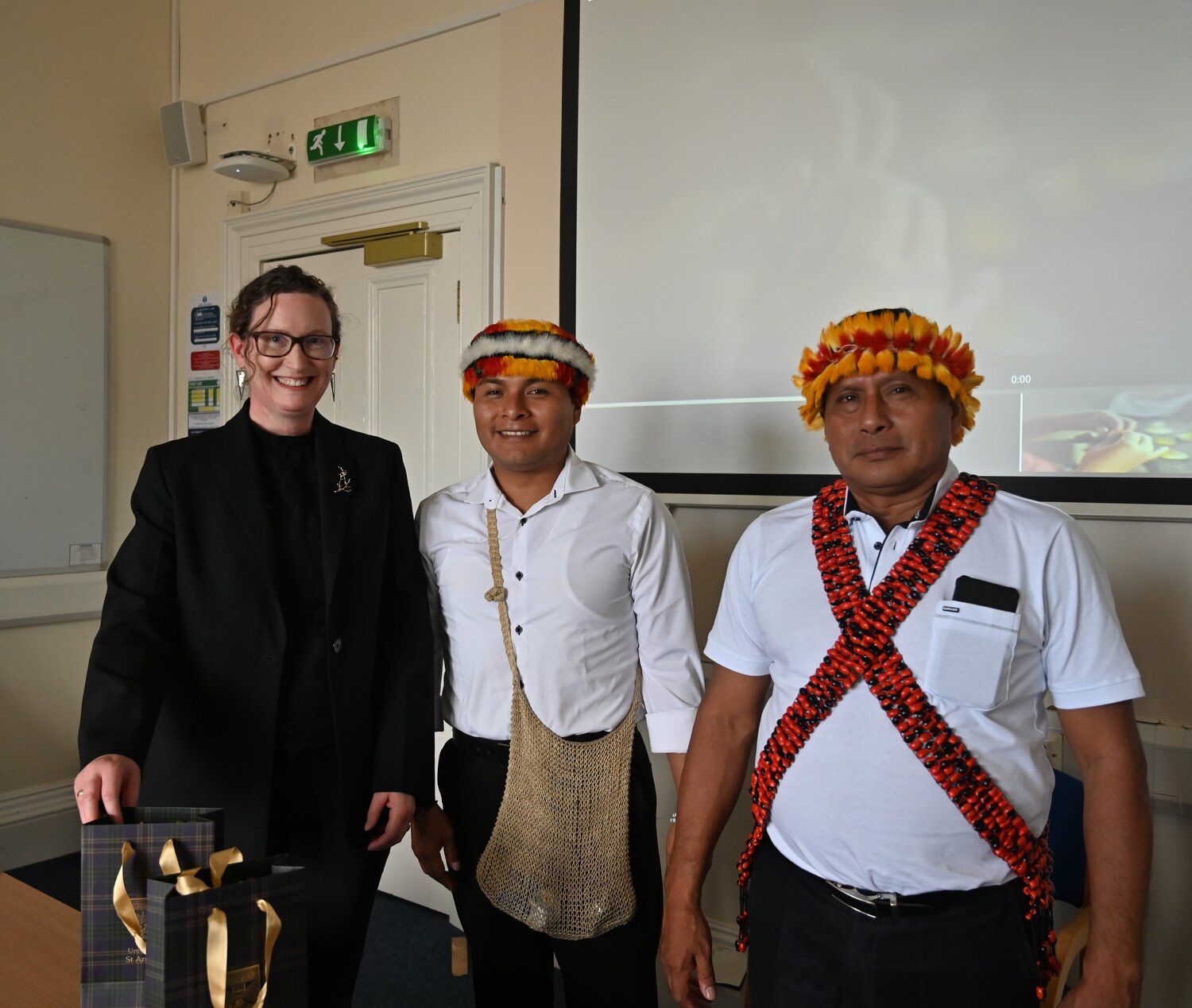
At the University of St Andrews, the leaders were welcomed by Professor Catherine O'Leary and engaged in a dialogue with academics and local residents, which was hosted by the Centre for Amerindian, Latin American, and Caribbean Studies (CAS). The discussion focused on the Wampís model of socio-territorial governance and autonomy.
A Meeting of Self-Determined Communities on the Isle of Eigg
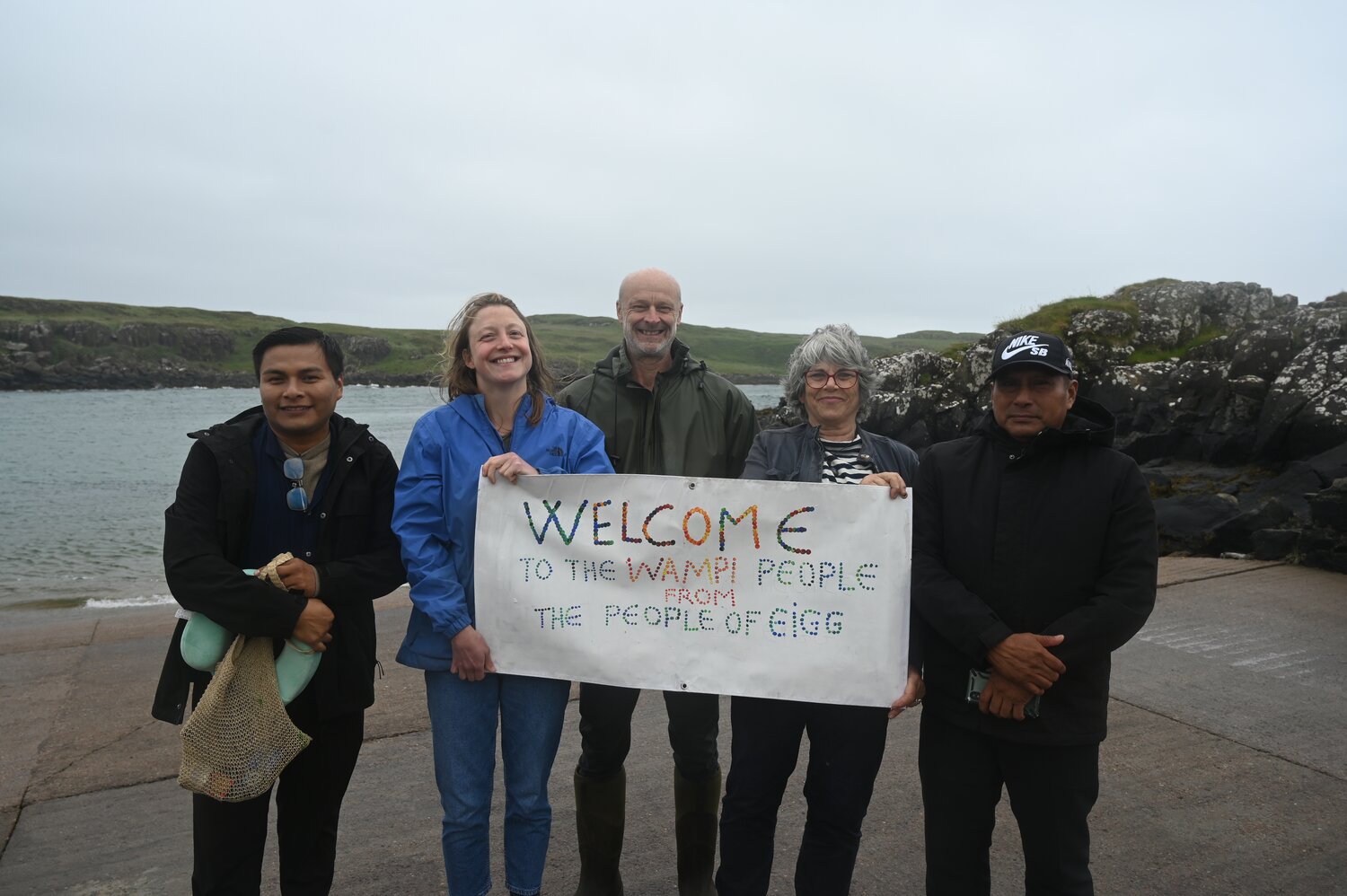
On the Isle of Eigg, a community-owned island and beacon of grassroots sustainability, Wampís leaders explored local initiatives demonstrating circular economy in action. From a tree nursery that has planted over 16,000 native trees, to a renewable energy cooperative powering the island through wind, hydro, and solar, Eigg showcased the power of community-led climate solutions.
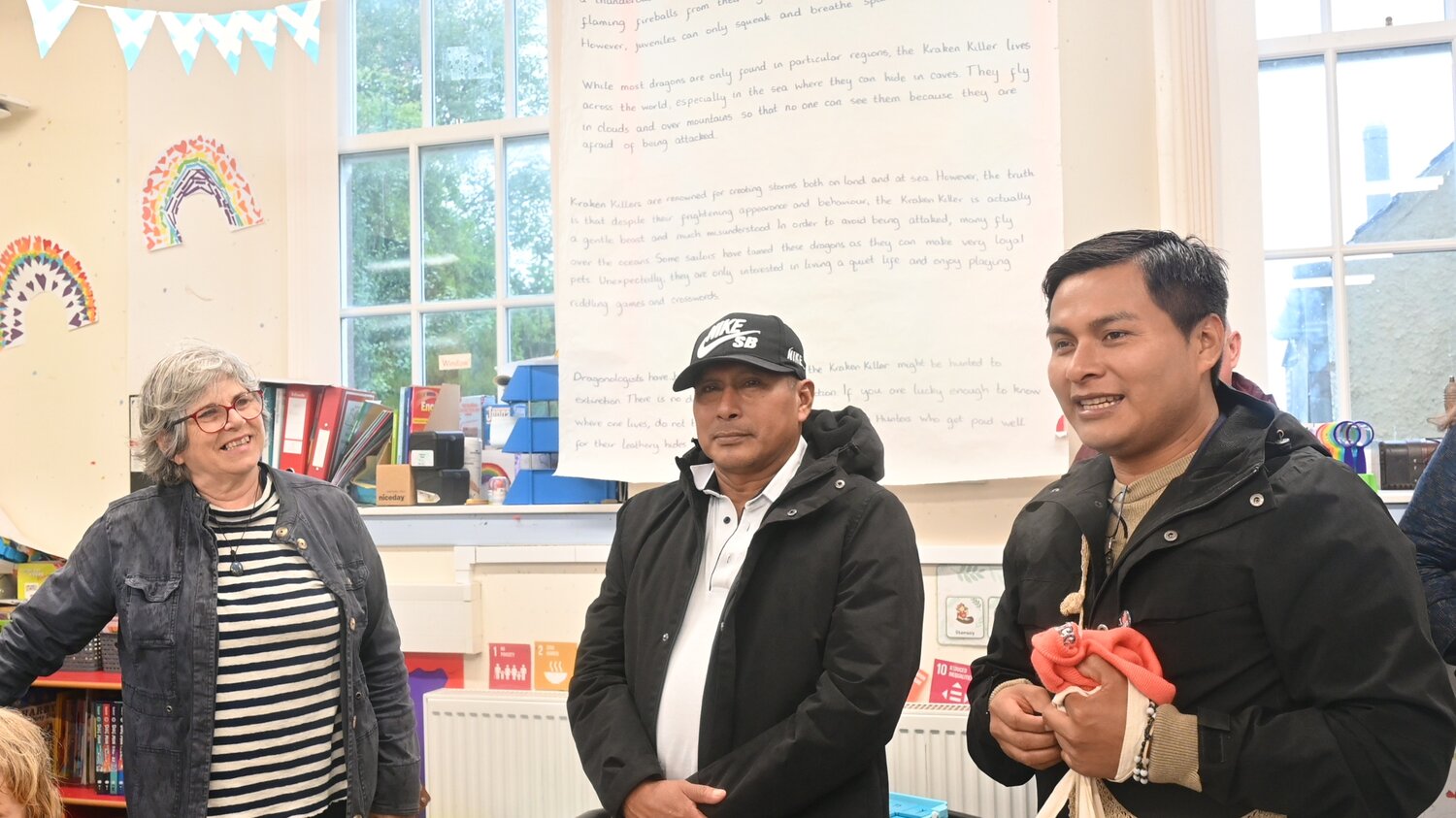
They also visited a local brewery, a weaving workshop and croft cultivating 5,000 willow trees, and a community-run museum curated by children. Conversations with local school children sparked a cultural exchange filled with curiosity and connection.
The message I want to leave with you is to support the guardians of the forest, help us preserve Indigenous Peoples’ ability to protect life.”
Tsanim Evaristo Wajai Asamat
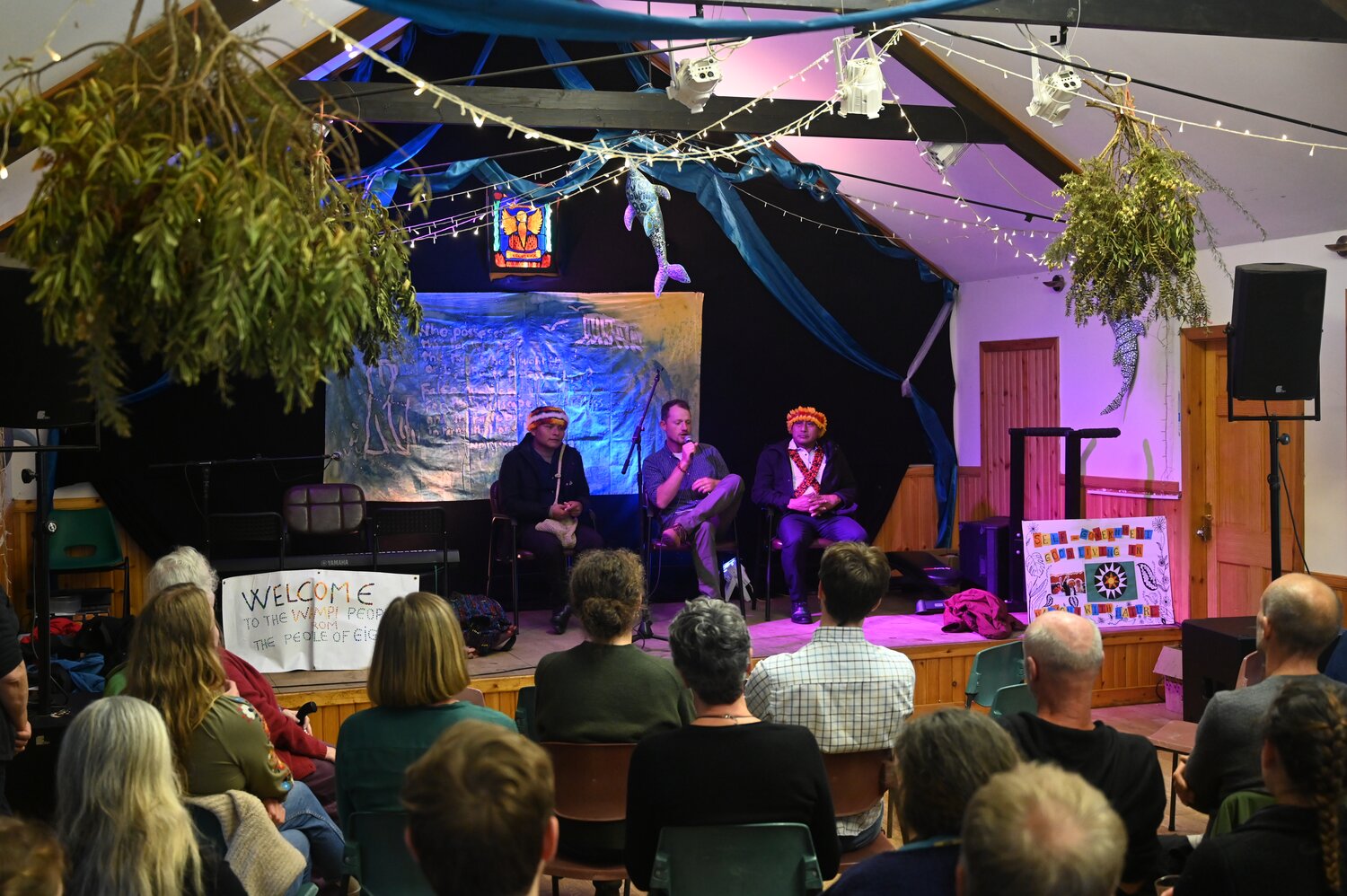
In the evening, the Wampís spoke at a community gathering hosted by Grassroots to Global. They called for solidarity and direct support for Charip, and encouraged people in Scotland to stand with them as COP30 approaches.
The event concluded with a performance of songs from The Chariot, The Flag and the Empty Empty Houses by Daniel Cullen and Rhona Coogan. The visit underscored shared values – self-sufficiency, mutual care, and a deep connection to land – and left a lasting impression on both the Wampís and the Eigg community.
Frontline Resistance in Aberdeen
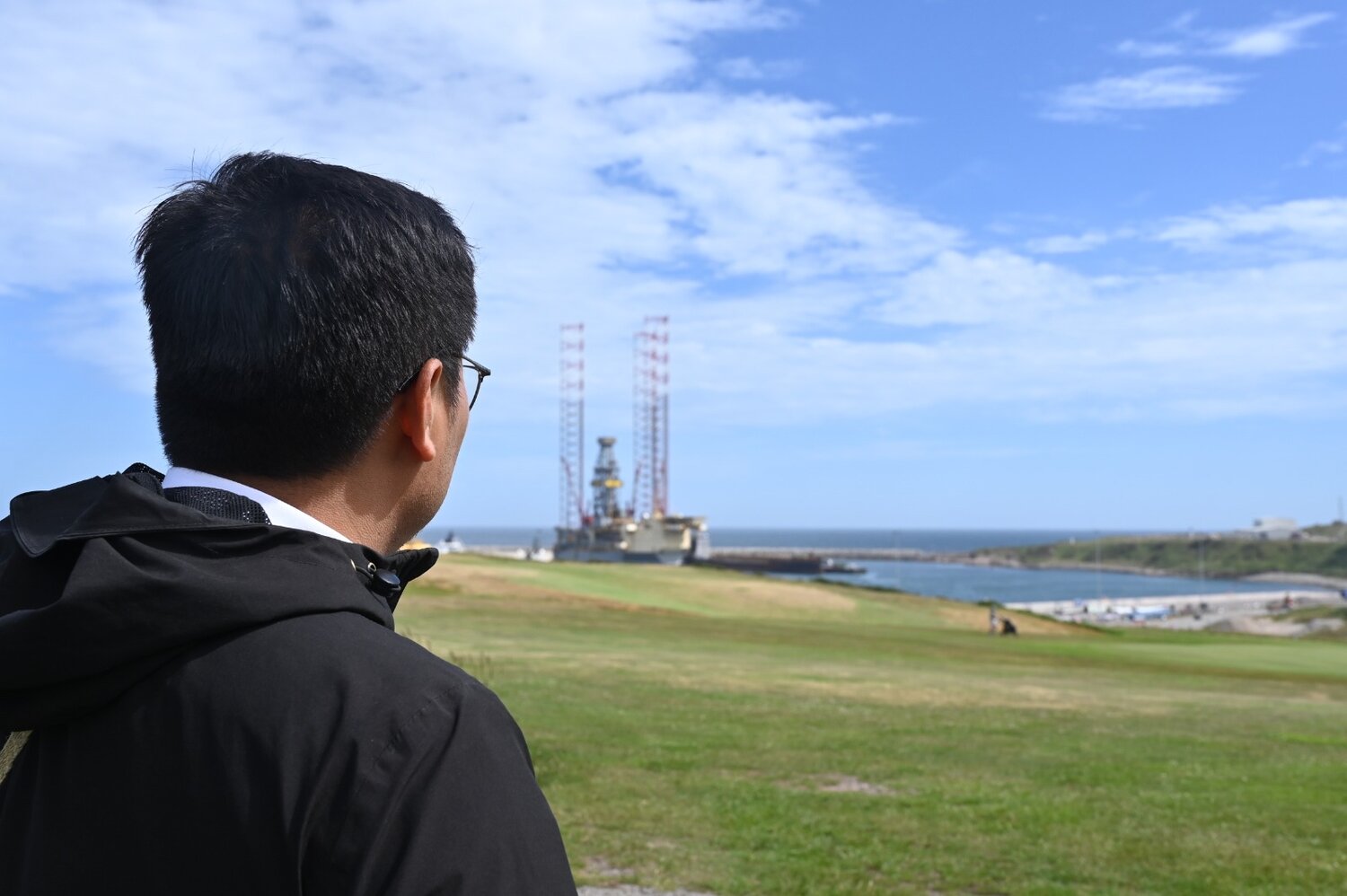
In Aberdeen, Wampís leaders visited Torry, a community which has faced decades of environmental injustice including from oil infrastructure. Residents shared how industrial projects, including a sewage treatment plant and a large-scale incinerator, have been imposed near family homes and primary schools.
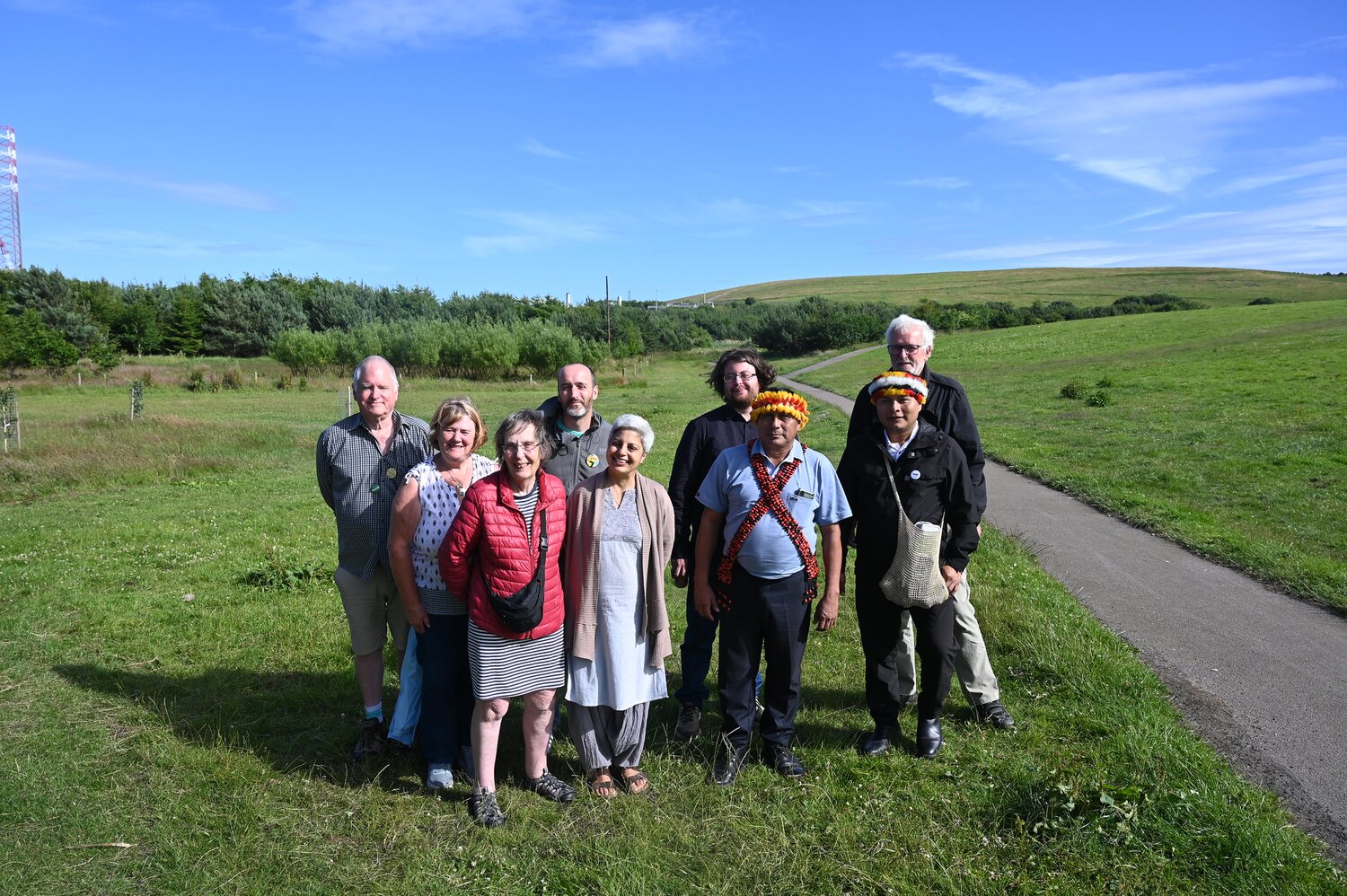
The Wampís expressed deep solidarity with Torry’s resistance, their connection to the land, and drew parallels to their own struggle to defend ancestral territories in the Amazon.
Meeting with an MSP
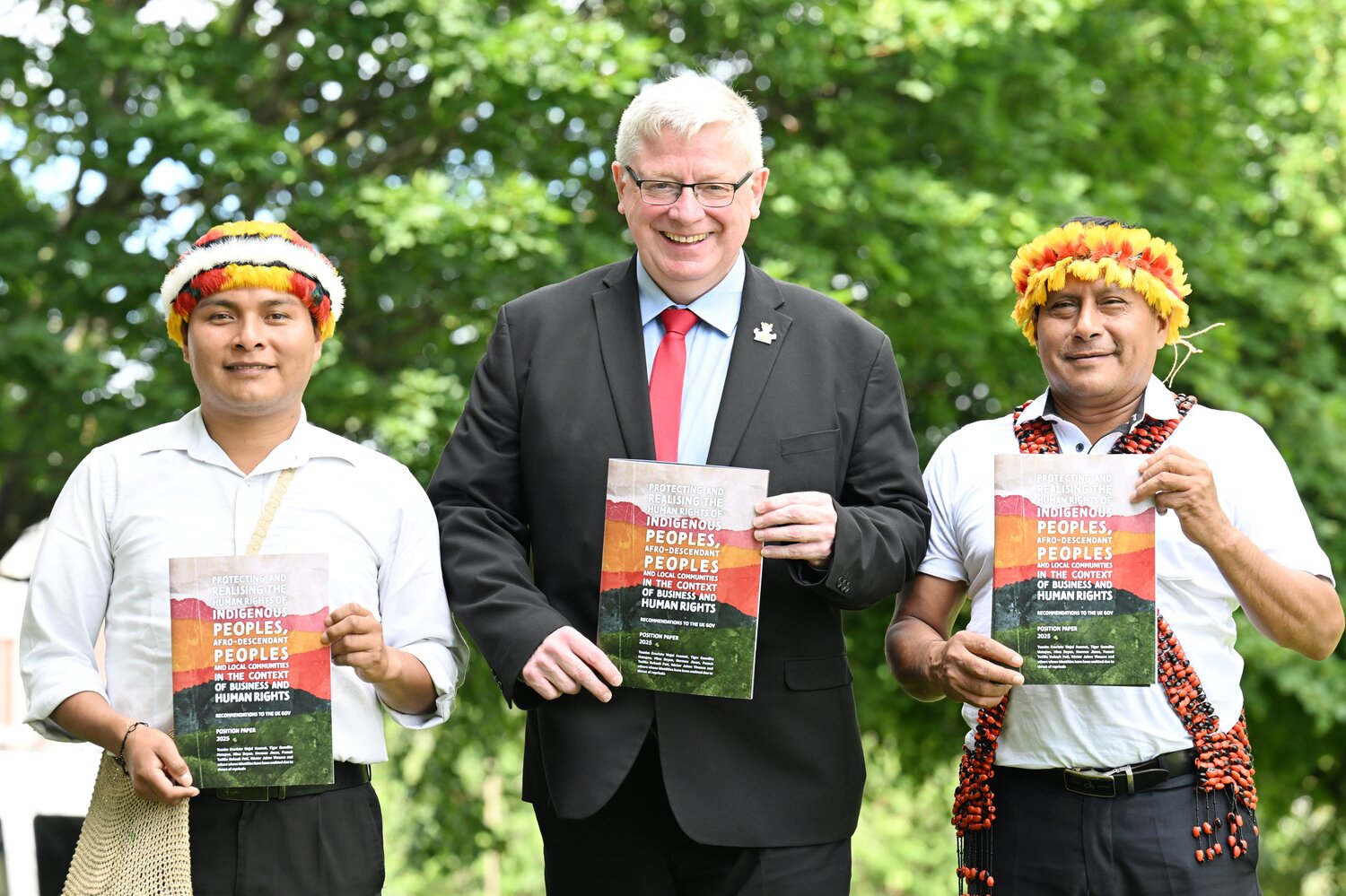
Before returning to Peru, Pamuk Teófilo Kukush Pati and Tsanim Evaristo Wajai Asamat met with Martin Whitfield MSP (East Lothian). They outlined the severe human rights and environmental abuses caused by illegal gold mining, logging, and oil extraction in their territory, including river contamination that threatens food and water supplies.
They presented a co-authored position paper calling for the UK to pass a corporate responsibility law to ensure British companies respect human and environmental rights, both abroad and domestically.
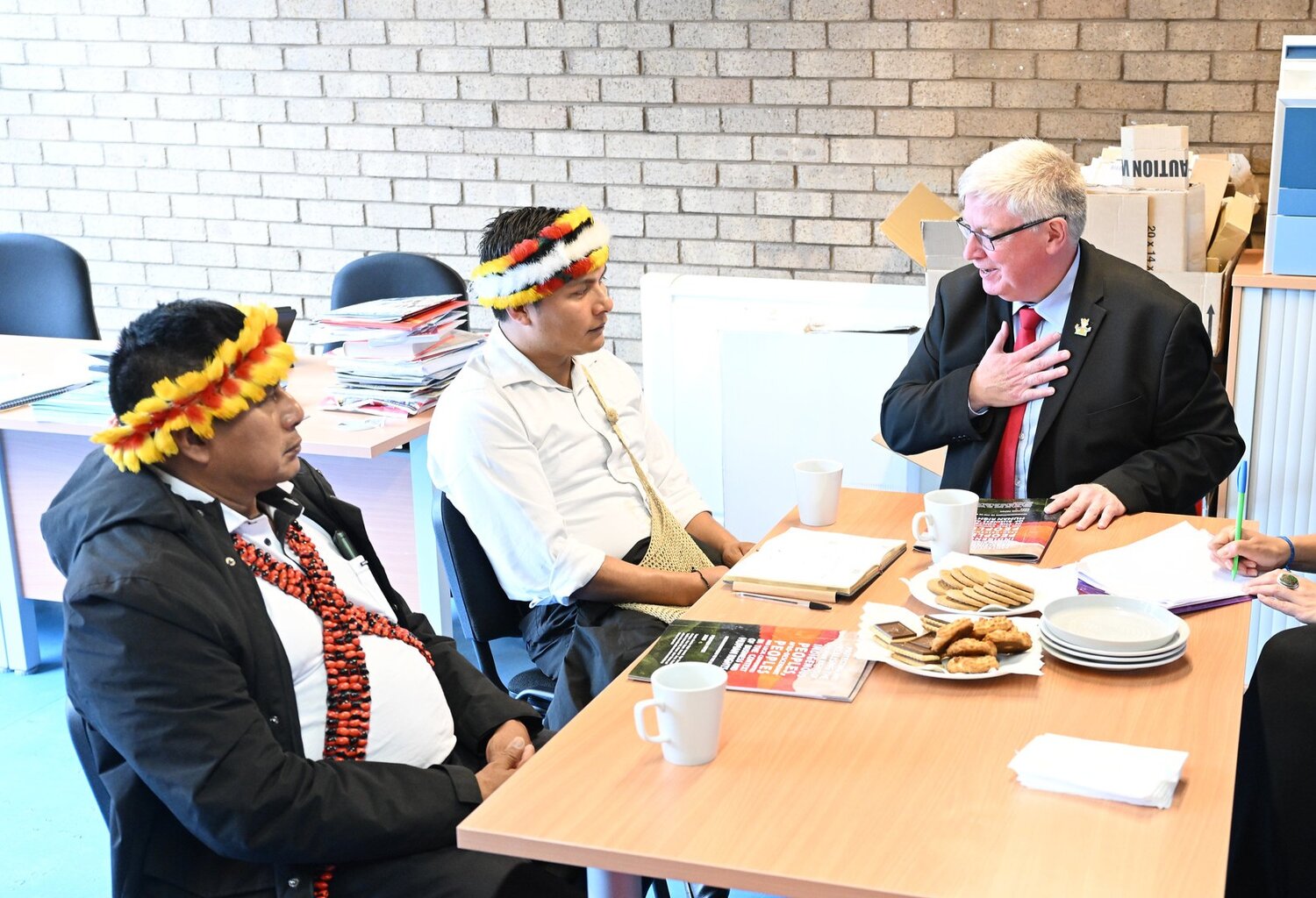
It was a wonderful privilege to meet with representatives of the Wampis indigenous people of northern Peru. The opportunity to learn about the environmental impact of illegal gold mining, logging and the risk of oil extraction was enlightening. The world has a responsibility to indigenous peoples, who are often best placed to preserve and care for the environments with which they have coexisted for millennia.”
Martin Whitfield, MSP for South Scotland
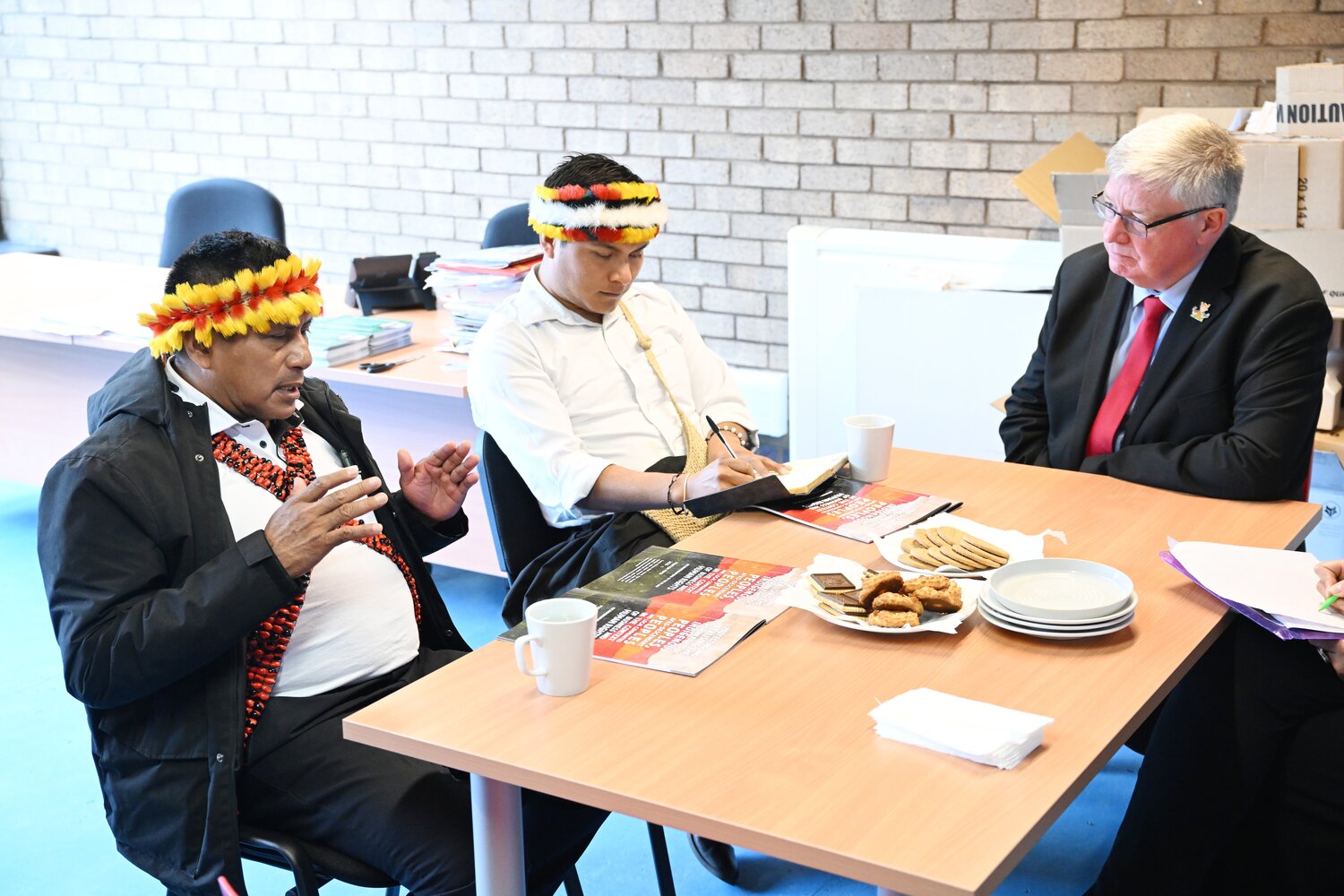
Our policy is well-being, Tarimat Pujut, or good living in harmony with nature, that is why we demand that the funds support us to protect our territory, our forest - which is 82% intact - and we will continue to reforest for the good of our generation, our people and everyone."
Pamuk Teófilo Kukush Pati
Reflections
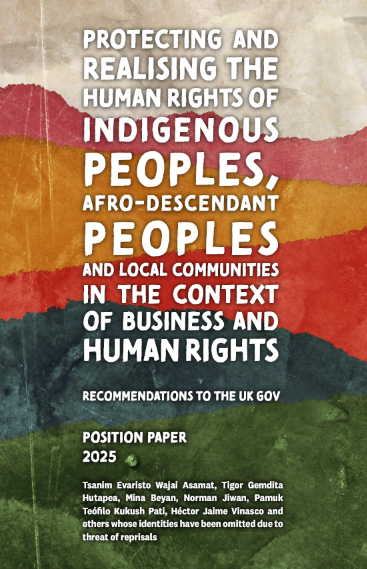
From Parliament Square to the Isle of Eigg, their message was urgent and unwavering: Indigenous Peoples are at the forefront of defending life, but to continue their work they need solidarity, not just in words, but through action. Countries such as the UK must defend the human rights of Indigenous Peoples, including through adopting a corporate accountability law that is grounded in the key principles outlined in in the position paper.
To directly support the GTANW, you can visit their website and donate via PayPal. For more information about the position paper, read Protecting and Realising the Human Rights of Indigenous Peoples, Afro-descendant Peoples and Local Communities in the Context of Business and Human Rights.
