
Beyond the intermediary role: What good allyship with Indigenous Peoples looks like
Reflection on how to be the best possible ally for Indigenous Peoples has preoccupied us for years, with our understanding evolving through countless conversations with Indigenous collaborators, from the Amazon, across Africa to Southeast Asia.
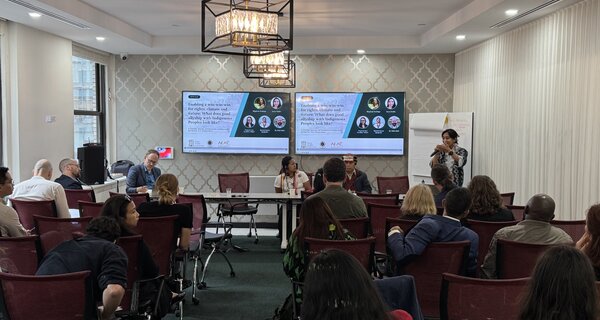
During New York Climate Week in September 2025, we dived deep into the question, working alongside Akar Global Inisiatif (Indonesia) and the Autonomous Territorial Government of the Wampís Nation (GTANW, Peru) to convene an event designed to make space for the voices best positioned to articulate the answers – those of Indigenous Peoples.
The event, entitled “Enabling a win-win-win for rights, climate and nature: What does good allyship with Indigenous Peoples look like?” coincided with an important moment for the donor and solidarity ecosystem. Amid proliferating calls for providing direct support to Indigenous Peoples, and a tendency for international organisations to be grouped together under the “intermediary” label, we found ourselves asking: what forms of added value do Indigenous Peoples actually need from their allies? And how might the support architecture be shaped to provide those enabling conditions, rather than merely transferring funds from point A to point B?
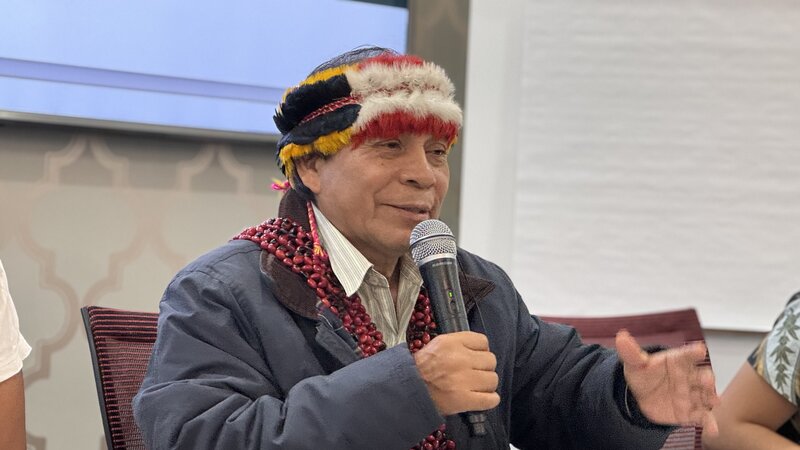
With the best arbiters of what constitutes good allyship being Indigenous Peoples themselves, the event centred on Indigenous analysis and strategic vision through the perspectives of Shapiom Noningo (Wampís Nation), Pramasti Ayu Kusdinar, known as ‘Dinar’ (Akar), and Marisol García Apagueño (a Kichwa leader and President of FEPIKECHA – the Federation of Indigenous Kechua Chazuta Amazonian Peoples), among others. It was facilitated by Joyce Godio, herself an Indigenous Ibaloi-Kankanaey Kalanguya of the Igorots of Cordillera, Philippines. Appearing by video were Mt Elgon Ogiek leader Peter Kitelo (Director of the Chepitkale Indigenous People Development Project and an FPP Board member) and Nɨpodɨmakɨ leader Omar Castro Suárez from Colombia.
Their message was clear: effective solidarity encompasses far more than the transfer of funding – it requires relationships, political accompaniment, technical capacity where invited, and a trust grown from years spent working side by side.
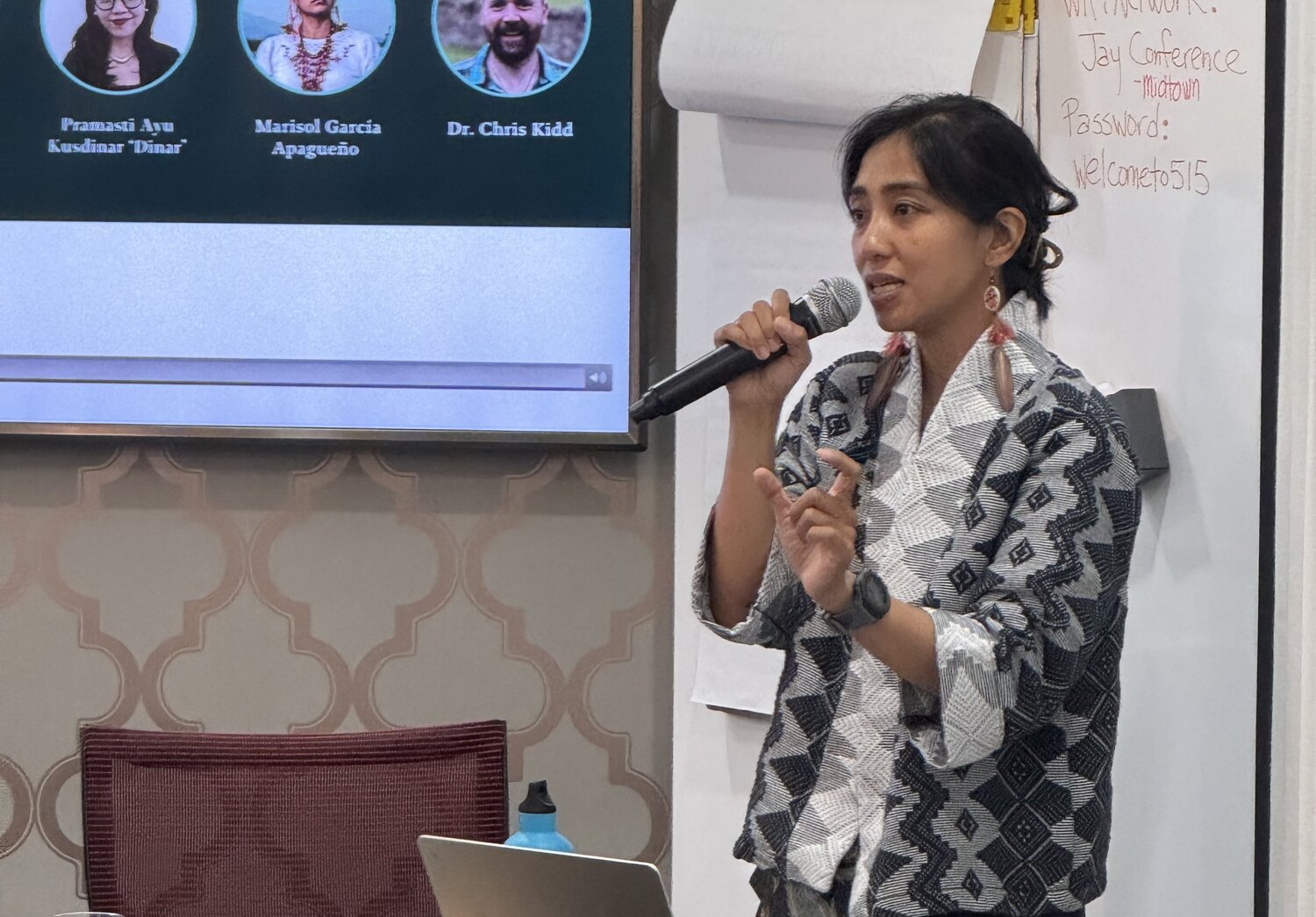
Joyce’s role merits particular attention because of her contribution to the learning journey we at FPP have been on. Prior to the event, she conducted in-depth research and interviews with a range of FPP’s Indigenous partners to better understand what our direct support has meant to them in practice – not what we assumed it meant, but what they experienced and needed. Her insights shaped both the event and the report we launched in New York later that week: Valuing allyship: The case for pairing direct and unrestricted funding with solidarity-based allyship for grassroots Indigenous Peoples and forest peoples.
At FPP, we now more clearly understand the niche within the allyship ecosystem that organisations like us are best placed to fill, with our role extending well beyond the transactional re-granting role commonly associated with the term “intermediary”. As a result, we have steered away from that label to instead emphasise our relational approach, rooted in solidarity, and the multi-faceted nature of the added value that Indigenous Peoples value from us, which includes:
- providing legal and technical support such as territorial mapping and monitoring
- accompanying new and resilient Indigenous institutions and leaders
- supporting national, regional and international networks and Indigenous platforms.
The Indigenous speakers affirmed that the conversation must go wider and deeper than the mechanics of funding. Money matters profoundly, since control over how it is used is a fundamental indicator of power relations. But not in isolation from the full spectrum of enabling conditions that Indigenous Peoples need from the allyship ecosystem if they are to flourish and achieve transformative change.
The event in New York and the research underpinning it form part of a broader, ongoing inquiry: to make visible those dimensions of support that are routinely rendered invisible when solidarity collapses into dollar amounts.
We now understand better the contribution we can and so often do make, not as intermediaries who “deliver” to communities, but as allies committed to the power-equalising, reciprocal and long-term relationships on which transformative change depends.
Aperçu
- Type de ressource:
- News
- Date de publication:
- 15 juillet 2026
- Partenaires:
- Akar Global Inisiatif Gobierno Territorial Autónomo de la Nación Wampís (GTANW) Federación de Pueblos Indígenas Kechwa Chazuta Amazonía (FEPIKECHA)
Actualités connexes